

A long repair estimate looks like a priority list because it has numbers and checkboxes. It is not one. A worn wiper, an overdue cosmetic service, an active brake symptom, and an unknown fluid history can appear on the same page even though their consequences, evidence, and urgency are fundamentally different.
The defensible way to prioritize limited time and money is to consider four things in order: safety consequence, active evidence, manufacturer requirement, and preventable escalation. This is an editorial framework, not a universal ranking of parts and not a substitute for inspection.
Safety consequence comes first
Start with failures that could materially reduce control, visibility, stopping, tire integrity, or safe operation. The FTC identifies brake symptoms such as pulling, a sinking pedal, scraping or grinding, and an illuminated brake warning as reasons to arrange diagnosis and repair. NHTSA emphasizes correct tire pressure, tread, loading, and attention to damage.
That does not mean every brake noise proves imminent failure or every tire mark requires replacement. It means that a credible sign involving a safety-critical system deserves earlier verification than an appearance concern. Exact model warnings still control: an owner's manual instruction to stop the engine or stop driving outranks a general priority framework.
Open safety recalls also belong near the top because they concern a manufacturer and government remedy, not ordinary wear. Check by VIN through NHTSA in the United States and follow the recall instructions. Do not treat a recall as a paid maintenance add-on.
Active evidence outranks a generic possibility
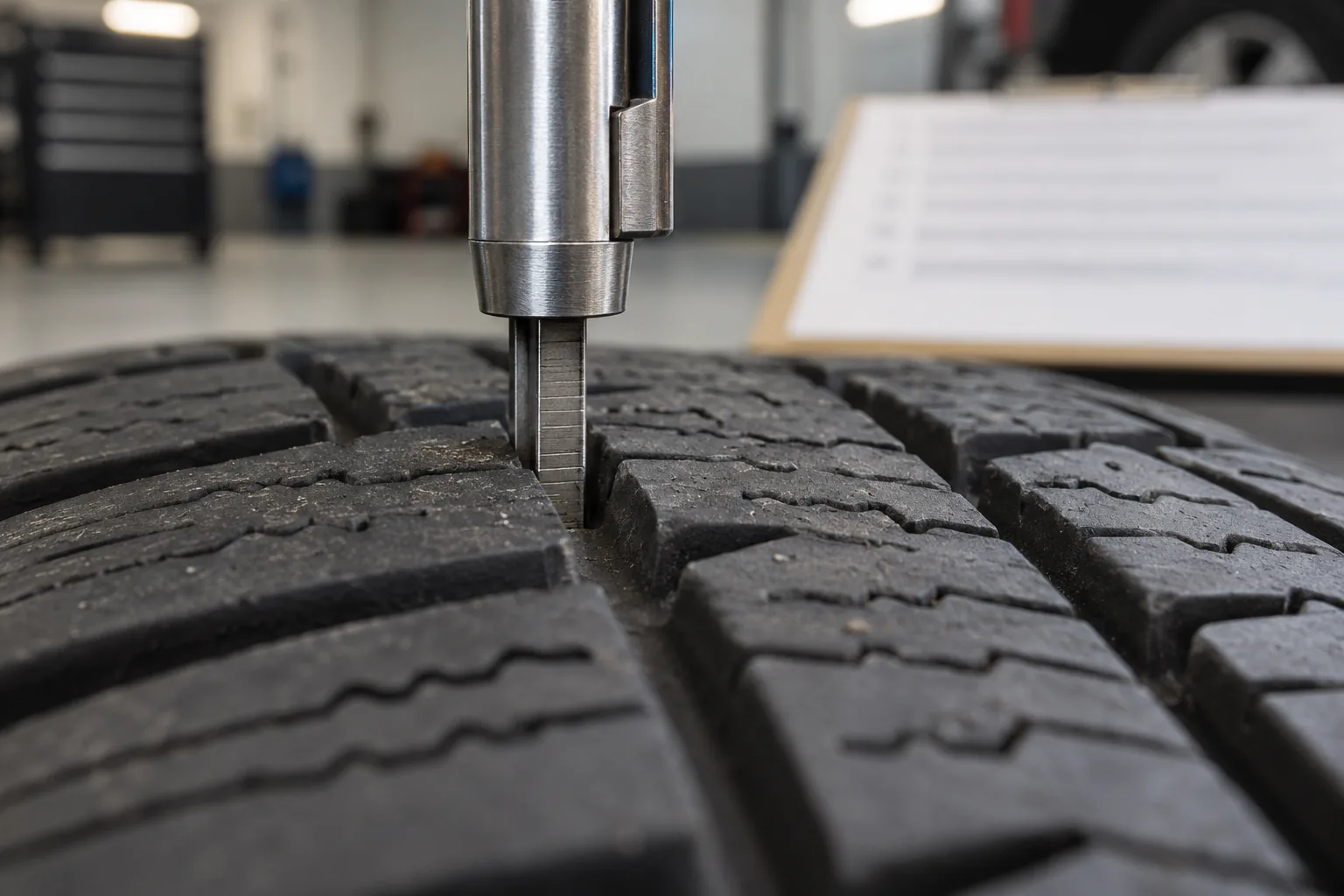
An estimate should tell you what the shop observed. Useful evidence can include a measurement, test result, diagnostic process, photograph, leak location, warning message, or reproducible symptom. “Recommended by mileage” and “measured below specification” are different claims.
Ask for the finding and its threshold. For tires, request tread measurements and the location of damage or wear. For brakes, ask for pad or lining measurements, rotor condition, warning status, and the reason for the urgency assigned. For a battery or charging complaint, ask what was tested; the FTC notes that loose or corroded connections can make a battery or alternator appear defective.
Evidence has limits. A dashboard code identifies a detected condition, not necessarily the part to replace. Fluid color alone may not establish system identity or condition. A clean visual check cannot prove that an internal system is healthy. Good prioritization keeps those limits visible.
Manufacturer requirements create the baseline
For routine work without an active defect, the correct model-specific schedule is the baseline. The FTC advises following the manufacturer's schedule for your type of driving and asking a shop to explain service beyond it. Read the applicable operating-condition definitions and preserve “inspect,” “replace,” time, mileage, and whichever-comes-first language.
This prevents two opposite errors: neglecting a clearly due requirement and buying a generic package that does not match the vehicle. A schedule also helps separate maintenance from repair. Replacing a part because it failed inspection is not the same decision as replacing it because a calendar date arrived.
Warranty and service-contract terms can affect timing and documentation, but they should be read rather than assumed. Coverage is not a safety assessment, and an uncovered item is not automatically unimportant.
Preventable escalation breaks close calls
After safety, evidence, and schedule status, consider what delay could turn a manageable condition into broader damage or a breakdown. A small issue with clear progression may deserve attention before a stable, low-consequence item. The reasoning should be explained, not implied by a red marker on an estimate.
Ask what component could be affected, how the shop knows progression is occurring, and whether monitoring is safe. “Could get worse” is too vague. A useful answer describes an observed condition, likely consequence, and review trigger.
Cost also matters, but cheap work is not automatically high priority. A low-cost add-on with no applicable schedule or evidence can wait behind a costly safety repair. Conversely, a budget limit does not make an unsafe condition safe; it changes the transport and repair plan.
Apply the framework to a mixed estimate

Imagine an explicitly hypothetical estimate containing four lines: a brake warning with a changed pedal feel, two tires with measured damage, a cabin filter based only on a generic interval, and a cosmetic treatment. The first task is not to rank the prices. It is to verify the warning and braking condition, assess whether the tires can be used safely, compare the filter recommendation with the manual and evidence, and treat the cosmetic item as optional.
Now change the facts: the brake line is a future inspection note with no symptom, while a tire has a visible bulge. The tire may move first. The category name does not set priority; consequence and evidence do.
Turn the framework into four questions
For every line on an estimate, ask: “What happens if this fails?”, “What evidence shows its current condition?”, “What does the exact manufacturer schedule require?”, and “What becomes more difficult or expensive if I wait?” Write the answers beside the item before ranking it.
An answer such as “safety issue” is not yet enough. Ask which capability is affected and whether the vehicle should be driven. An answer such as “dirty” needs a method, threshold, or observable effect. A mileage recommendation needs the applicable schedule and operating condition. An escalation claim needs a plausible affected system and a review point.
This questioning should remain collaborative. Technicians may see evidence that a customer cannot safely inspect, and a good explanation takes time. The goal is not to win an argument or prove every shop dishonest. It is to make the reason for priority visible. When a provider cannot explain an expensive or complicated recommendation, a second opinion is a proportionate next step—not a remote diagnosis from an article.
The strongest objection: maintenance is interconnected
It is true that vehicles are systems. Neglected routine work can reduce reliability, increase cost, or affect other components. A safety-first framework should not become permission to ignore everything that is not immediately dangerous.
The answer is a second queue, not a denial. Put urgent verification and safety work first. Then schedule manufacturer-required maintenance, progressive defects, and reliability items. Finally, decide among comfort, appearance, and elective improvements. Record what was deferred and the condition that should trigger review.
The question “Which maintenance item matters most?” has no permanent parts list as an answer. The honest answer is a method: identify the worst credible consequence, demand evidence, consult the correct schedule, and understand what delay changes. That method is less marketable than a top-ten list—and far more useful when the estimate is real.
Document the final order and its assumptions. If new evidence appears—a warning light, measurement, leak, or change in driving—the order can change without pretending the earlier decision was irrational. Priority is a reasoned snapshot, not a lifetime label attached to a component.