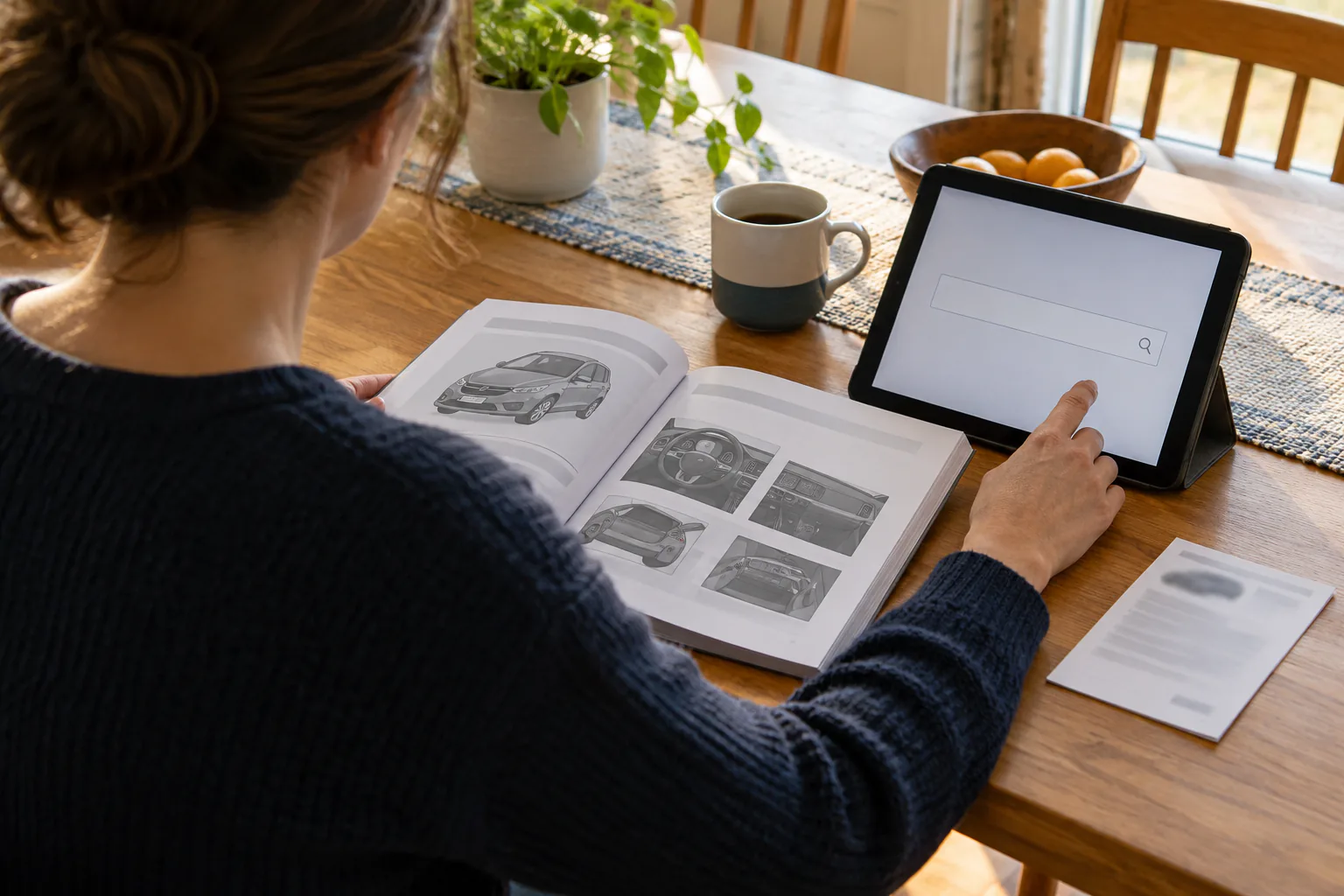
A useful car-care routine runs on two different clocks. The first is an observation rhythm: quick checks that help you notice change. The second is the manufacturer's service schedule: model-specific work triggered by time, mileage, operating conditions, or a vehicle reminder. Mixing those clocks creates bad advice. Looking at tires regularly is sensible; declaring that every car needs the same fluid service at the same mileage is not.
Use the routine below as an editorial cadence for paying attention, not as a replacement maintenance schedule. Keep the exact owner's manual and maintenance guide for your vehicle nearby. If either document gives a different instruction, follow the vehicle-specific source.
Before driving: notice change, not perfection
You do not need a formal inspection before every trip. A brief scan is enough to catch obvious changes:
- A tire that looks much lower than the others, visible damage, or an object in the tread
- A fresh or growing puddle, smoke, or a persistent fuel odor
- A windshield, mirror, lamp, or camera area blocked by dirt, ice, or damage
- A warning light or message that remains after the normal start-up check
- A new problem with starting, braking, steering, or visibility
Do not turn the scan into a diagnosis. A tire can be underinflated without looking flat, and a clean parking space does not prove that every fluid level is correct. The value of a frequent glance is comparison: today's vehicle against the one you normally drive.
If braking or steering feels impaired, a tire is seriously damaged, the vehicle is overheating, or the owner's manual directs you to stop, do not continue merely to complete a checklist. Safety escalation replaces the routine.
Once a month: make a few conditions measurable
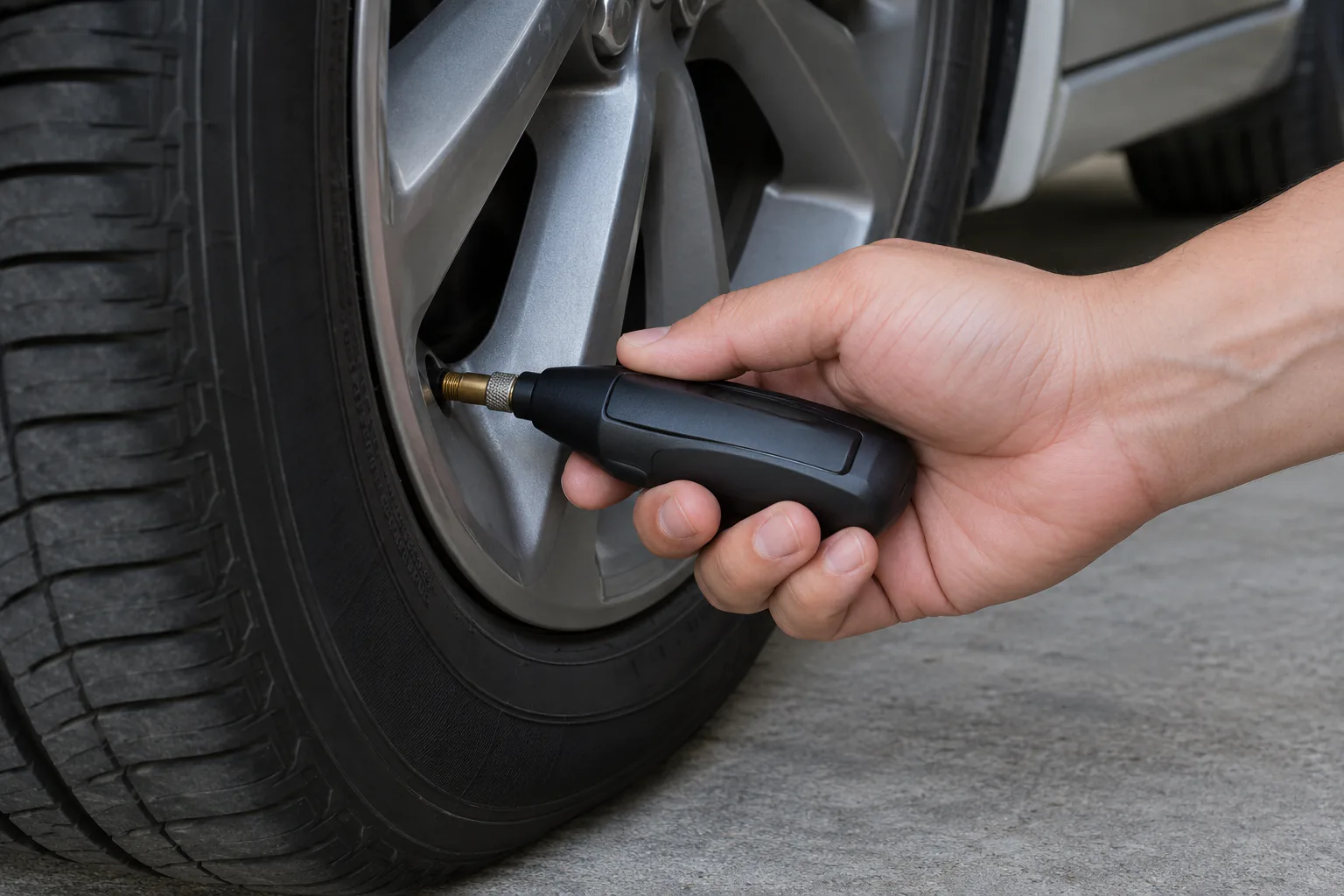
Choose a repeatable day and a safe, well-lit place. Start with tire pressure when the tires are cold, meaning the vehicle has been parked long enough to avoid heat from normal driving affecting the reading. Use the pressure on the tire and loading information label or in the manual—not the maximum pressure molded into the tire sidewall. Check the spare if your vehicle has one and its manual calls for it.
Look across the tread and sidewall for uneven wear, cuts, cracks, bulges, or embedded objects. NHTSA notes that tread, pressure, alignment, rotation, and vehicle load all matter to tire safety. A pattern can justify inspection, but it does not identify a failed part by itself.
Check exterior lamps with help from another person where necessary. Inspect wiper blades for splitting or poor wiping, and keep the windshield washer reservoir filled with a product that matches the climate and the owner's manual. Never open a hot, pressurized cooling system. Only check accessible fluid levels by the procedure and vehicle state specified by the manufacturer.
Review the dashboard for stored messages and the ground for recurring leaks. Add the date, odometer, observation, and action to a short log. A monthly note saying “no change observed” is optional; record abnormalities and measurements that will help you see a trend.
At seasonal changes: prepare for the conditions ahead
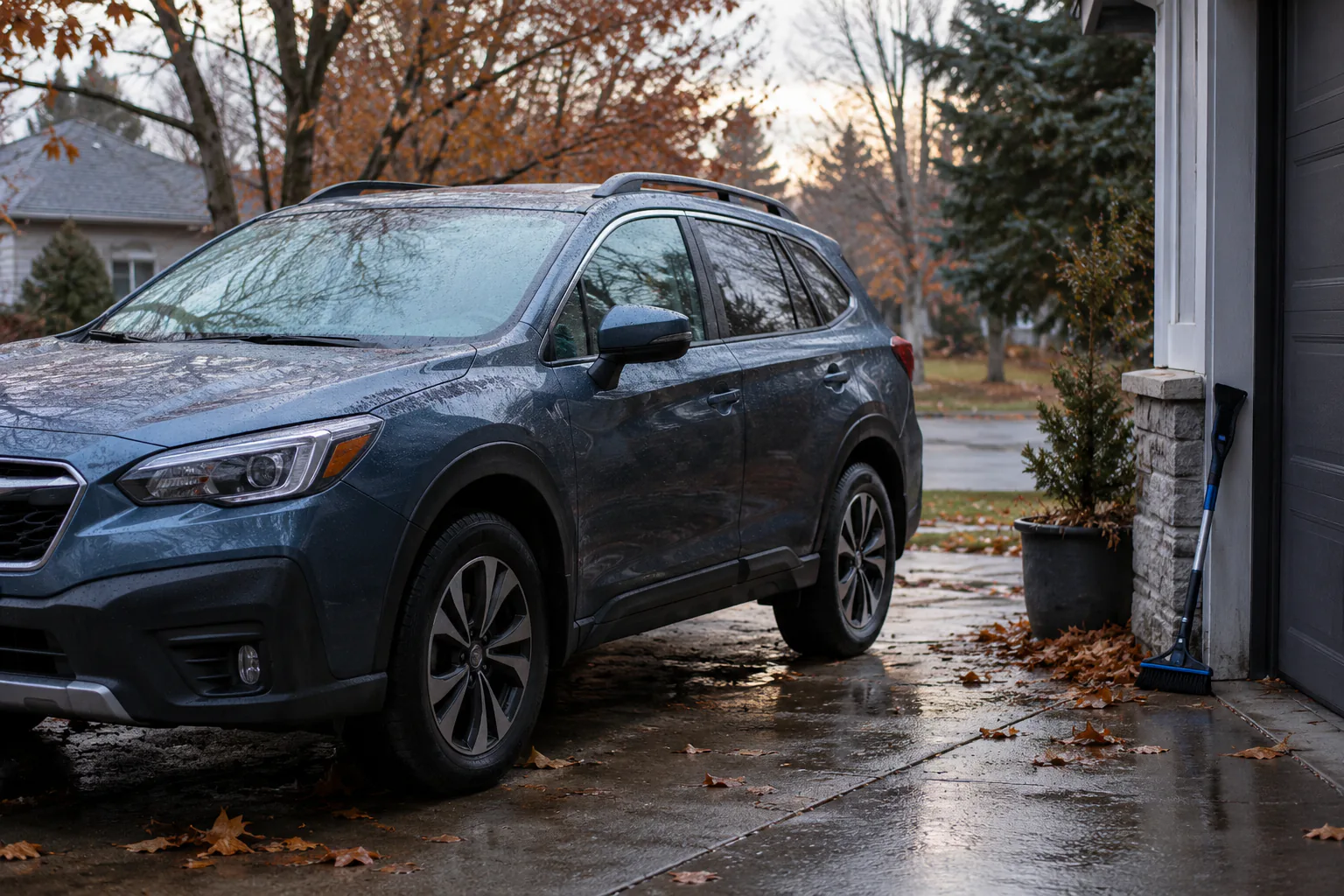
Temperature changes pressure, traction demands, battery performance, fluid needs, and emergency planning. The useful seasonal question is not “What should everyone replace?” It is “What condition will this vehicle face next, and what does its manual require?”
Before hot weather or a long summer trip, review tires, cooling-system warnings, the 12-volt battery if accessible, air-conditioning performance, wipers, washer fluid, and signs of worn belts or hoses that can be seen without touching moving or hot components. NHTSA's summer-driving guidance also emphasizes planning the route, checking recalls, and carrying emergency supplies.
Before freezing weather, use washer fluid suited to expected temperatures, clear snow and ice from lights and glass, inspect tires for the expected road conditions, and check local rules before buying or using chains. Cold-weather equipment is regional. A warm urban commute and a remote mountain journey do not call for identical kits.
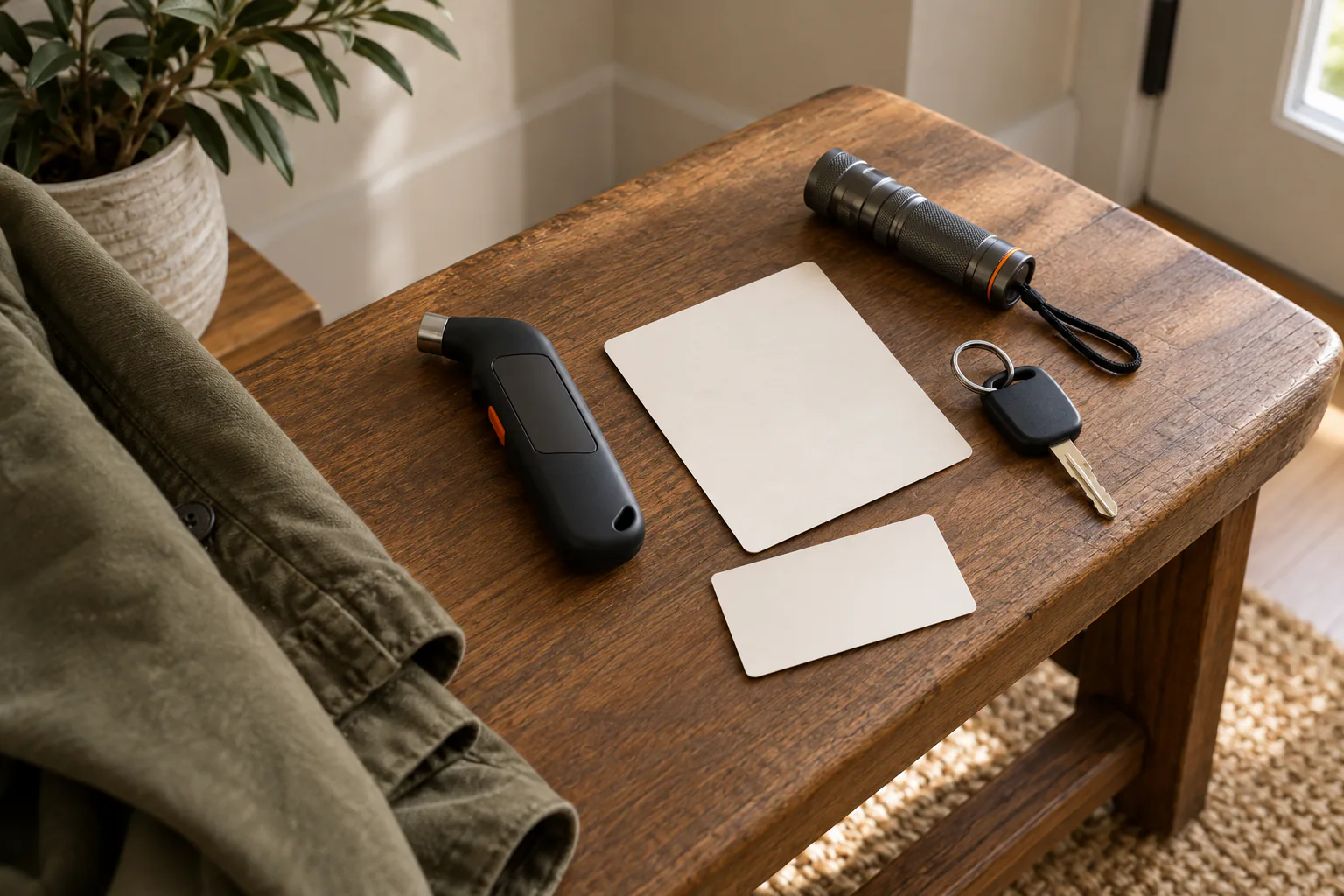
Review the emergency kit when seasons change. Replace expired or damaged items, charge or test appropriate lights, and adapt supplies for passengers, medication needs, climate, and route. Store everything so it cannot become a projectile in a sudden stop. Do not carry a tool merely because a generic list includes it; carry equipment only when it is safe, legal, compatible with the vehicle, and usable by the people traveling.
Seasonal review is also a good time to compare actual use with the schedule's operating-condition definitions. Repeated towing, dusty travel, extensive idling, or short trips may matter when the manufacturer explicitly says they do. Record the applicable condition instead of casually labeling all demanding use “severe.”
When the manufacturer says service is due
Open the exact schedule for the model year and powertrain. Read the conditions around each item. Some schedules distinguish normal from special or severe operating conditions. Some use “whichever comes first” language for time and mileage. A dashboard maintenance reminder may help track a trigger, but it does not prove that work has been completed or that every required item is included.
The FTC recommends following the manufacturer's schedule for your type of driving and comparing extra shop recommendations with that schedule. An additional service is not automatically unnecessary: a measured defect, contamination, active symptom, recall, or documented operating condition may justify action. Ask for the evidence and the consequence of waiting.
After service, keep the completed repair order and update the next trigger. A sticker can be a convenience, but your durable record should identify what was done, at what mileage, on what date, and according to which specification.
Use a five-line log
A routine survives when the record is smaller than the task. Use five fields:
- Date and mileage
- Item observed or serviced
- Result or measurement
- Source or document consulted
- Next action and trigger
For example: “October 20, 42,180 miles; cold tire pressure checked; adjusted to door-label values; owner's manual and label; recheck after major temperature change.” This is an illustrative format, not a claim about a real vehicle.
The routine should make changes visible without encouraging unnecessary work. Observe briefly, measure what is safe and meaningful, follow the exact schedule, and preserve evidence. That is enough structure to make maintenance repeatable without pretending that every car follows the same clock.