

A red battery-shaped light is commonly a charging-system warning, not a request to buy a battery. Toyota describes its charging-system light as indicating a charging-system malfunction, while Ford manuals use model-specific language and actions. The exact symbol, message, and response belong to the vehicle's own manual.
The battery stores electrical energy, but the charging system must support the vehicle and replenish the 12-volt battery while operating. A warning can involve charging output, a belt where applicable, wiring, connections, control systems, or the battery itself. The light does not diagnose which part failed.
Confirm the symbol and operating state
Many warning lamps illuminate briefly during startup as a bulb or system check. Note whether the light stays on after the engine or ready system is operating, appears while driving, flashes, or is paired with a message or sound.
Photograph the full instrument display when safely stopped. Record time, mileage, weather, recent service, starting behavior, dimming lights, unusual steering effort, overheating, smell, noise, or other warnings. Similar battery icons can appear in different vehicle systems, especially electrified models.
Open the exact model-year manual. Do not rely on color or shape alone.
Reduce risk while reaching safety

Follow the manual's instructions. If it directs you to stop immediately, do so in a safe location. If it permits moving to safety, minimize nonessential electrical loads without disabling required visibility, defogging, or safety equipment. Do not continue simply to reach a preferred shop.
Electrical support may decline as stored 12-volt energy is used. The engine or hybrid system can stop, and electric steering assistance, displays, lights, or other functions may be affected depending on the vehicle. There is no reliable universal estimate of remaining distance.
If the charging warning appears with overheating, a burning odor, smoke, belt noise, or severe electrical behavior, stop and arrange transport. A shared belt can drive more than one system on some vehicles, but the warning does not prove a broken belt.
Do not disconnect or test while driving
The old practice of disconnecting a battery cable to “test the alternator” is unsafe for modern electronics and can create sparks or voltage damage. Do not open the hood in traffic, touch a hot or moving belt area, or bridge battery terminals.
A handheld voltage reading can be useful only with correct equipment, access, and vehicle procedure. It cannot by itself identify an alternator, battery, wiring, belt, or control fault. Hybrids and EVs contain high-voltage systems that are outside an owner check.
Jump-starting may get a vehicle running after low 12-volt charge, but it does not prove the charging system works. If the warning remains, follow the manual rather than assuming driving will recharge the battery.
Ask for a system diagnosis
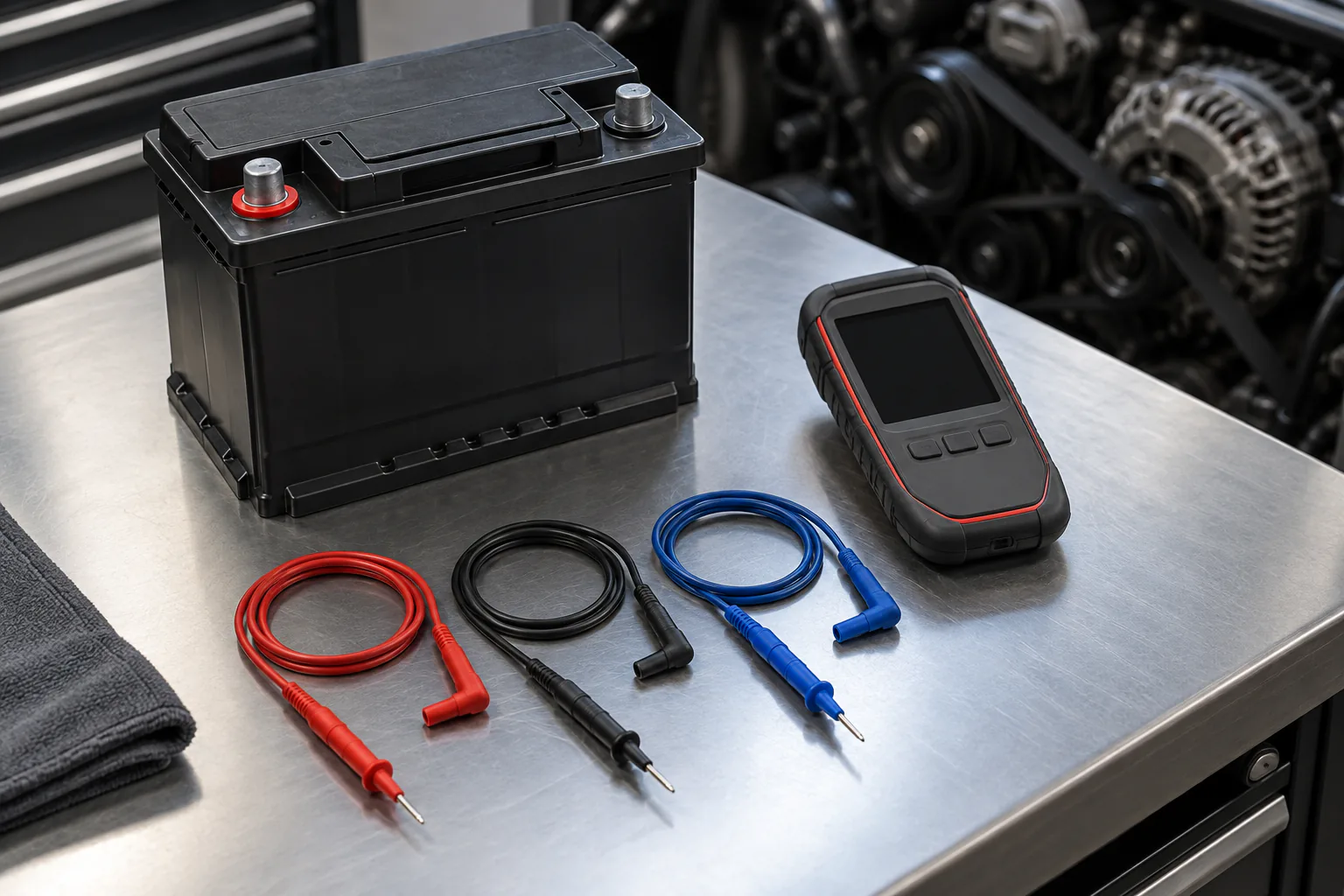
A qualified evaluation may include 12-volt battery condition, terminal and cable integrity, charging output under defined conditions, belt and tensioner condition where applicable, voltage drop, fuses, control data, and parasitic draw when relevant.
The FTC notes that loose wiring can make an alternator appear defective and loose or corroded terminals can make a battery appear bad. Ask which measurement supports each replacement recommendation.
If a battery is recommended, request the test result, battery type, rating, age, and charging-system result. If an alternator or converter is recommended, ask what output or diagnostic evidence failed and whether the battery was also assessed. A new battery can be damaged by an unresolved charging fault.
Plan the stop before power declines
Choose the nearest genuinely safe location rather than the most convenient destination. Consider traffic, lighting, weather, shoulder width, passengers, and whether the vehicle can be secured if it will not restart. Use hazard lights when appropriate, but remember that every electrical load consumes remaining 12-volt energy.
Do not switch the vehicle off in an unsafe lane merely because the lamp is red. The immediate task is controlled movement to safety under the manual's direction. Once secure, assume the vehicle may not restart and arrange roadside assistance or towing.
If steering becomes heavier, displays flicker, multiple warnings appear, or engine temperature rises, the situation is worsening. Stop at the first safe opportunity. A charging fault can create secondary warnings as system voltage falls, so a suddenly crowded dashboard does not prove that many unrelated systems failed at once.
Passengers should exit only when the location and traffic make it safer. On high-speed roads, follow local roadside-safety guidance and emergency-service instructions.
Distinguish the warning from an old battery
A weak battery can cause slow cranking or a no-start without illuminating the charging lamp during normal operation. Conversely, a charging warning can appear with a relatively new battery. Battery age changes probability, not the meaning of the warning.
After replacement, ask whether battery registration, battery-management reset, venting, or coding was required. Confirm that the charging fault and belt or connection condition were tested, not merely that the vehicle starts.
Special case: electrified vehicles
Hybrids and battery-electric vehicles still use a 12-volt system for controls and accessories, but the charging source and warning logic may differ from a conventional alternator. A traction-battery icon, plug warning, or hybrid-system message is not interchangeable with a 12-volt charging warning.
Do not touch orange cables, high-voltage enclosures, service disconnects, or traction-battery components. Use the manufacturer manual and trained service.
Record the complete event
Save the symbol, message, operating state, symptoms, transport decision, diagnostic measurements, repair, and verification. After repair, confirm the lamp completes its normal startup check and remains off under the conditions specified by the provider and manual.
If the light returns, the previous invoice and test results matter. Do not restart the history with “battery light came on.”
The most useful interpretation is narrow: the vehicle has detected a charging-system condition that may reduce available electrical power. Reach safety according to the manual, avoid improvised tests, and require diagnosis of the complete 12-volt charging system before replacing the part suggested by the icon's shape.
Keep the tow record and diagnostic printout. If low voltage produced additional fault codes, the repairer should distinguish consequences of the voltage event from independent faults and verify the system after stable power is restored.
Before a long trip, confirm that a prior charging repair included a battery-condition check and road or load verification appropriate to the vehicle. A lamp that is currently off does not replace the documented test result.