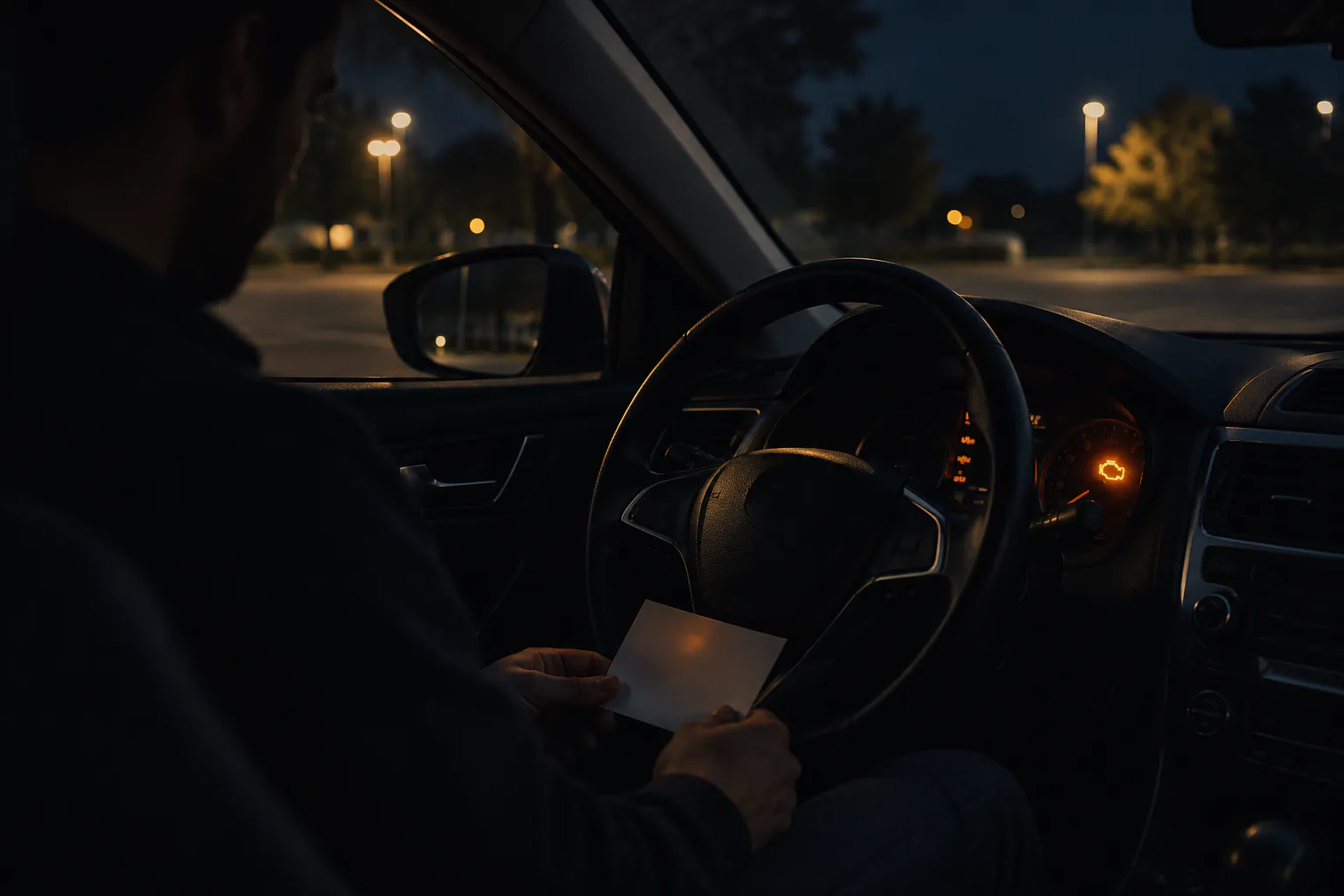

A red brake warning can serve more than one function. It may indicate an applied parking brake, a low-fluid or hydraulic condition, an electronic parking-brake problem, or another model-specific fault. An ABS warning is related but not identical. The safe response begins with the exact symbol, message, and braking behavior—not a list of possible parts.
If braking is reduced, the pedal sinks or feels unusually soft, the vehicle pulls strongly, grinding or smoke appears, fluid is visible near a wheel, or the owner's manual says to stop, do not continue normal driving. Arrange appropriate assistance.
Capture the warning accurately
Park safely without making additional test stops. Photograph the full instrument cluster and message. Record color, whether the light is steady or flashing, any buzzer, the parking-brake position, speed or event when it appeared, and whether ABS, stability, or other warnings are also on.
Warning symbols vary by model and market. Read the model-year manual before deciding that a circle, exclamation mark, or `BRAKE` text means one universal condition.
Check only what is safely observable
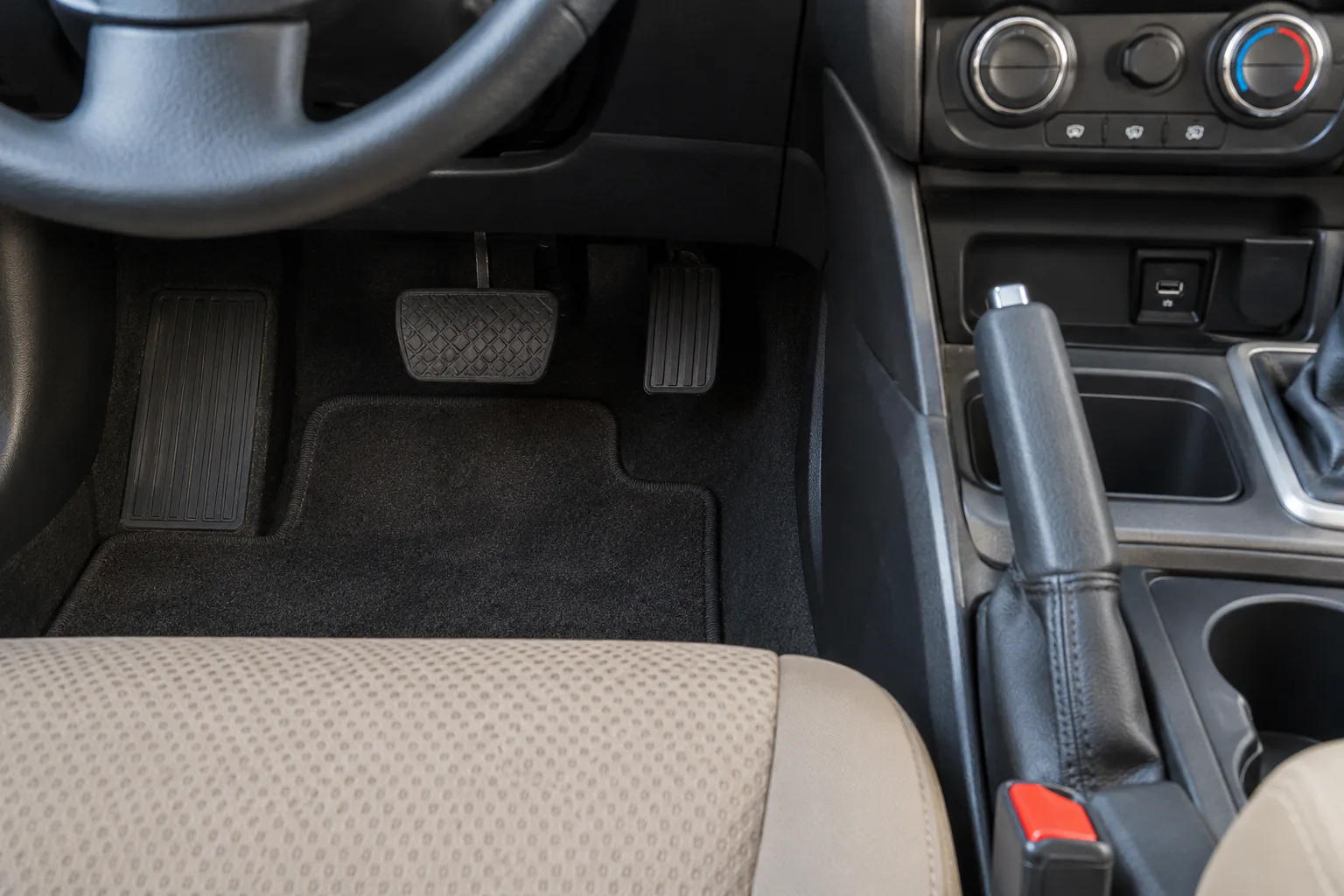
Confirm whether the parking brake is fully released according to its normal control. Do not repeatedly cycle an electronic brake if the manual reports a fault. Notice pedal feel and whether braking changed during the ordinary stop already made; do not drive again solely to test it.
Look for obvious fluid on the ground or near a wheel from a safe position. Do not crawl underneath or touch fluid. Do not open the brake reservoir or add fluid as a first response. A low level can reflect wear or a leak, and topping up can hide evidence without restoring system integrity.
If the warning clears after releasing the parking brake and braking feels normal, consult the manual and monitor. A warning that returns, lingers, or appears while moving still needs evaluation.
Understand combined warnings
An ABS lamp alone can indicate loss of anti-lock or brake-assist functions while ordinary braking may remain, depending on the vehicle. A red brake warning together with ABS or stability warnings can change the required action. Follow the manual's combined-warning language.
Do not assume that normal pedal feel proves all brake functions are available. Electronic distribution, assistance, regenerative braking, and stability systems can be involved. Hybrids and EVs may blend regenerative and friction braking, but the red warning remains a reason for model-specific triage.
Decide whether the car should move
Stop-driving signs include impaired braking, a sinking pedal, major pulling, scraping or grinding with poor performance, smoke or strong burning odor, visible active leakage, or a manual instruction to stop. Use towing when the system's ability is uncertain.
If the manual permits driving to service and no adverse symptom exists, minimize distance and speed, avoid heavy loads and difficult routes, and maintain extra space. This is not a universal clearance; the actual manual and conditions control.
Do not rely on pumping the pedal, adding fluid, disconnecting the battery, or clearing a code to make the vehicle safe. A warning reset does not repair the fault.
Handle parking-brake and hill situations carefully
If the warning appears after using the parking brake, confirm the normal release once. On a slope, keep the vehicle secured before troubleshooting; do not release a parking brake if doing so could allow movement. An electronic parking brake can display separate messages for application, release, malfunction, or service mode.
Do not pull harder on a mechanical lever, repeatedly cycle an electric control, or drive to “free” a brake when resistance, smoke, heat, or odor suggests it remains applied. A dragging brake can overheat and lose effectiveness.
If the vehicle must remain parked, use the transmission position and wheel-chocking guidance in the manual. Improvised objects may move. Roadside assistance is preferable to working around traffic or beneath a vehicle.
Separate red brake, ABS, and wear indicators
A red brake-system warning can represent a different level of concern from an amber ABS lamp or a pad-wear message. Some vehicles use text, multiple symbols, or a master warning. Identify all of them.
An ABS fault does not automatically mean no braking, but it can remove anti-lock and related assistance. A red hydraulic warning can indicate a more fundamental condition. Pad-wear indicators concern friction material and do not certify fluid, hydraulic, parking-brake, or ABS condition.
When more than one lamp is on, read the combined-warning entry. Do not address them one at a time based on generic web pages.
Prepare for diagnosis

Give the technician the warning photograph, exact message, parking-brake status, pedal observations, sounds, odor, recent brake or wheel work, fluid evidence, mileage, and prior repairs. Ask whether the vehicle is safe to move before the appointment.
A useful inspection may include hydraulic leakage, fluid level and condition, pad or lining measurements, rotor or drum condition, parking-brake operation, sensors, ABS data, electrical faults, and model-specific tests. Ask which finding supports each recommended part or repair.
The FTC lists pulling, a sinking pedal, grinding or scraping, and an illuminated brake light as brake-problem symptoms requiring diagnosis and repair. Its consumer guidance supports escalation, not a remote cause.
Review the repair and verification
The completed order should identify the warning or code, tests, measurements, failed condition, repairs, fluid specification where relevant, and final verification. If the warning was intermittent, ask how the repair addresses the stored evidence and when to return if it recurs.
Record axle and wheel position for mechanical findings. Keep before-and-after measurements and the warranty. Do not mark a reported pedal or pulling issue resolved solely because the lamp is off.
The brake warning's most important question is not “Which part?” but “Is normal braking available, and what does this vehicle instruct me to do?” Confirm the parking-brake state once, observe performance without deliberate testing, and escalate conservatively.
Keep the warning photograph even after repair. It anchors the exact symbol and combination for any recurrence and helps prevent a later service record from collapsing several different brake indicators into one vague event.
If the warning first appeared after tire, wheel, brake, or battery work, include that timing without assuming causation. A disturbed sensor, low voltage, a mechanical finding, or coincidence require different tests. Ask the provider to verify both the electronic warning and physical brake condition.
Document the final road-safety decision explicitly.