
A brake noise is evidence, not a diagnosis. The same word—squeal, scrape, click, or grind—can describe different conditions, and sound alone cannot reveal remaining pad thickness, rotor condition, hydraulic performance, or whether a loose object is involved. The useful first response is triage: combine the sound with braking performance, warning lights, persistence, vibration, and context.
Do not reproduce a dangerous noise for testing. If braking ability has changed, the pedal sinks or feels unusually soft, the vehicle pulls strongly, smoke or a burning odor appears, a wheel is visibly hot, or a brake warning remains on, stop normal driving and follow the model-specific owner's-manual instruction. Arrange towing or professional help when indicated.
Record the context before naming the sound
From a safe, ordinary drive—not a deliberate stress test—note whether the noise occurs during light or firm braking, at low or higher speed, on the first stops after rain, while turning, or even when the brake is not applied. Record whether it is one event or repeats, and whether steering, pedal feel, stopping distance, or vibration changed.
Capture the exact dashboard symbol and message. A parking-brake reminder, an anti-lock braking-system warning, and a red brake-system warning do not mean the same thing. Use the exact owner's manual, because warning behavior and required action vary by vehicle.
Do not crawl under a vehicle, touch a wheel or brake component that may be hot, or remove a wheel for this check. A phone recording can help a technician if made by a passenger or while safely parked; it should never distract the driver.
Conditions that need prompt or immediate attention
Grinding or scraping during braking deserves prompt inspection, especially when persistent or paired with reduced braking, vibration, pulling, or a warning. The FTC includes scraping or grinding, pulling, a sinking pedal, and an illuminated brake light among symptoms that call for diagnosis and repair.
A high, continuous squeal may come from a wear indicator on some designs, but that possibility is not permission to keep driving indefinitely. The FTC describes a screech as a possible brake wear-indicator sound. Only inspection and vehicle-specific information can establish the actual cause.
Stop and seek help for smoke, a strong burning odor, an apparent fluid leak near a wheel, seriously changed pedal feel, or markedly reduced braking. A brake component manufacturer such as Brembo can describe pad and disc wear signs, but it also sells braking products; use its technical context alongside OEM instructions and qualified inspection, not as independent proof that a particular part needs replacement.
Noises that may be temporary—but still deserve observation
A brief sound on the first few stops after rain, washing, or overnight moisture can disappear as surface moisture or light corrosion is swept away. Small amounts of road debris can also create a short-lived sound. The key is resolution: it should stop quickly without a warning, vibration, pulling, changed pedal feel, or reduced performance.
Some vehicles, brake materials, temperatures, and operating conditions produce characteristic sounds. “Normal for the design” should come from reliable model-specific information or an inspection, not from a generic claim that all squeaks are harmless.
If a noise repeatedly returns, grows louder, appears under ordinary braking, or persists beyond the initial stops, schedule an inspection. Waiting is not justified merely because the car still stops. A recurring sound is a change that should be documented.
What a useful brake inspection should provide
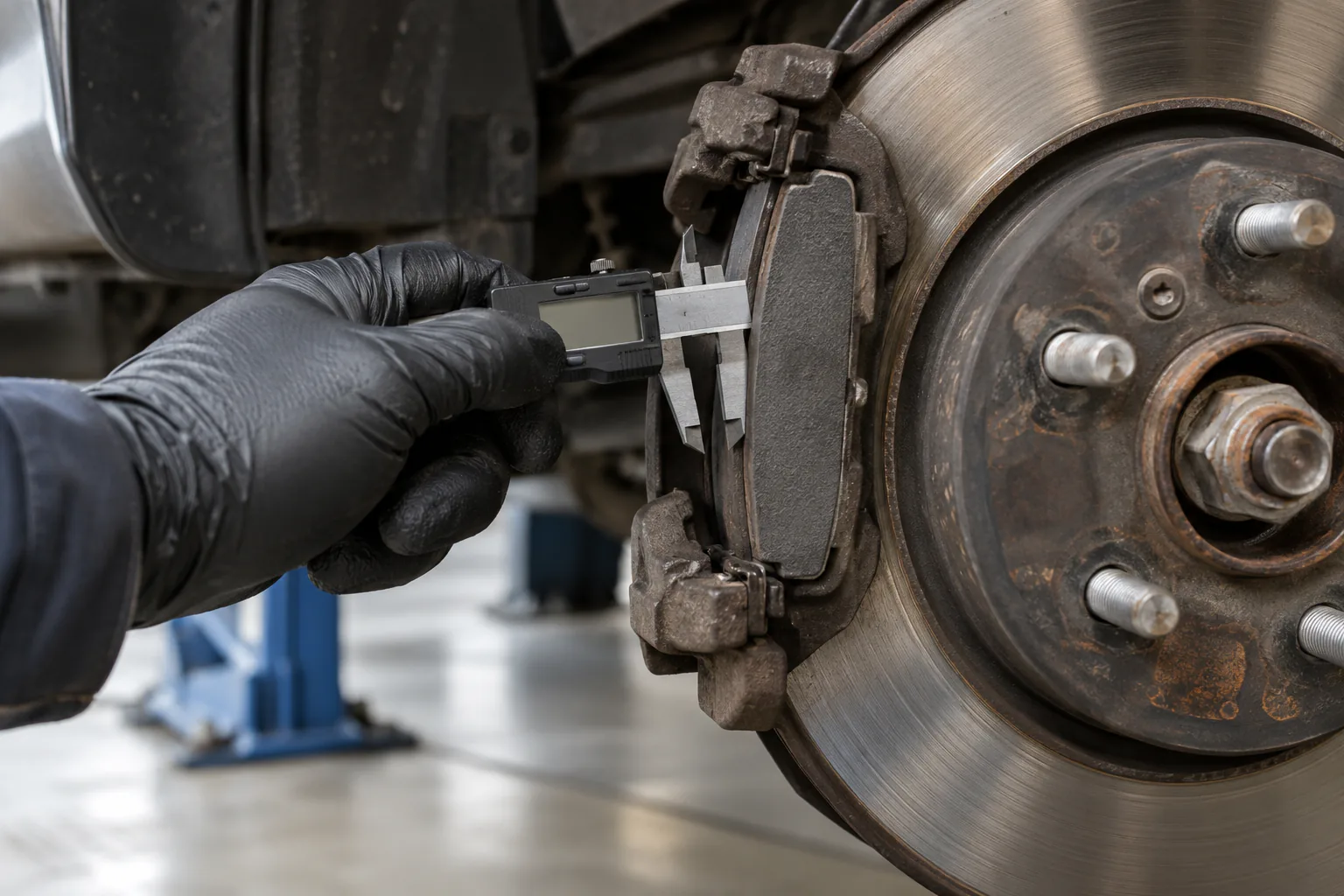
Ask the provider to connect the recommendation to evidence. Depending on the vehicle and concern, useful information can include pad or lining measurements, rotor or drum condition, signs of overheating or contamination, caliper or hardware condition, hydraulic findings, warning-system results, and whether the reported noise was reproduced.
Request measurements and the applicable service limit when a replacement is recommended. Mileage alone is a weak basis for brake-pad replacement because wear depends on vehicle, load, route, braking pattern, regenerative braking, material, and hardware condition. A photograph can help, but it should identify the wheel and component and should not replace measurements when measurements are relevant.
Ask whether the estimate addresses the cause of the noise or only replaces a commonly associated part. Brake systems are safety-critical, and remote lists of possible causes can mislead. The correct aim is not to guess the component before arrival; it is to provide an accurate symptom history and obtain a documented finding.
Questions to ask before authorizing work
Use a short checklist:
- What did you observe or measure?
- Which wheel or axle is affected?
- What is the manufacturer's limit or procedure?
- Is the vehicle safe to drive before repair?
- Does another component need correction to prevent repeat wear?
- Which recommendations are required now, and which can be monitored?
- What warranty applies to parts and labor?
For expensive or complicated work, the FTC suggests considering a second opinion. Share the same symptom notes and prior records so the two evaluations are comparable.
Describe the concern when booking service
Give the shop a compact factual statement: when the noise began, current mileage, whether it occurs with the brake applied, speed or temperature context, warning status, pedal feel, vibration, pulling, odor, and any recent brake, tire, or wheel work. Mention whether rain or washing changes it, but do not declare moisture the cause.
Ask whether the shop wants the vehicle delivered without further driving. A service adviser cannot inspect the brakes over the phone, but the combination of performance loss, smoke, heat, warning lights, or a leak should change transport planning.
Remove unrelated theories from the description. “Metallic scraping during light braking after 20 minutes, no warning, slight pedal vibration” is more useful than “the rotor is bad.” If the noise is intermittent, provide the recording and timeline rather than attempting repeated demonstrations. Clear symptom language reduces the chance that a quiet arrival is mistaken for a resolved concern.
Create a clear record
Write the first date and mileage, sound description, operating context, warning status, braking feel, inspection findings, measurements, work completed, and unresolved items. Do not mark the concern solved merely because the sound changed after rain or because an appointment occurred.
The dividing line is not “squeak versus grind.” It is the combination of performance, warning status, heat or odor, persistence, and evidence. A quiet brake can still have a problem, and a brief noise can be harmless. Triage conservatively, consult the exact manual, and let inspection—not an online sound dictionary—identify the repair.