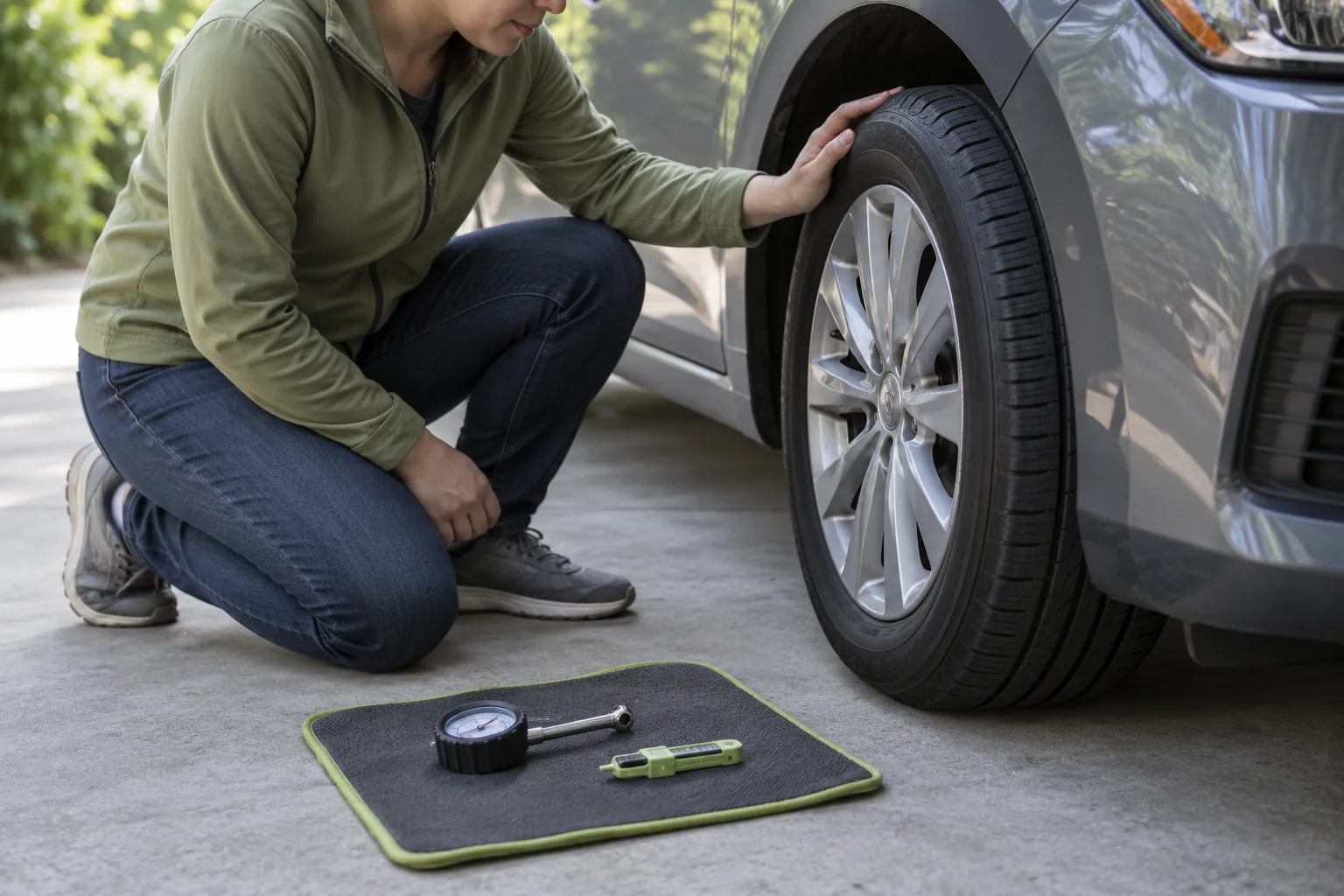
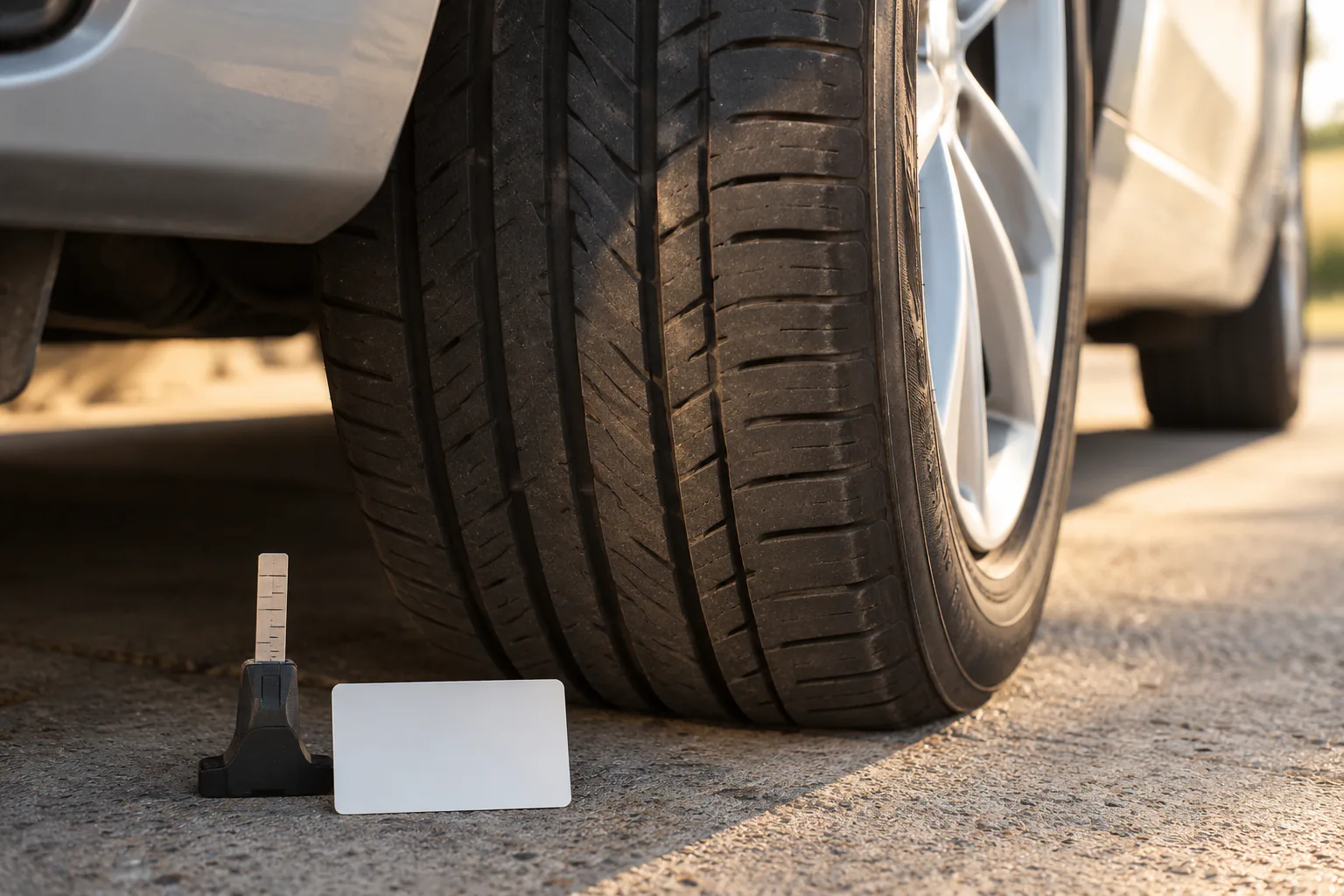
Uneven tire wear is a pattern that narrows questions; it is not a parts diagnosis. Pressure, load, rotation, alignment, balance, wheel damage, suspension condition, road impacts, driving patterns, and tire construction can interact. A chart that maps one pattern directly to one failed component skips the measurements needed to confirm the cause.
Inspect safely on level ground with the vehicle parked and brakes cool. Do not reach under a vehicle, use a jack as the only support, or run a hand across exposed cords or sharp damage. A bulge, separation, exposed internal material, rapidly falling pressure, or severe vibration calls for prompt professional evaluation and may make continued driving unsafe.
Measure before interpreting
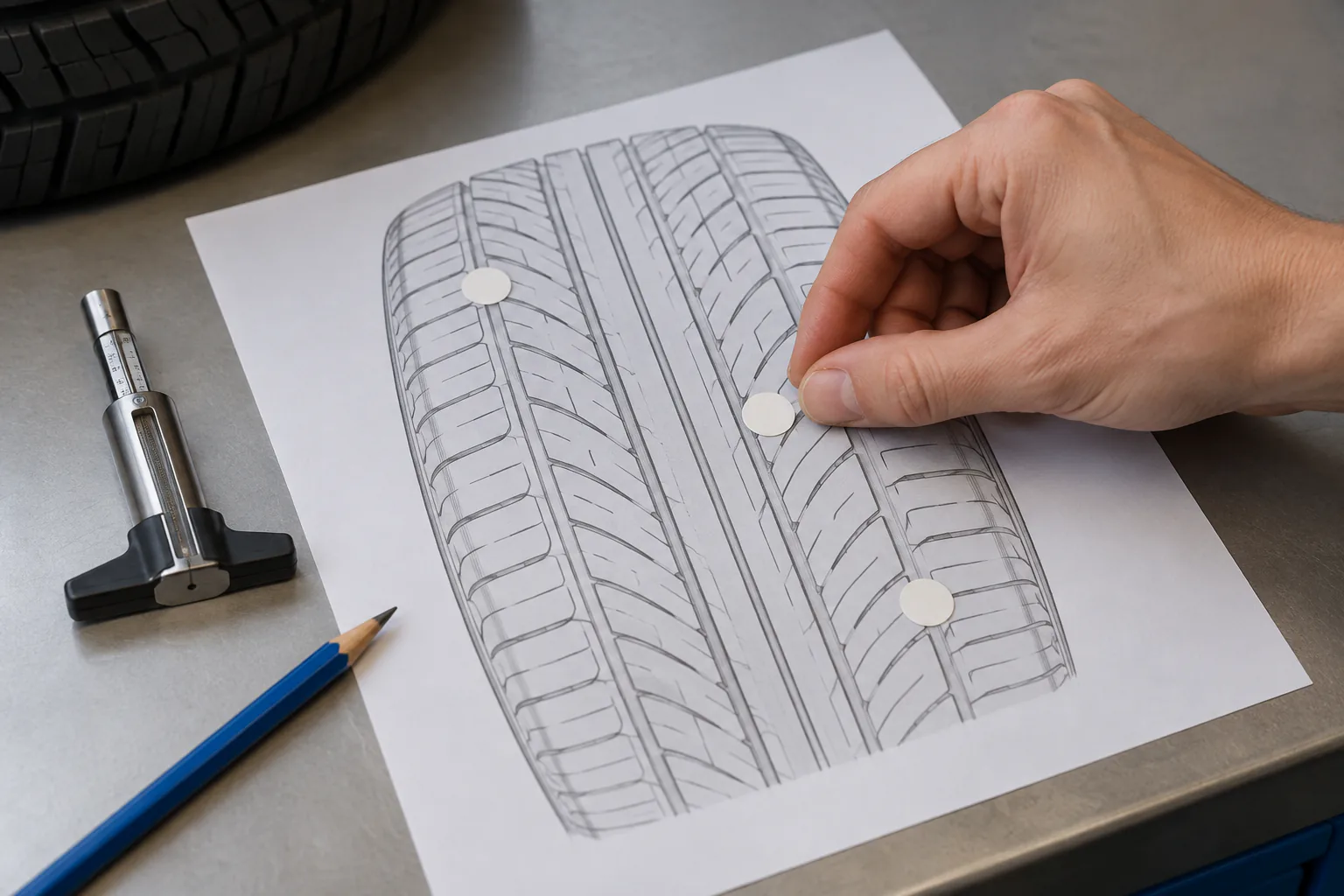
Record cold pressure at all positions using the vehicle label, not the sidewall maximum, as the target. Then measure tread depth at the inner shoulder, center, and outer shoulder in several places around each tire. Note tire position, date, mileage, rotation history, and any TPMS warning, pulling, noise, or vibration.
Photograph the full tread and a close view with a measurement reference. Lighting can exaggerate or hide patterns, so photographs supplement rather than replace numbers. Compare paired positions and previous records when available.
NHTSA recommends monthly pressure and tread checks and explains that rotation can reduce irregular wear. The owner's manual determines whether and how the vehicle's tires can be rotated; staggered sizes or directional tires can limit patterns.
Shoulder, center, and one-edge patterns
Wear at both shoulders can be consistent with operation at insufficient pressure, while greater center wear can be consistent with excessive pressure in some circumstances. Those are possible categories, not verdicts. Verify actual pressure history, gauge accuracy, load, and tire-maker information. Modern constructions and mixed use do not always produce textbook patterns.
Wear concentrated on one edge can justify an alignment and component evaluation. It does not identify which adjustment or part is responsible. Road crown, damage, ride height, alignment settings, and worn or bent components may need to be distinguished by measurement.
A feathered feel or diagonal pattern can suggest alignment or mechanical questions, but touching damaged tread can be hazardous. Describe the visible direction and leave physical evaluation to a qualified professional when the surface is sharp or integrity is uncertain.
Cupping, isolated spots, and irregular patches
Scalloped or cupped areas, flat spots, and repeating patches can be associated with balance, damping, alignment, braking events, storage, or mechanical movement. Frequency and location matter. Record whether vibration changes with speed or braking, but do not deliberately drive at an unsafe speed to reproduce it.
An isolated damaged area may result from impact or road debris rather than a maintenance pattern. A sidewall bulge is structural damage, not an alignment clue to monitor casually. An object embedded in the tread should remain in place until inspected; removing it can accelerate air loss.
Compare wear with rotation and vehicle layout
Rotation can redistribute wear only when the vehicle and tires permit the pattern. NHTSA tells owners to consult the manual, noting that some front/rear size combinations cannot be rotated normally. Directional, asymmetric, dual-wheel, all-wheel-drive, and replacement configurations can add constraints.
If one position repeatedly develops abnormal wear after proper inflation and allowed rotation, preserve the history. It can help a technician separate a recurring vehicle condition from a single damaged tire. Do not use rotation to hide a rapidly progressing pattern.
Ask for confirming evidence
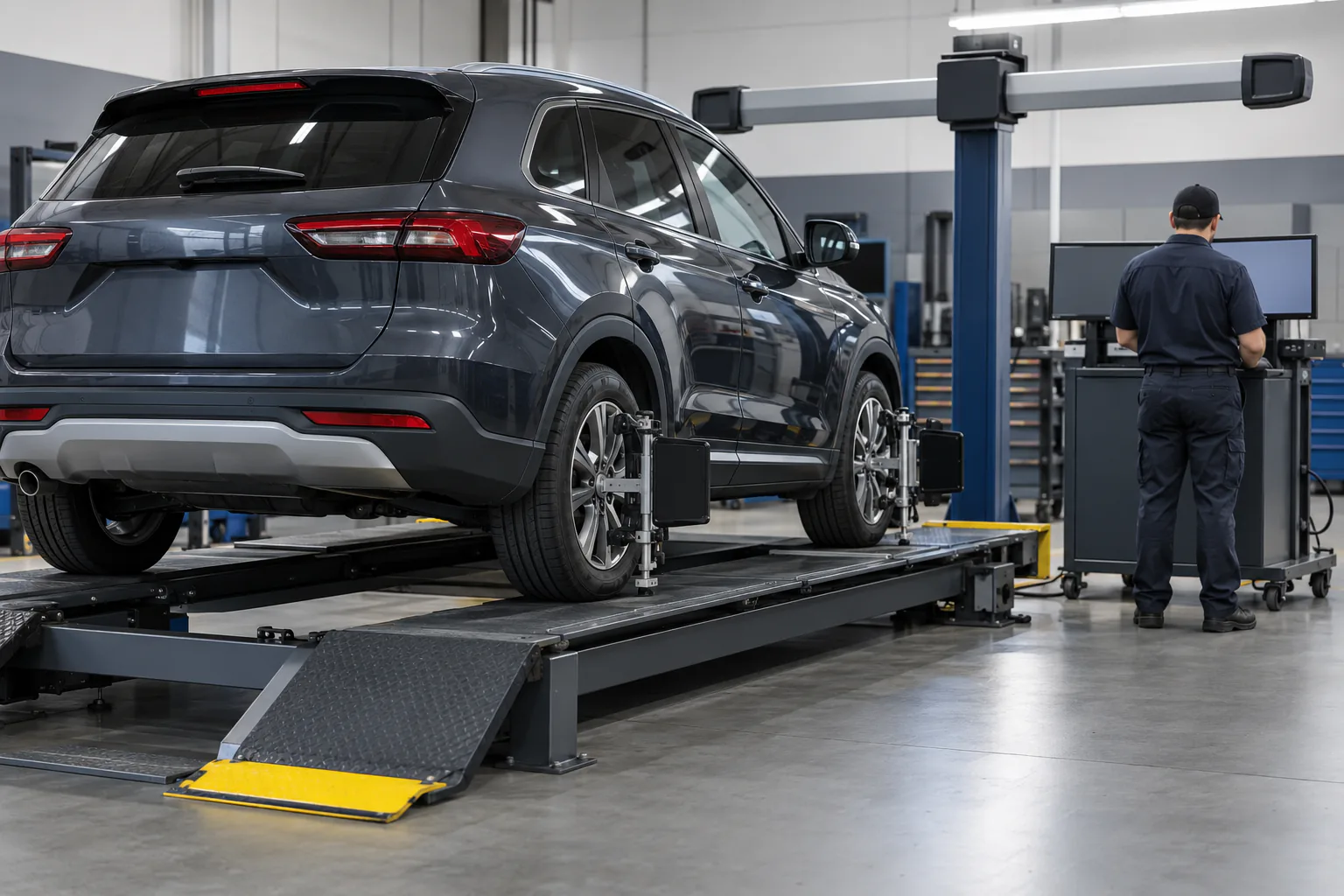
A useful inspection can include tread measurements by position, cold pressures, alignment readings, balance findings, wheel runout or damage observations, suspension and steering checks, load discussion, and the tire manufacturer's limits. Ask which result supports each recommendation.
The Bridgestone/Firestone maintenance manual provides tire-maker guidance on inflation, damage, rotation, service life, and mixing. Its expertise is relevant, but it is manufacturer material. Cross-check neutral NHTSA guidance and the exact vehicle manual, especially for replacement and rotation decisions.
If alignment is recommended, request before-and-after readings and the vehicle specification used. If a part is recommended, ask how its condition was established. “Uneven wear” proves the tire's outcome; it does not by itself prove the proposed cause.
Build a trend before the pattern disappears
Create a position map with four boxes and record pressure, inner/center/outer tread readings, photographs, and mileage. Repeat at a consistent interval or after a rotation. When tires move, record the old and new positions. Without that step, the wear history becomes detached from the vehicle corner where it developed.
Note impacts, repairs, alignment work, wheel changes, and sustained changes in load. These events do not prove causation, but they give an inspector useful timing. Preserve the repair order and any alignment printout.
If replacement is required, photograph and measure the old tire before disposal when safe. Ask the provider to document the reason and whether another condition must be corrected to protect the replacement. A fresh tire can erase visible evidence while leaving the originating pressure, alignment, wheel, load, or component issue unresolved.
Trend records should not delay action. A structural defect, exposed material, rapid pressure loss, or unsafe handling is not something to monitor for another month. The record supports the decision; it does not overrule tire integrity.
Decide the next action
Continue routine monitoring only when tread and pressure remain within applicable limits, no structural damage or serious symptom is present, and the pattern is stable or explained. Schedule inspection when wear is progressive, meaningfully different across the tire, paired with pulling or vibration, or unsupported by known pressure or rotation history.
Stop normal use when structural integrity is in doubt, internal material is exposed, pressure cannot be maintained, or the vehicle behaves unsafely. Follow professional and manufacturer instructions for transport.
The most useful conclusion from uneven wear is often a better question: which measurements distinguish pressure, alignment, balance, load, tire, wheel, or component factors here? Treating the pattern as evidence keeps that question open long enough to reach a defensible answer.
After correction, continue measuring. Improvement across the next interval is evidence that the intervention addressed the pattern; a repeat pattern is evidence to reopen the investigation, not simply rotate the tires again.
Retain the baseline even after replacement. It gives the next technician a dated comparison and prevents the new tire's clean appearance from erasing the earlier pattern.