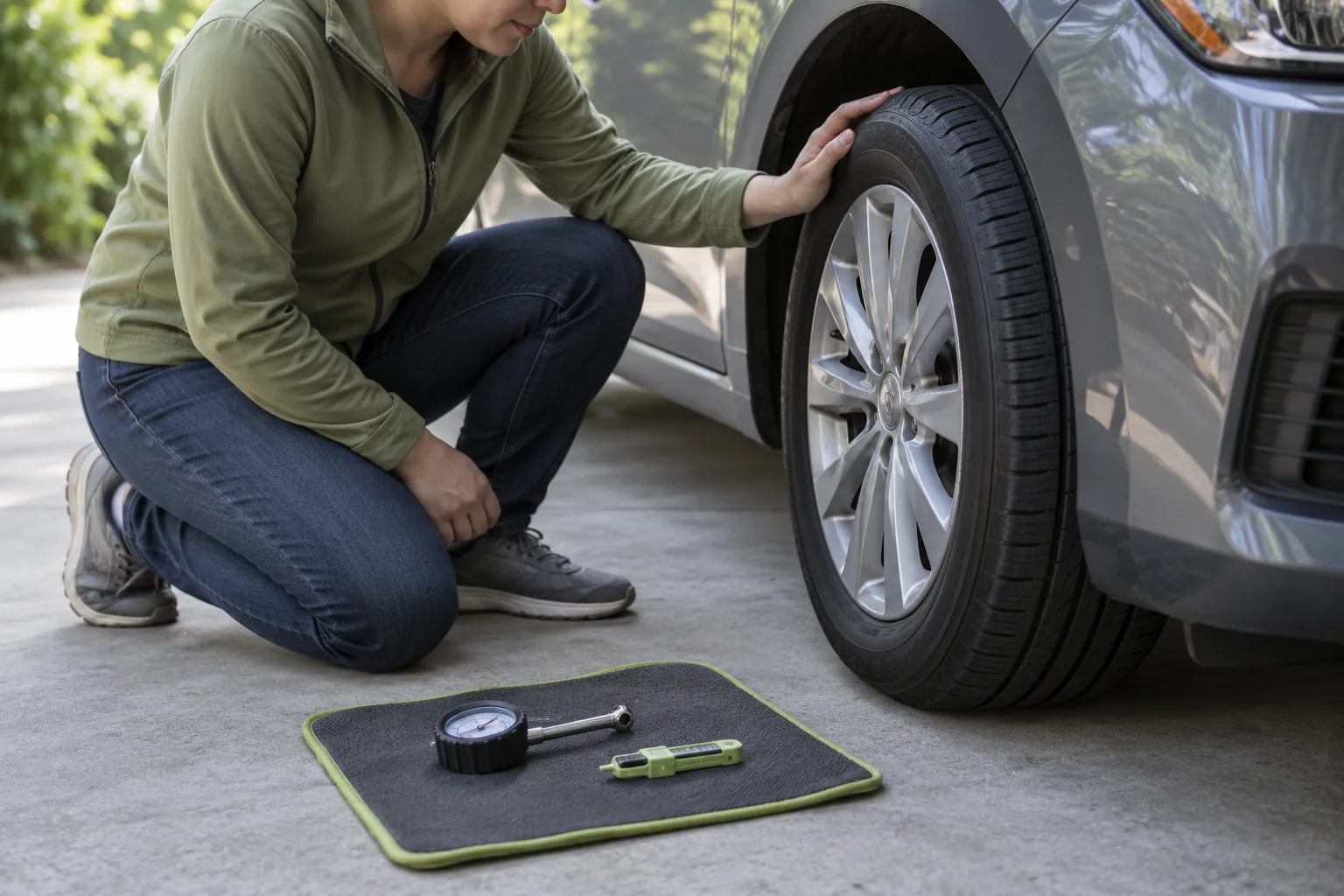
A tire check should combine three different kinds of evidence: pressure measured with a gauge, tread measured across the tire, and visible condition observed on the tread and sidewall. None replaces the others. A tire can look normal while underinflated, have acceptable tread depth but serious damage, or show uneven wear that needs professional evaluation.
Work in a safe, well-lit location away from traffic. Do not inspect a vehicle supported only by a jack, reach behind a wheel near hot brakes, or remove an embedded object. If a tire is visibly collapsing, bulged, cut to internal material, separating, smoking, or rapidly losing pressure, do not continue normal driving.
Find the vehicle's pressure target
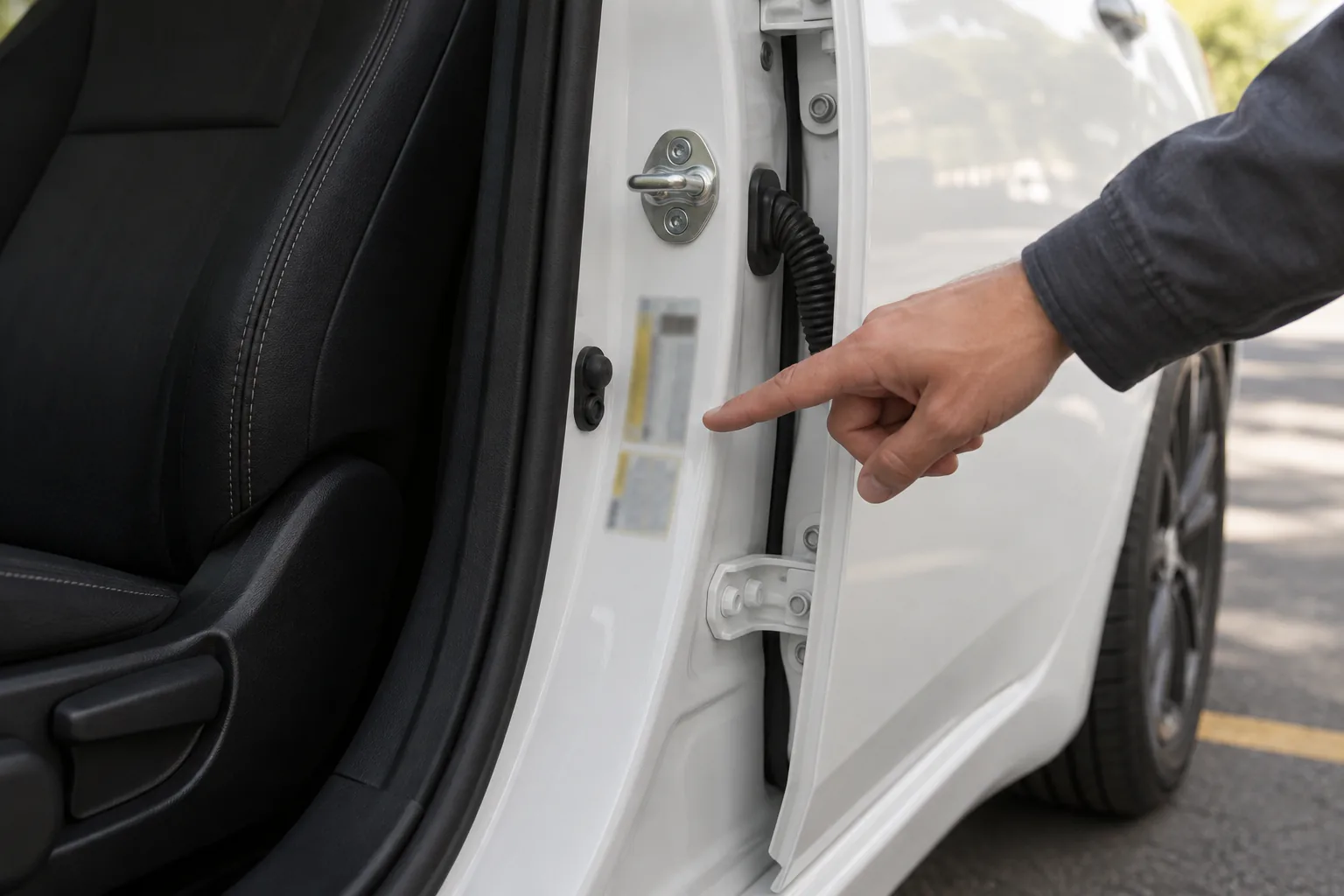
Locate the Tire and Loading Information label, usually on the driver's door edge or door pillar, and confirm with the owner's manual. NHTSA states that the vehicle manufacturer's recommended cold pressure—not the maximum pressure molded on the tire sidewall—is the correct reference.
The front and rear targets may differ. A temporary spare or full-size spare may have its own requirement. If wheels, tires, load configuration, or vehicle use have been modified, consult qualified guidance rather than assuming the original label answers every setup question.
Measure cold pressure
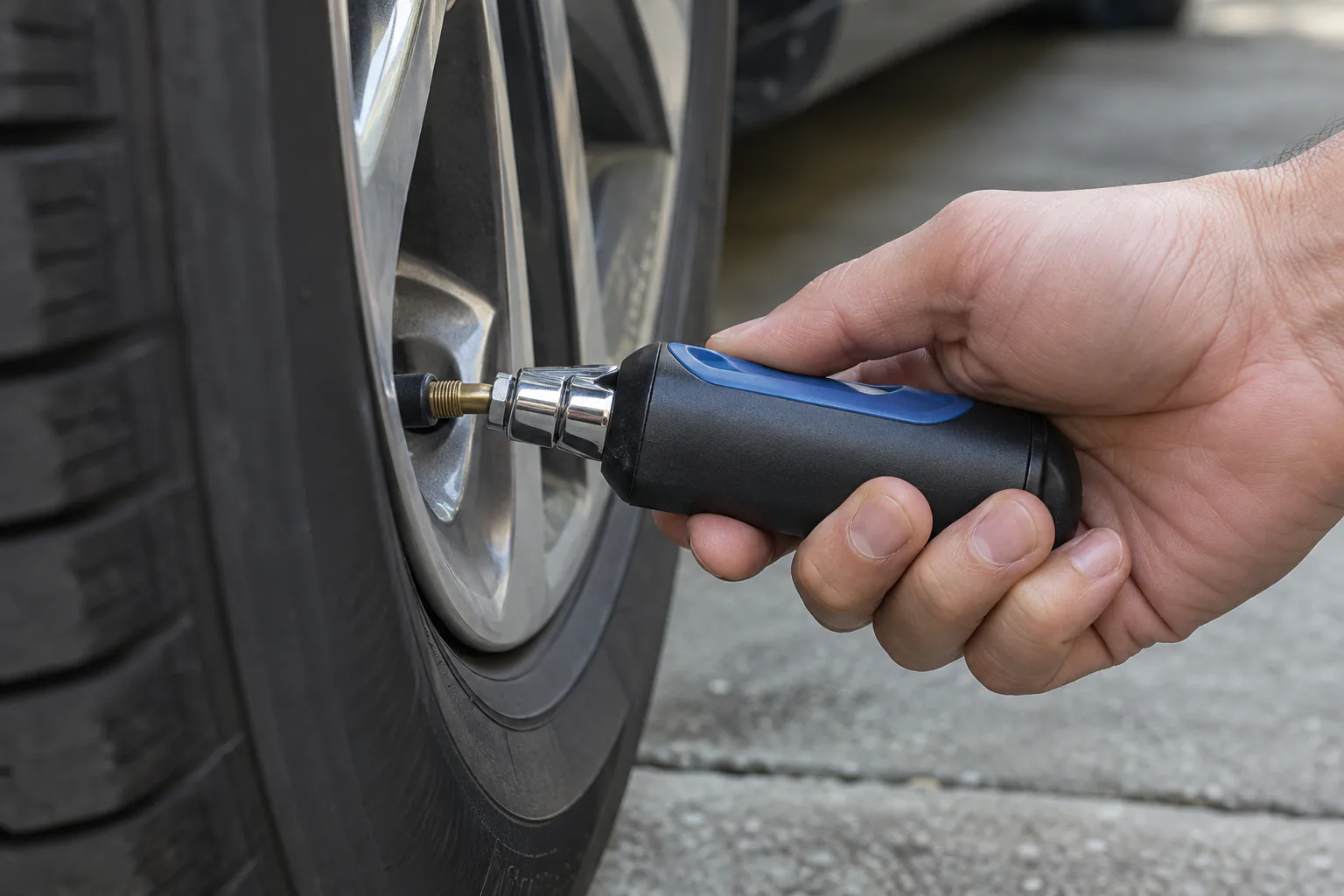
NHTSA defines a cold reading as one taken after the vehicle has not been driven for at least three hours. Remove the valve cap, press an accurate gauge squarely onto the valve, and read the result. Repeat if air hisses around the gauge or the reading seems inconsistent. Check every road tire and the spare if applicable.
Compare each reading with the correct front or rear label value. Add air in small increments and recheck. If pressure is too high while the tire is genuinely cold, release small amounts and measure again. Replace the valve cap.
Check the gauge itself before trusting a surprising number. A damaged seal, weak battery in a digital gauge, dirt at the valve, or poor seating can produce inconsistent readings. Take two readings and compare the gauge with a second reliable gauge when results change sharply without an obvious reason. Record which gauge was used so later comparisons are meaningful.
If you had to add a large amount, record the result and recheck soon. A repeated loss needs professional inspection. Do not pull a nail or screw; it may be slowing the leak. Temperature changes can alter pressure, so a warning that appears on a cold morning still deserves a gauge check.
TPMS is not a substitute for this routine. NHTSA explains that the warning means at least one tire is significantly underinflated, and a flashing sequence followed by steady illumination can indicate a system malfunction. Use the exact manual for the vehicle's behavior and reset procedure.
Measure tread across the width
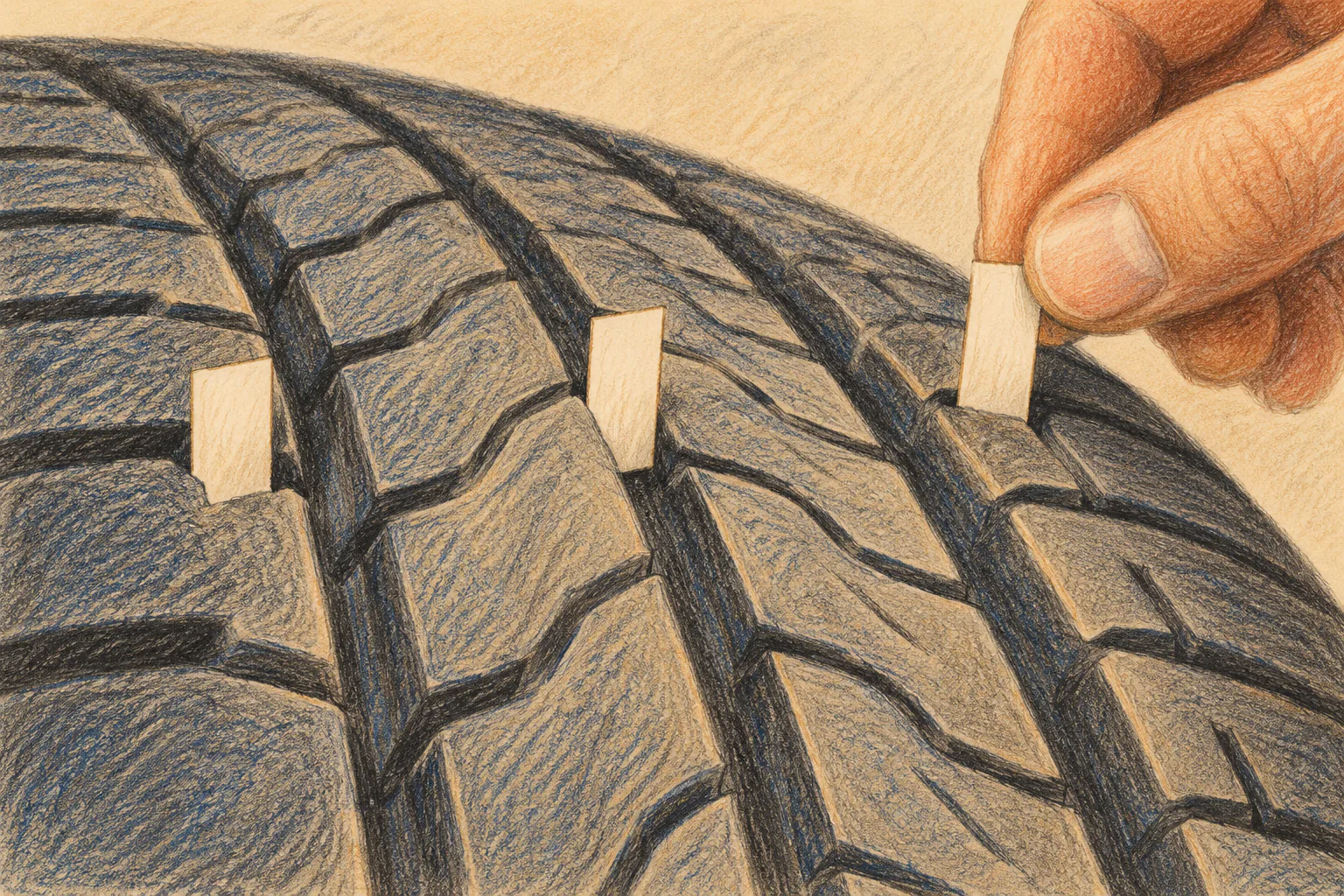
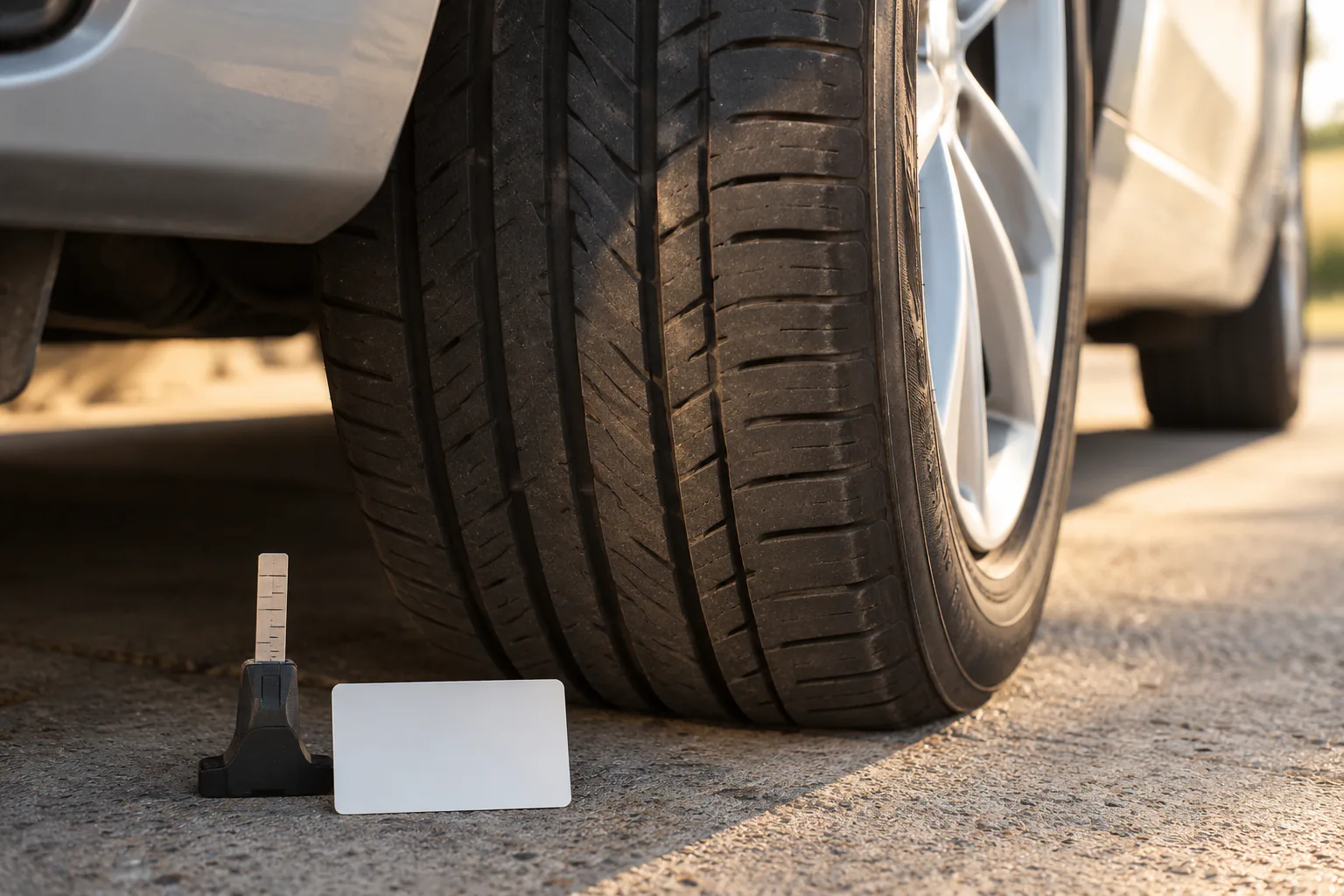
Use a tread-depth gauge at several points around and across each tire, avoiding raised wear bars when taking the reading. Record the inner, center, and outer measurements. NHTSA identifies 2/32 inch as the U.S. minimum at which a tire should be replaced and describes both built-in treadwear indicators and the penny check, but local law and wet- or winter-weather needs can justify earlier professional advice.
One measurement is not enough. A tire with adequate depth at the center may be worn at an inner shoulder that is harder to see. Turn the steering wheel only when safely parked if that improves access to the front tread; keep hands clear of mechanical hazards and never place part of your body under the vehicle.
If wear bars are level with the adjacent tread, cords or internal material are visible, or measurements reach a legal or manufacturer limit, stop treating the check as routine monitoring. Arrange replacement or qualified evaluation.
Inspect visible condition
Look for cuts, cracks, bulges, bubbles, punctures, missing chunks, exposed material, separation, and objects lodged in the tread. Examine both sidewalls where visible. NHTSA also recommends attention to vibration, noise, inability to maintain pressure, and irregular wear.
Do not decide that a puncture is repairable from its appearance. Repairability depends on location, size, internal damage, prior operation while underinflated, tire design, and industry or manufacturer requirements. An external plug kit is not a universal permanent repair.
Check the DOT Tire Identification Number when age is relevant. NHTSA notes that the last four digits identify week and year of manufacture, and that some vehicle and tire manufacturers recommend replacement in a six-to-ten-year range regardless of tread. Use the applicable manufacturer guidance; appearance alone cannot establish aging risk.
Interpret patterns without diagnosing parts
Wear concentrated at both shoulders, the center, one edge, or isolated spots can suggest categories such as inflation, alignment, balance, rotation, loading, or component issues. It does not prove a single cause. Record the pattern and measurements, then seek an inspection when the wear is material, progressive, or paired with pulling or vibration.
The Bridgestone/Firestone maintenance manual is useful manufacturer material on inflation, damage, service life, rotation, and replacement, but it represents a tire maker. Cross-check the vehicle manual and neutral safety guidance before applying a recommendation.
Finish with a usable record
Record date, odometer, cold pressure for each position, tread readings, visible findings, TPMS status, and action. Recheck after a major temperature change, pothole or curb impact, persistent warning, repair, or unexplained pressure loss. NHTSA recommends monthly pressure and tread checks.
Successful tire care is not a glance and not a single number. Use the vehicle label for pressure, measure when cold, sample tread across the width, inspect for damage, and escalate anything that threatens integrity or refuses to stay stable.
After adjustment, drive only if the tire has no serious damage and maintains pressure. Recheck cold at the next safe opportunity. A repeated loss is not solved by repeatedly adding air; the leak and any damage from underinflated operation require evaluation. If the vehicle uses sealant or a mobility kit, consult its instructions, expiration date, and speed or distance limits before an emergency occurs.
Treat measurements as a trend. A one-psi difference between gauges is not the same problem as one tire repeatedly losing a large amount. Dates, positions, temperatures, and repeat readings help separate a stable seasonal change from an active leak without pretending to diagnose the tire internally.