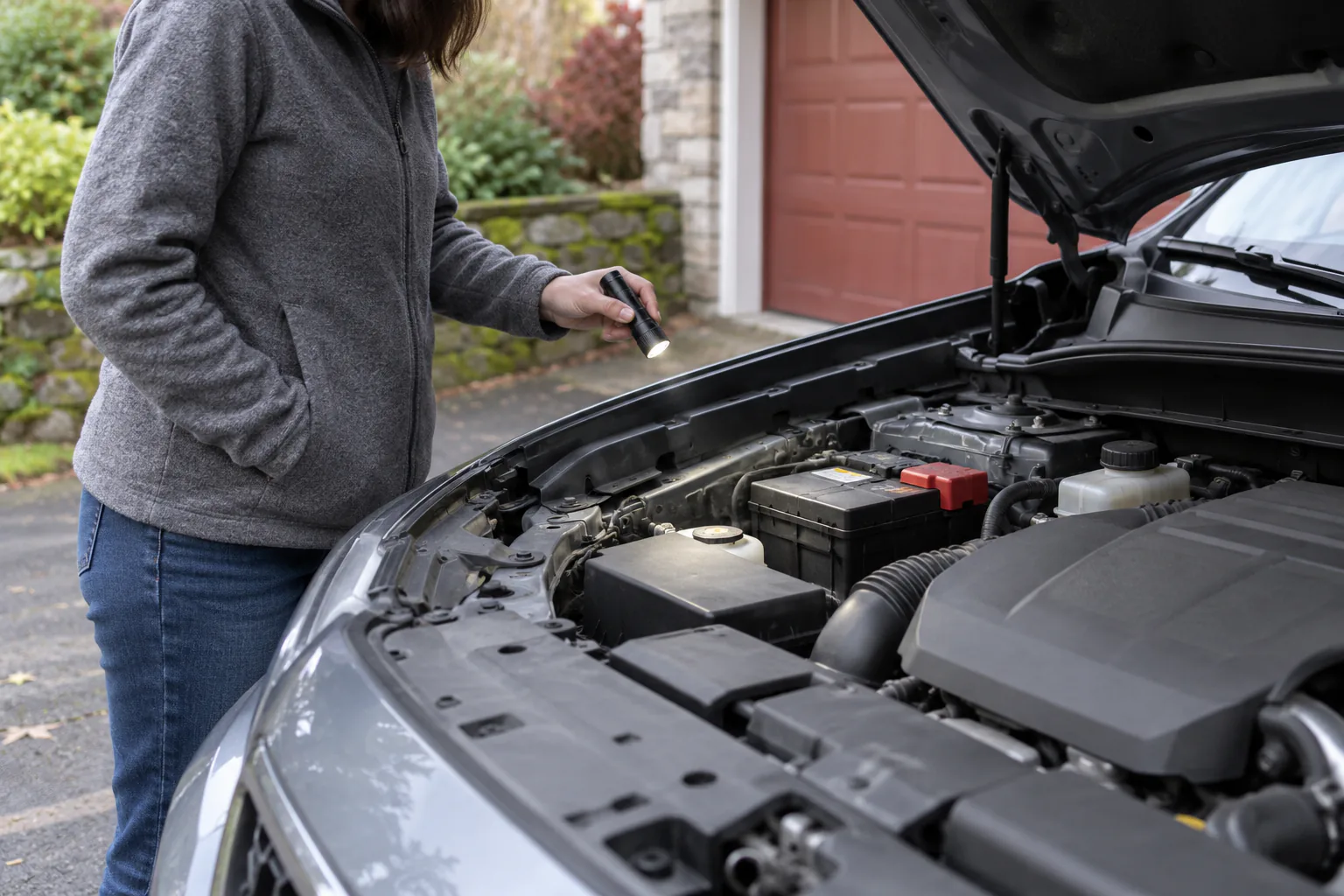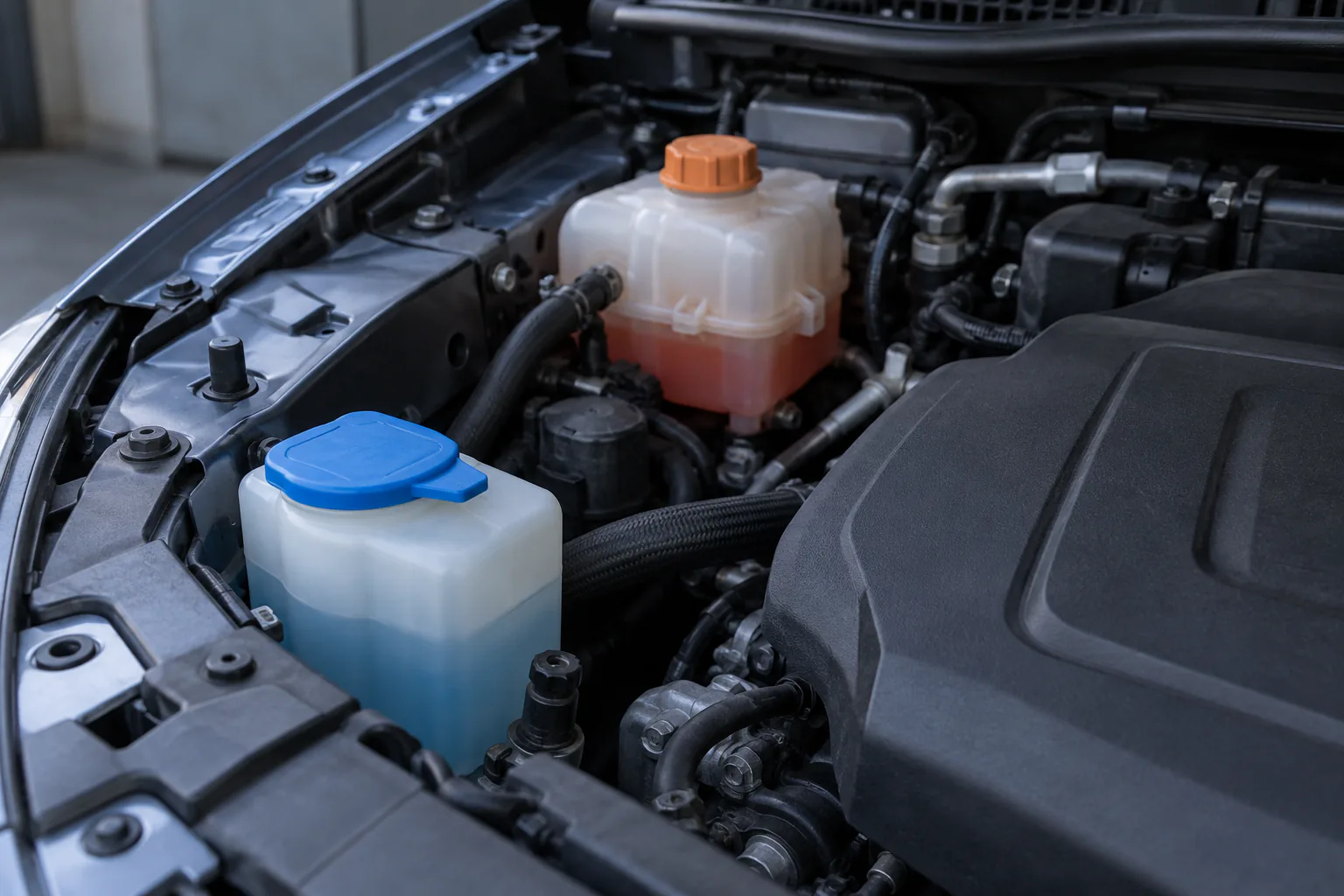

There is no single engine-oil checking sequence for every car. Some manuals require a warm engine followed by a waiting period; others specify cold conditions. Some engines use a dipstick, some an electronic display, and some limit what the owner can measure. Begin by identifying the system and exact vehicle state in the owner's manual.
Park on level ground, apply the parking brake, and keep clear of traffic. Stop for smoke, fire risk, severe leakage, overheating, or an oil-pressure warning that the manual says requires immediate shutdown. A level check does not prove oil pressure.
Determine which measurement system you have
Use the manual's engine-compartment diagram and instrument instructions. A physical dipstick usually has a colored handle and marked range. An electronic system may place oil level in a service menu and impose temperature, parking, or waiting requirements.
Do not assume a sealed tube or unfamiliar cap is a dipstick. Do not confuse engine oil with transmission fluid. If the manual does not provide an owner procedure, arrange qualified service.
Record the approved oil grade and specification before buying anything. Viscosity alone may not be the complete requirement. Keep the source page or official URL with the vehicle records.
Follow the dipstick procedure exactly
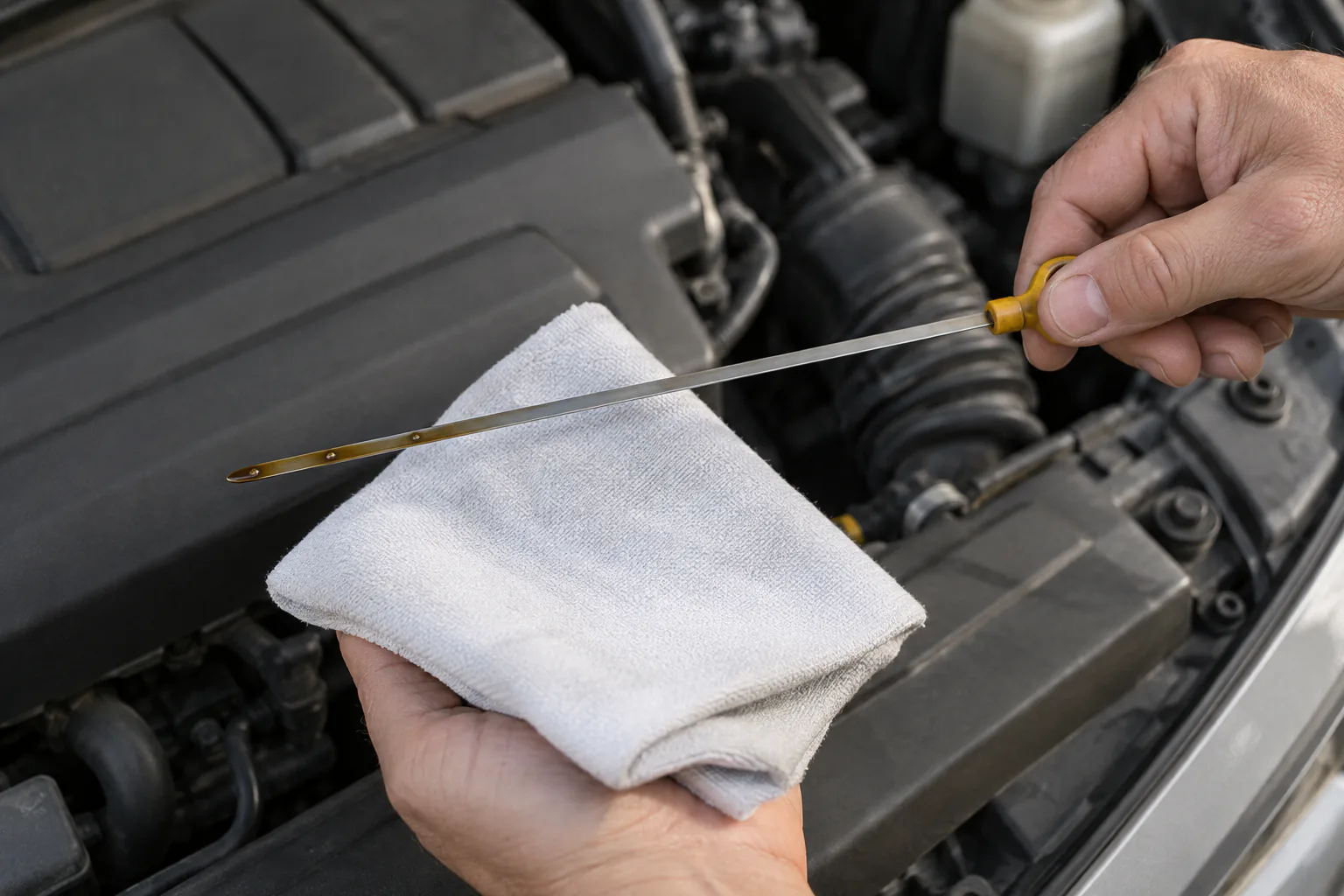
Use the engine state and waiting time in the manual. The wait allows oil to drain to the sump and reduces contact with hot or moving components. Switch the engine off, remove the correct dipstick, wipe it with a clean lint-free material, fully reinsert it, then withdraw it to read both sides.
The valid reading is within the manufacturer's marked range. Smearing, an uneven line, or different sides may require another clean reading. Do not estimate volume from the distance between marks unless the manual states the amount.
If adding is authorized, use the specified oil and add small amounts through the identified filler. Wait as directed and recheck. Overfilling can be harmful, so do not pour in a full container simply because the level is near the lower mark. Secure the filler cap and dipstick.
Follow electronic-level conditions

Electronic systems can refuse a reading until the vehicle is level, the engine reaches a defined temperature, the engine has been off for a set period, or another condition is met. Read the display wording. “Measurement unavailable” is not the same as “low.”
Do not cycle or drive the vehicle in an unsafe way just to force a reading. If the display repeatedly fails under the correct conditions, record the message and obtain service. An electronic value can still be affected by vehicle state or a system fault.
After adding oil, wait and remeasure according to the manual. Do not keep adding while the display is updating.
Interpret warnings separately
An oil-pressure warning indicates a lubrication-pressure problem or detected condition requiring the exact manual response. Even a full dipstick does not establish pressure. Stop the engine when directed and arrange assistance.
A low-level message may allow a different response, but only the vehicle's manual can define it. Identify the symbol and words rather than calling every oil icon an “oil light.”
Noise, smoke, strong odor, a major leak, rough operation, or a warning paired with symptoms increases urgency. Do not continue driving to see whether a top-up clears it.
Look for trends
Record date, mileage, engine state, reading, amount and specification added, warning status, and visible leaks. Compare equivalent conditions. A one-time ambiguous reading is less useful than repeated results taken correctly.
The FTC lists excessive oil use as an engine-trouble symptom, but a generic threshold should not replace the vehicle manufacturer's guidance. If oil regularly needs adding, level changes quickly, or smoke and stains appear, arrange diagnosis. Topping up maintains level; it does not repair consumption or leakage.
Resolve difficult readings
Fresh oil can be hard to see on a dipstick. Use bright light and a clean background, read both sides, and repeat after fully reinserting. Do not scratch, bend, sand, or mark the dipstick. If the oil smears far above the range, confirm the waiting time and tube contact before concluding it is overfilled.
On an incline, move the vehicle only if it is otherwise safe to operate, then repeat on level ground. A level reading taken on a slope is not suitable for deciding how much to add. If the engine has just run, wait the manual's specified time rather than choosing an arbitrary interval.
If no oil appears, do not repeatedly start the engine to warm it or make the electronic display work. Confirm the procedure, check for major leakage, and obtain qualified help. If the level appears above the maximum, do not assume the excess will burn off safely; verify and correct it through an approved method.
Milky residue on a filler cap, fuel odor, metallic material, foam, or an unexpectedly rising level needs context and diagnosis. Short-trip condensation can affect some observations, but an article cannot distinguish it from contamination or another fault remotely.
Oil changes and level checks are different
A recent oil change does not guarantee the current level, correct specification, or absence of a leak. Check the invoice for product and quantity, then verify level under the approved condition. If the cap, drain area, or filter area appears wet after service, contact the provider and avoid touching hot components.
Conversely, adding oil does not reset the maintenance reminder or replace an oil change due under the schedule. One action corrects level; the other renews oil and filter according to a specified procedure.
Avoid contamination and burns
Keep dirt, fragments, and the wrong fluid out of the filler. Store oil in its labeled container and clean spills according to the manual. Hot exhaust and engine components can burn or ignite oil. Never work near moving belts or fans; some electric fans can operate unexpectedly.
Dispose of used oil and contaminated materials through an appropriate recycling program. Do not pour oil into drains, soil, or ordinary waste where prohibited.
Verify the result
A successful check ends with a stable reading in the approved range, correctly secured dipstick and cap, no new warning, and a written record. If the reading remains unclear, the level is outside the range, or a warning persists, stop repeating the same steps and seek qualified help.
The safe method branches before it begins: dipstick or electronic, cold or warm, owner-accessible or service-only. Following that branch is more important than memorizing a generic sequence.