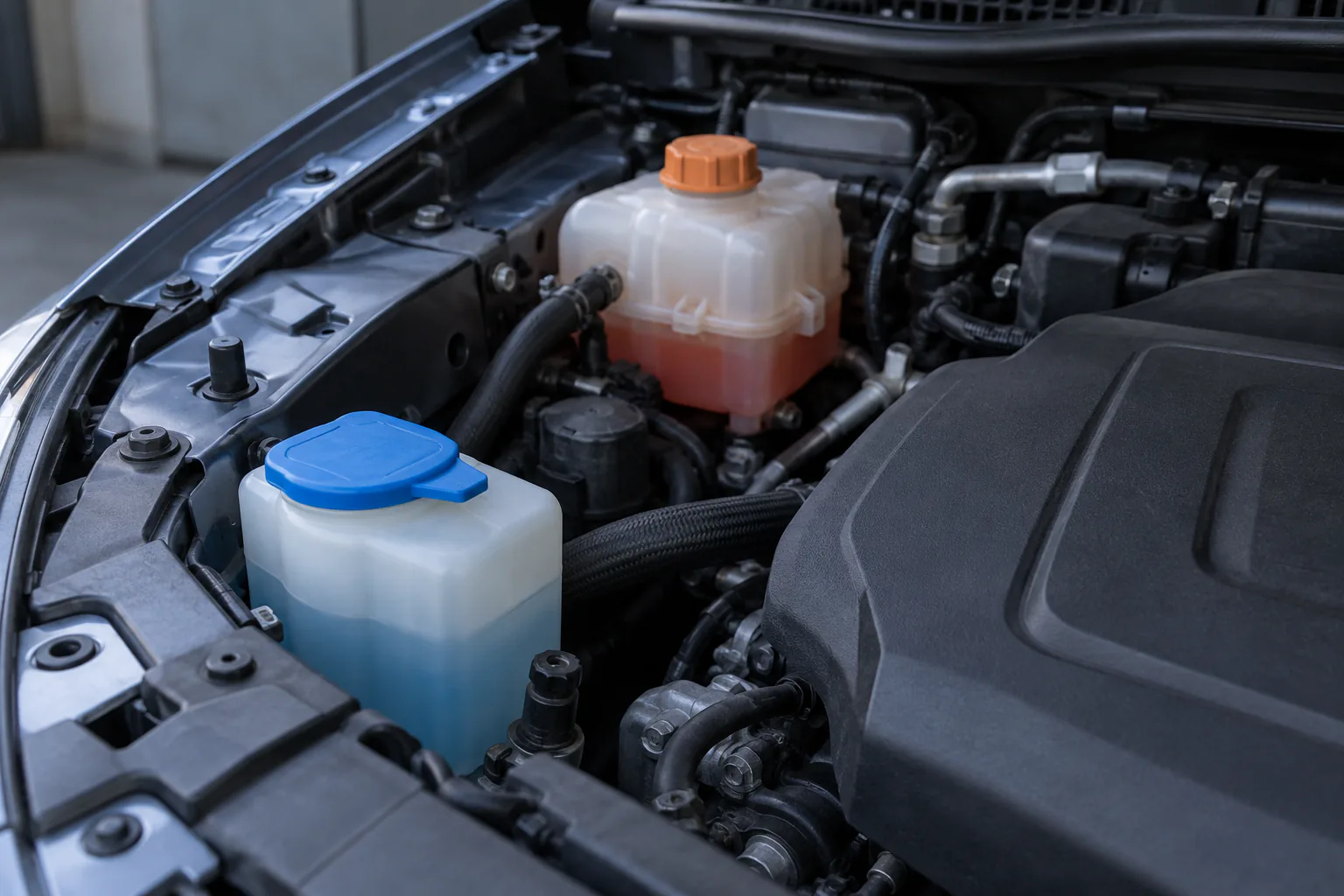
Washer fluid and engine coolant can both appear in translucent reservoirs under the hood, but that visual similarity is where the safe comparison ends. Washer fluid supports windshield cleaning and is often owner-fillable. Coolant manages engine or powertrain temperature in a pressurized system and can cause severe burns when hot. The reservoirs, fluids, specifications, and stop rules are not interchangeable.
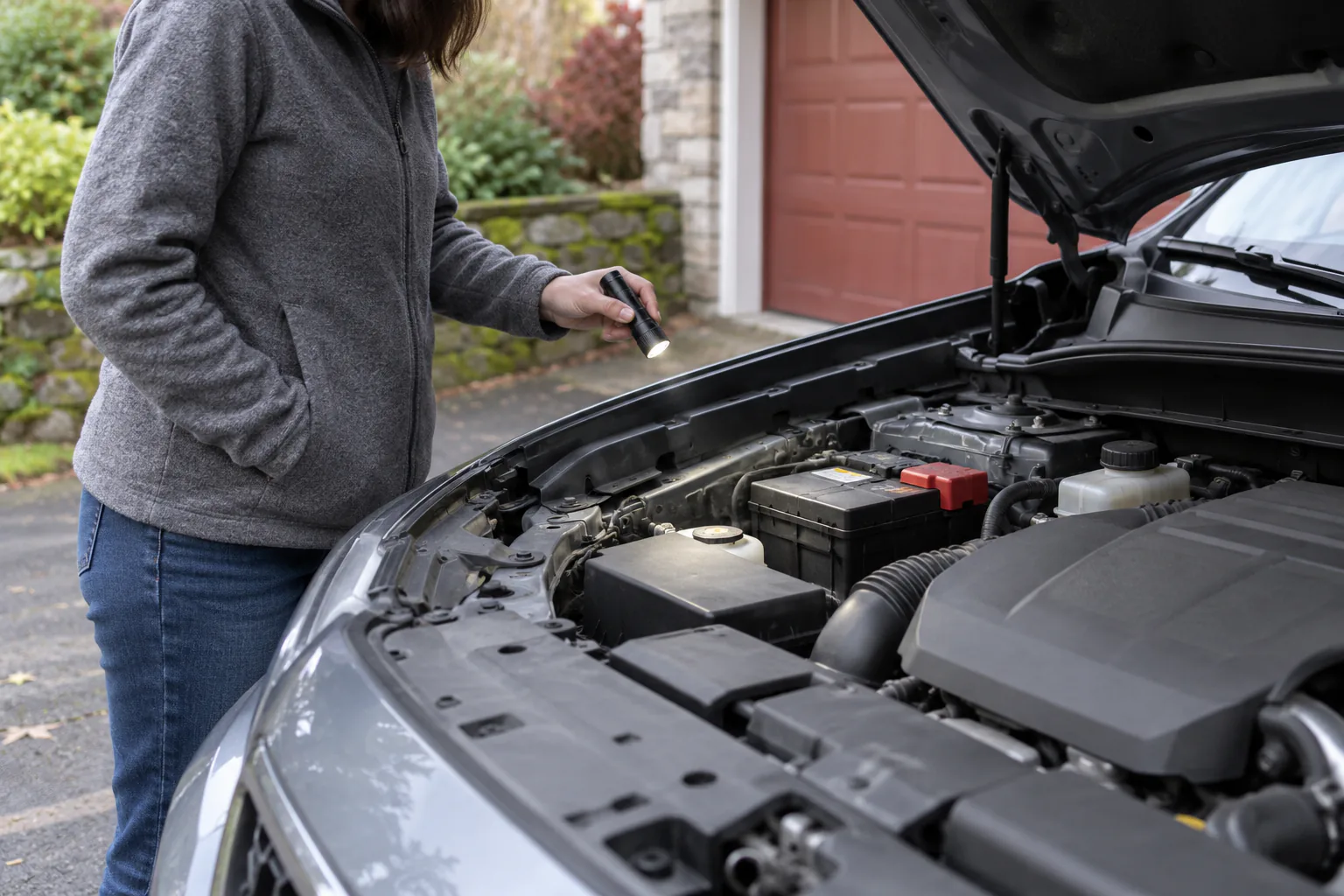
Work with the vehicle parked on level ground, the parking brake applied, and the engine off. Open the exact owner's manual before touching a cap. If the vehicle is overheating, steaming, leaking heavily, or showing a temperature warning, do not open the hood or cooling system merely to complete a check. Follow the model-specific emergency instructions.
Identify the reservoirs before opening anything
Use the manual's engine-compartment diagram. Match the cap symbol, label, shape, and location; do not identify a container by fluid color. Modern vehicles may have multiple cooling circuits, covered components, or no owner-serviceable reservoir. Hybrids and battery-electric vehicles can include power-electronics cooling systems that are not appropriate for casual topping up.
Clean loose dirt from around an owner-fillable cap without pushing debris into the system. If the label is missing, the diagram does not match, or a reservoir is inaccessible, stop. Guessing wrong can contaminate a safety-critical system.
Check and fill washer fluid
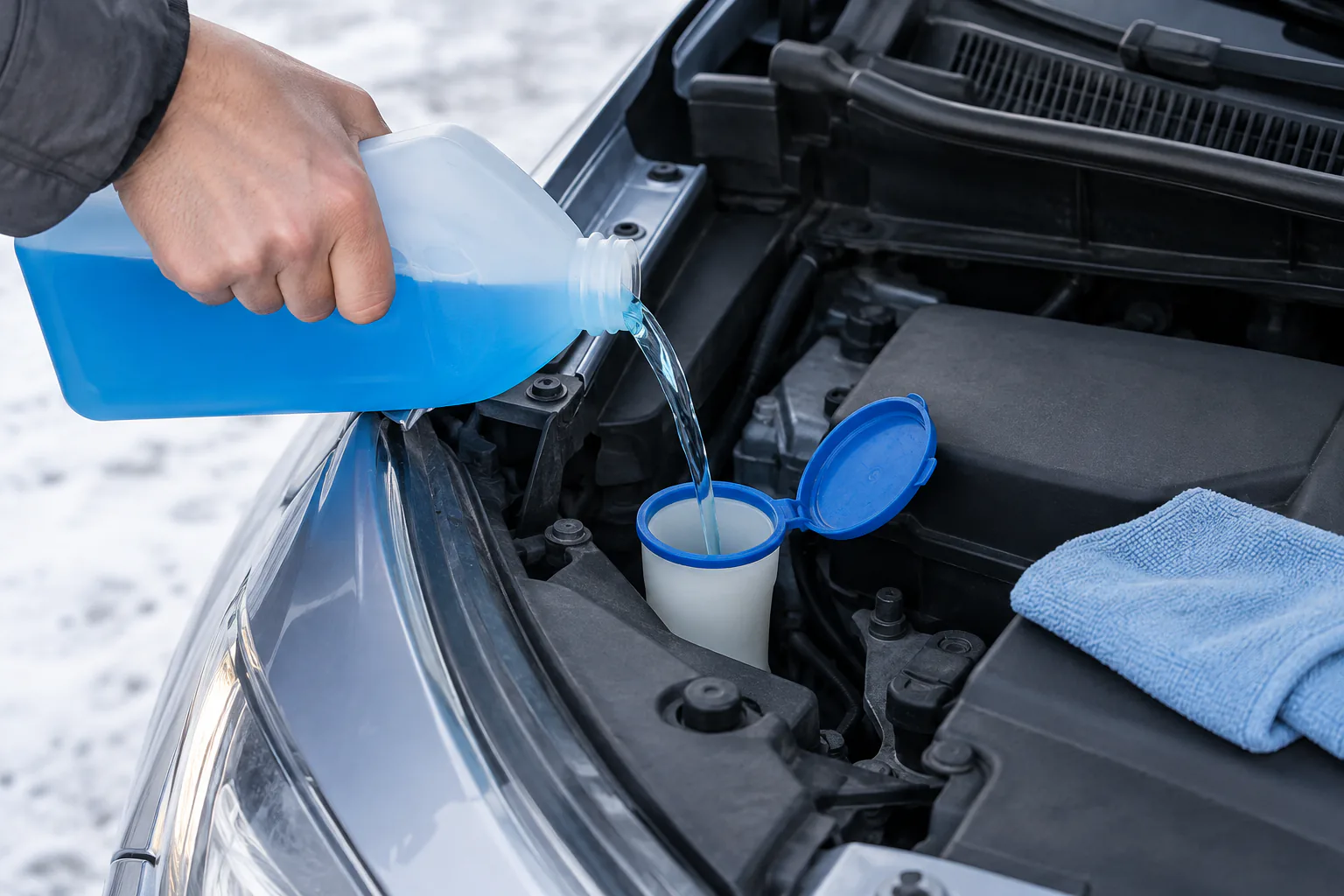
The washer reservoir usually has a windshield-and-spray symbol. Check the manual for location, permitted product, and any cold-weather requirement. Open only the identified washer cap, add fluid slowly with a clean funnel if useful, and avoid overfilling or spilling on hot components.
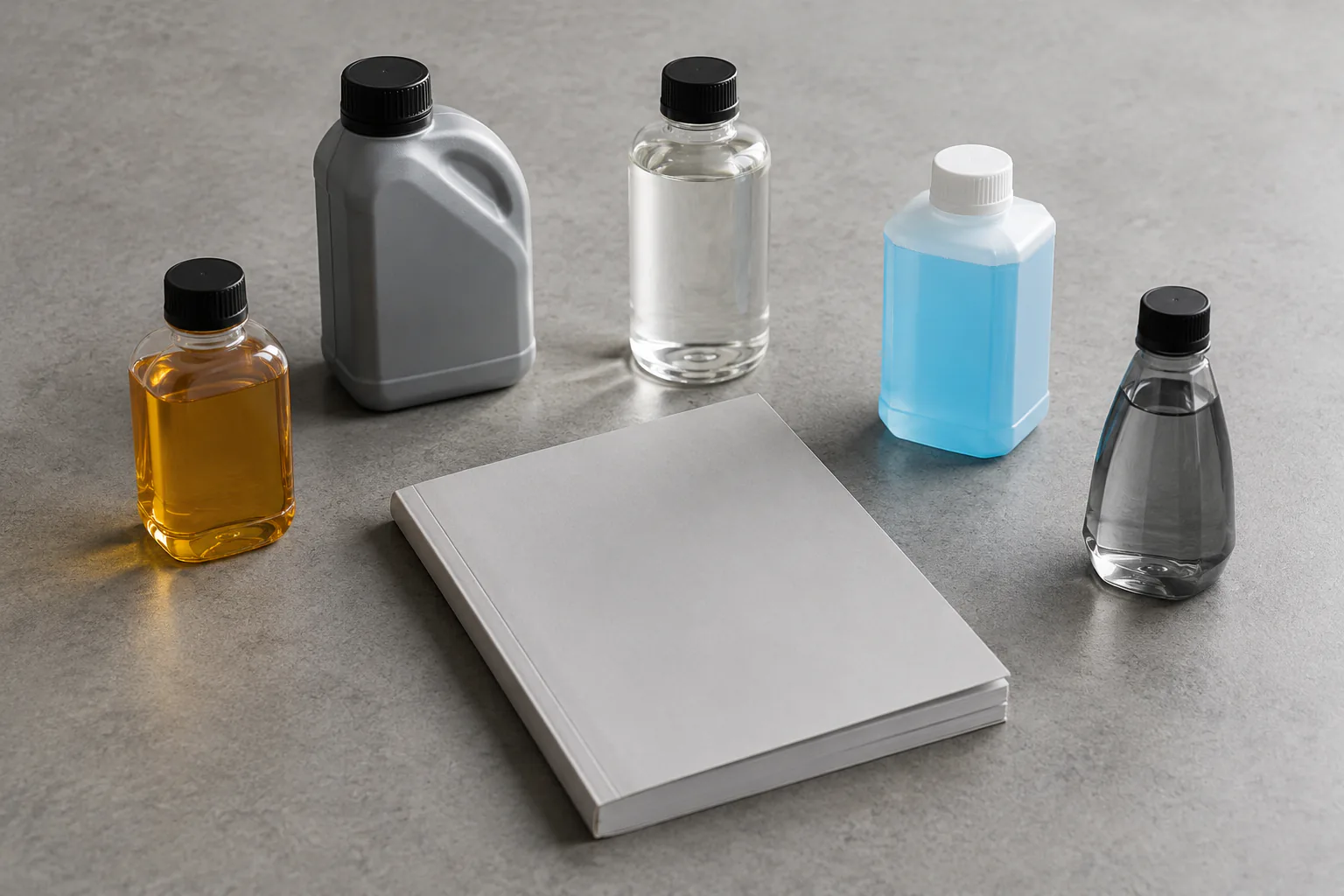
Use a washer product suitable for the expected temperature. Plain water can freeze, provide poor cleaning, encourage growth, or be inappropriate under the manual's guidance. Never pour coolant, antifreeze concentrate, household cleaner, or a mystery blue liquid into the washer reservoir.
After closing the cap, test the washers only from the driver's position in a safe location with adequate ventilation and visibility. If the pump runs but no fluid reaches the glass, stop repeated operation and investigate an empty reservoir, frozen line, blocked nozzle, leak, or model-specific fault without assuming the pump has failed.
Check coolant only under the manual's required conditions
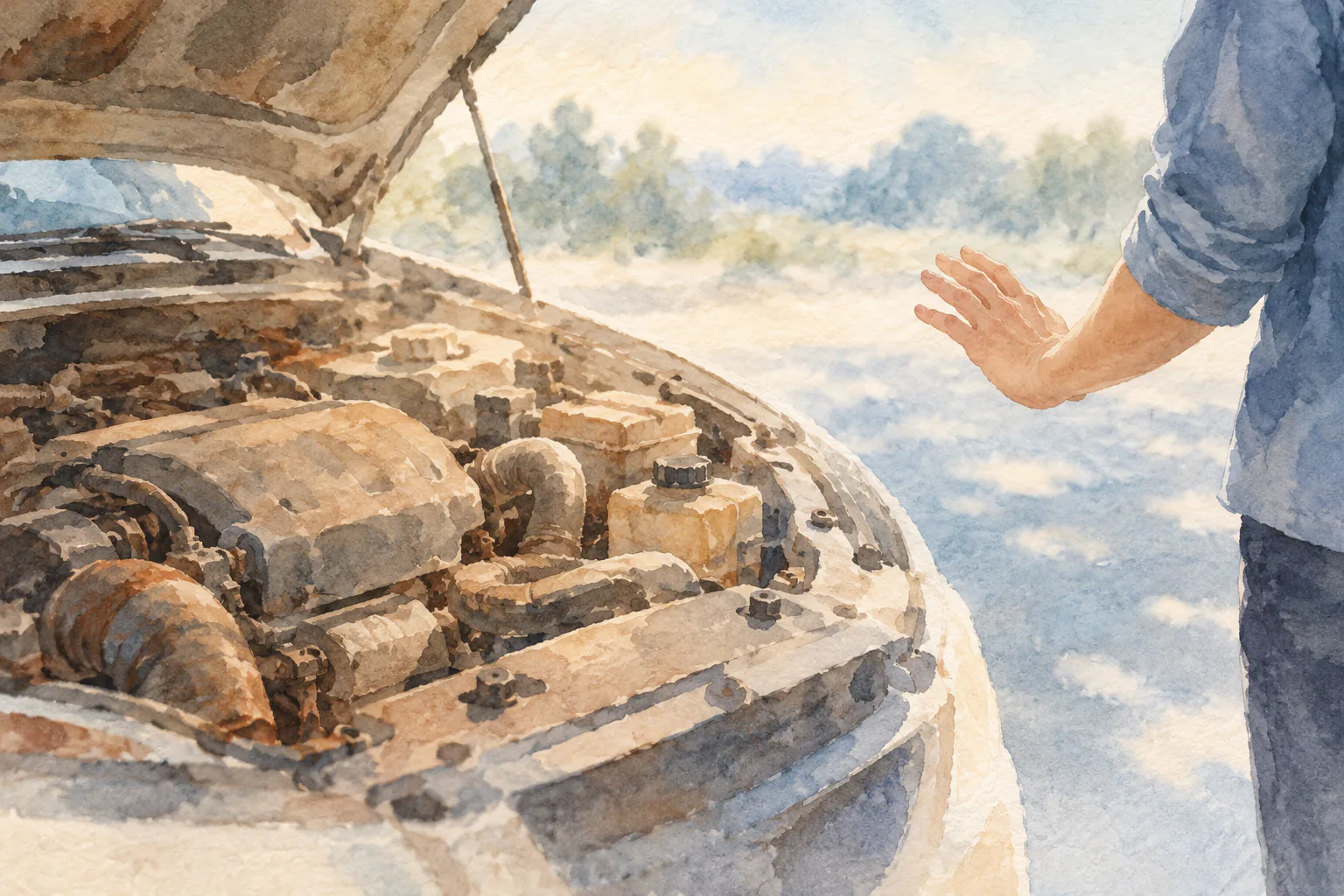
Many manuals permit a visual check of marks on an expansion reservoir when the engine is cold. “Cold” and “level” matter because coolant expands with temperature. Read the specified vehicle state and identify the correct `FULL`, `LOW`, `MAX`, or `MIN` marks.
Never remove a radiator cap, pressure cap, or hot reservoir cap. Hot coolant and steam can escape under pressure. A visible low level in a cold reservoir does not explain why coolant is missing. Repeated loss, staining, a sweet odor, wet areas, a temperature warning, or steam requires inspection.
If the manual permits owner topping-up, use only the exact coolant specification and mixing requirement. “Universal,” matching color, or the word antifreeze on a bottle is not proof of compatibility. Different chemistries can share colors, and a vehicle may require a premixed product or a defined water ratio. Use a clean, dedicated funnel and do not mix an unknown existing coolant with a guessed product.
Know when not to add fluid
Do not add coolant to make an overheating warning disappear. Adding fluid to a hot system is hazardous and may not correct circulation, fan, pump, leak, sensor, or internal faults. Do not keep driving solely because a reservoir was topped up.
Do not open a sealed, high-voltage, or specialist cooling circuit. Do not use leak-stop products unless the vehicle manufacturer and qualified repair plan specifically support them. Do not substitute washer fluid for coolant or coolant for washer fluid; if cross-contamination occurs, do not operate the system until qualified guidance is obtained.
For either reservoir, an unexpectedly empty container deserves investigation. Washer fluid may simply have been used, but rapid loss can indicate a cracked reservoir or line. Coolant loss can become an overheating and engine-damage risk.
Record the check
Write the date, odometer, engine state, observed level, product specification, amount added, and any staining or recurring loss. Photograph the product label and manual specification. A record helps distinguish normal washer use from a leak and one coolant correction from a developing pattern.
Recheck coolant only after the vehicle has returned to the same safe cold condition. If the level falls again, arrange inspection. If a warning or overheating event occurred, follow the manual even if the later level looks normal.
Resolve common confusing situations
If both reservoirs are low, treat them as two separate findings. Refill washer fluid only with the identified product and investigate why coolant is low under the manual's cold-check conditions. One event does not create a connection between the systems.
If the washer cap is open but the product specification is uncertain, close it and verify first. Climate ratings, concentrates, premixes, and water requirements differ. A product that works in warm weather can freeze when conditions change.
If coolant appears above the upper mark while hot, do not remove fluid. Expansion is part of system operation, and the manual defines the valid reading condition. Recheck cold. If the cold level is still abnormal, or fluid was recently added by someone else, have the condition assessed.
If the reservoir is stained and the level cannot be read, do not shake the vehicle or remove a hot cap. Use the permitted inspection method or qualified service. If an unidentified fluid was added to either system, stop using that system and ask how contamination should be corrected before circulating it further.
If washer spray stops during freezing weather, repeated pump operation can damage components. Move to a safe place and allow diagnosis or proper thawing; do not pour boiling water on glass or components. If coolant freezes or slush is suspected, do not run the engine for experimentation.
The practical difference
For washer fluid, the ordinary owner task is identification, climate-appropriate product selection, clean filling, and function check. For coolant, the ordinary owner task is often limited to a cold visual level check, specification verification, and escalation. The manual may authorize more or less for a particular vehicle.
Treating the two reservoirs as equivalent is the main error to avoid. Find the diagram, respect temperature and pressure, use exact specifications, and let recurring loss trigger diagnosis rather than another bottle.
Before closing the hood, account for the funnel, container cap, and any cloth used. Make sure both reservoir caps are seated according to their design and that no spilled product remains on a belt, hot surface, wiring, or painted finish.