

An oil-pressure warning is different from an oil-life reminder and different from a low-level message. Pressure is what moves lubricant through the engine while it runs. A normal dipstick level cannot prove that pressure exists, and adding oil cannot prove pressure has returned.
Toyota's warning-light overview identifies low engine oil pressure as a red condition requiring immediate attention. Ford manuals can explicitly instruct the driver to stop safely and switch the engine off. Follow the exact model-year manual rather than a generic symbol chart.
Identify the warning
Capture the oil-can icon, color, message, buzzer, and operating condition after reaching safety. Note whether it appeared only during the normal startup check, stayed on, flickered at idle, or appeared while driving. Record engine noise, temperature, smoke, leakage, and recent oil service.
Do not confuse “maintenance required,” oil-life percentage, low oil level, or an electronic-level measurement message with low pressure. The manual defines each display.
Stop the engine as directed
Move out of traffic without harsh maneuvers when safe, then switch the engine off according to the manual. Continuing to run an engine without adequate oil pressure can cause rapid damage. There is no safe universal distance to a shop.
If smoke, fire risk, heavy leakage, overheating, or loud mechanical noise is present, move away and arrange emergency help. Do not open a hot engine bay or touch spilled oil on hot components.
Do not restart repeatedly to see whether the light clears. Each run can add damage if pressure is genuinely low.
Check level only if the manual permits
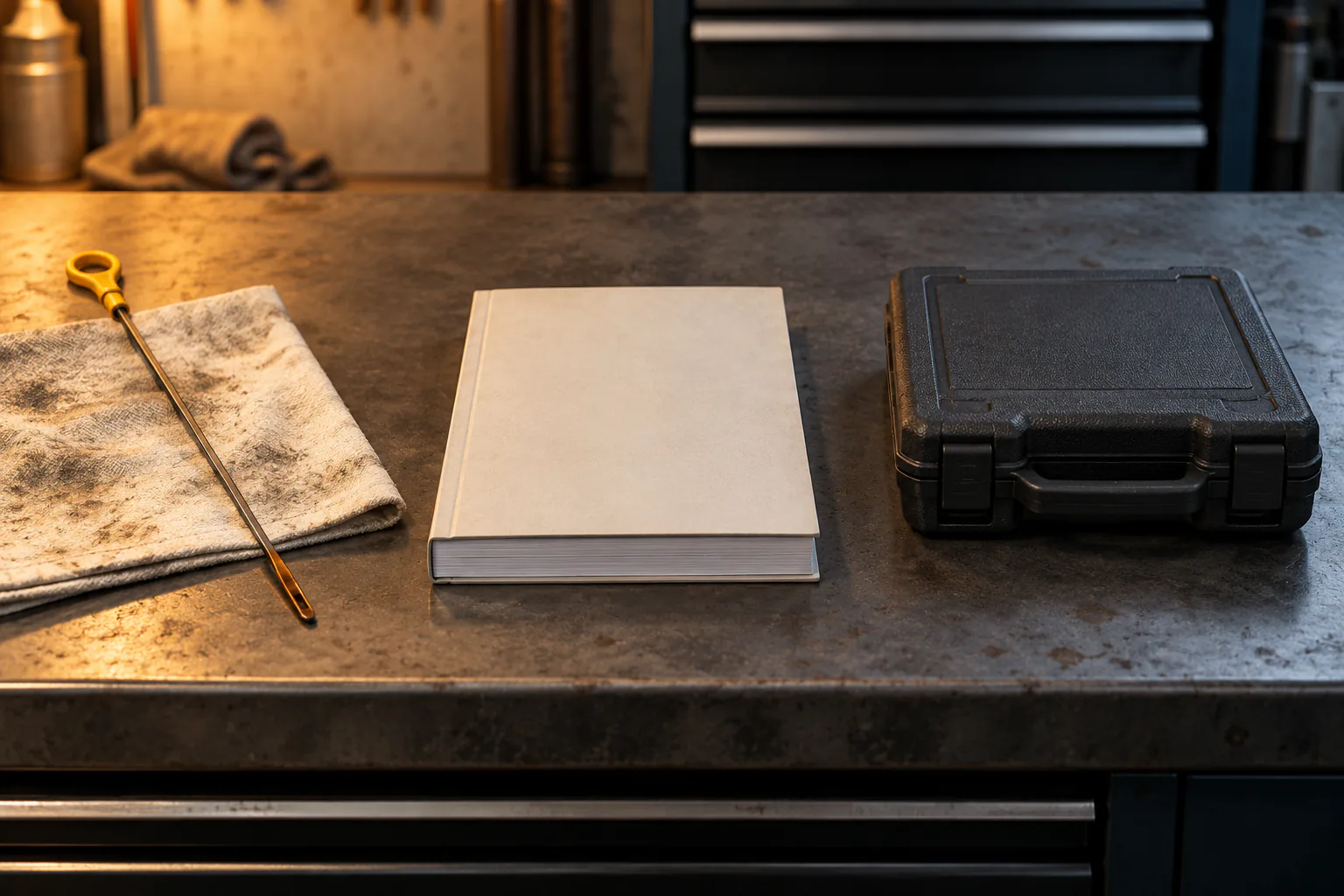
Some manuals direct the owner to check oil level after the engine is off, the vehicle is level, and a specified waiting time has passed. Follow the approved dipstick or electronic procedure.
If level is low and the manual permits adding oil, use the exact specification and add cautiously. Avoid overfilling. A corrected level still does not confirm pressure. Follow the manual's next instruction; do not assume the vehicle may continue because the dipstick now reads full.
If the level is normal, the pressure warning remains serious. The problem can involve oil flow, pump, pickup, filter, sensor, wiring, internal clearance, contamination, or another condition. The lamp cannot distinguish them.
Do not improvise a repair
Do not add a thicker oil, additive, flush, or leak-stop product to raise pressure. Do not replace a sensor solely because the engine sounds normal. Do not clear warnings by disconnecting the battery.
An external gauge test may be part of professional diagnosis, but it requires the correct port, adapter, specification, temperature, and safety procedure. This is not a roadside owner test.
If the warning followed an oil change, contact the service provider and arrange safe transport. Possible issues can include level, filter, drain, specification, leakage, or unrelated faults; avoid deciding the cause before inspection.
What diagnosis should document

Provide the event timeline, warning image, mileage, oil-change date and invoice, specification and amount added, level-check conditions, leaks, noise, temperature, and restart attempts.
A qualified diagnosis may verify level, specification, filter and leakage, sensor circuit, actual mechanical pressure, and internal or pump conditions. Ask which test result supports the repair and whether continued operation caused secondary damage.
The completed order should state the cause, measurements, parts, oil and filter specification, and post-repair verification. If the provider calls the warning a sensor fault, request the evidence that pressure was tested or otherwise verified under the manufacturer procedure.
Possible categories are not conclusions
Low oil level, an incorrect or restricted filter, oil viscosity or contamination, a pickup problem, pump wear, internal engine clearance, pressure-control faults, sensor or wiring problems, and service errors are different categories a technician may consider. Listing them does not rank or diagnose them.
The timing can guide testing. A warning immediately after service makes the invoice, oil specification, filter, drain area, and level especially relevant. A warning during hard cornering, hot idle, cold start, or sustained operation provides other context. Do not reproduce any condition deliberately.
Actual mechanical pressure testing can distinguish a true pressure problem from some sensing faults, but the method, expected values, oil temperature, engine speed, and connection point are model-specific. Ask for the measured result and specification rather than accepting “pressure seems fine.”
If internal engine damage is suspected, request the evidence and options before authorizing major work. Metal in oil, noise, pressure measurements, inspection results, and filter examination may contribute. A quiet engine does not override a failed pressure test.
Transport and roadside choices
Towing avoids running the engine, but the vehicle still needs safe loading procedures. Tell the provider the warning and powertrain type; some vehicles require a flatbed or specific wheel handling. Follow the manual's towing section.
Do not let a roadside helper run the engine repeatedly or add an unknown oil. Share the exact specification and event history. If oil has leaked onto the roadway, keep people away and notify the appropriate service rather than attempting unsafe cleanup in traffic.
After repair
Confirm the lamp performs its normal startup check and turns off as expected. Check oil level under the approved condition, look for fresh leaks without touching hot parts, and preserve the repair record. Stop again if the warning returns.
Do not treat a quiet engine and an extinguished lamp as a long-term guarantee. Follow any recheck instruction and monitor the exact symptom that led to repair.
The decision in one line
An oil-pressure warning means protect the engine first: reach safety, stop it as directed, check level only if the manual allows, and do not equate added oil with restored pressure. A tow and documented pressure diagnosis are safer than testing the engine by continuing to run it.
The record should preserve the original warning even if it disappeared after restart. Intermittent loss of pressure or an intermittent electrical fault both need evidence-based resolution; disappearance is not clearance to resume ordinary use.
Ask whether the filter and drained oil were retained or examined when relevant. A filter cut-open inspection or laboratory analysis is not necessary for every case, but it can become evidence when contamination or internal damage is suspected. The decision should come from the diagnostic plan, not a generic upsell.
After a verified repair, set the ordinary oil-change reminder from the manufacturer schedule. Do not shorten or extend it solely because a pressure event occurred unless the repairer or manufacturer documents a new requirement.