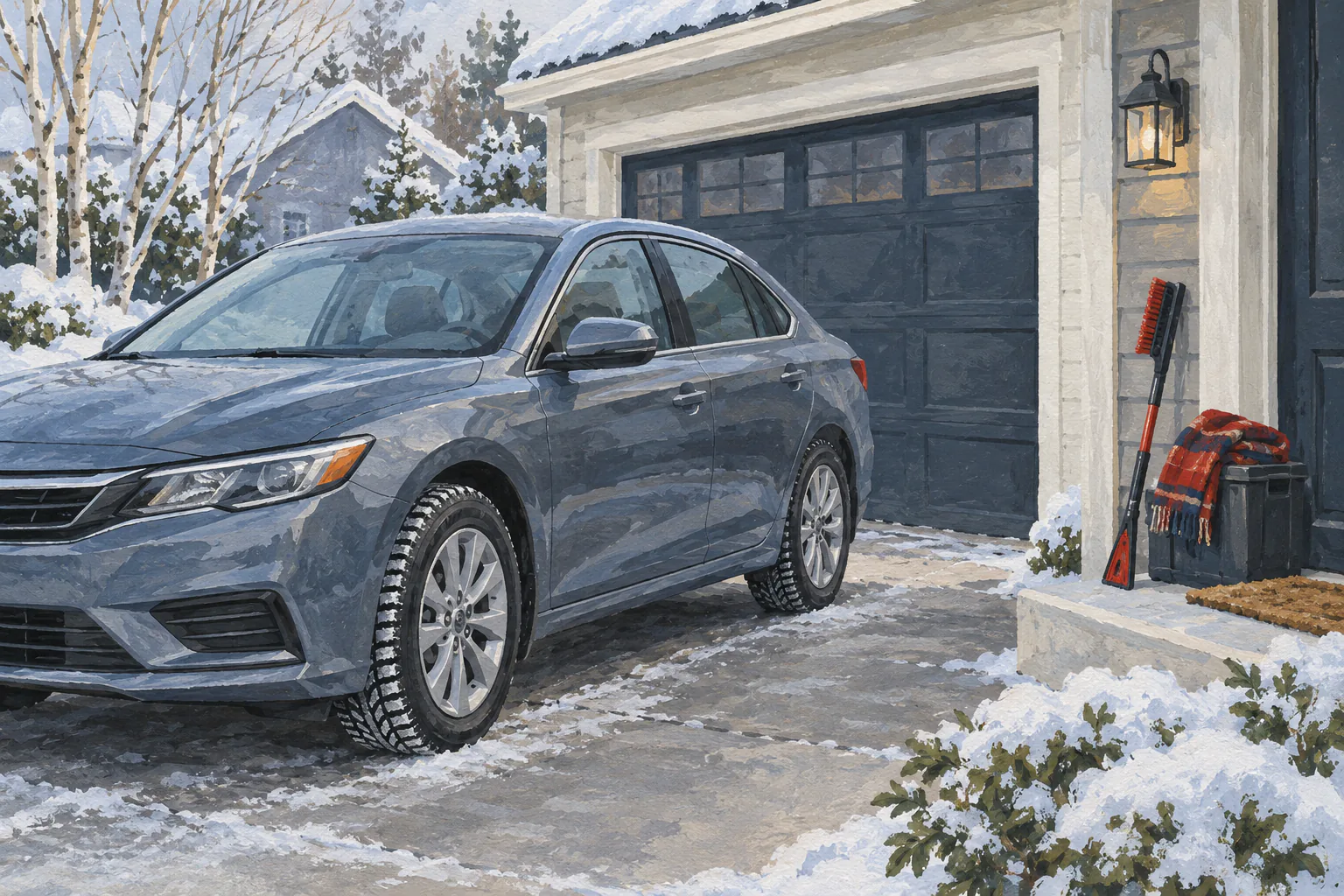
Winter preparation is not one product or one appointment. It is a sequence: understand the weather and legal requirements, resolve known vehicle problems, fit appropriate tires or traction equipment, protect visibility, and prepare for a longer wait if travel is interrupted.
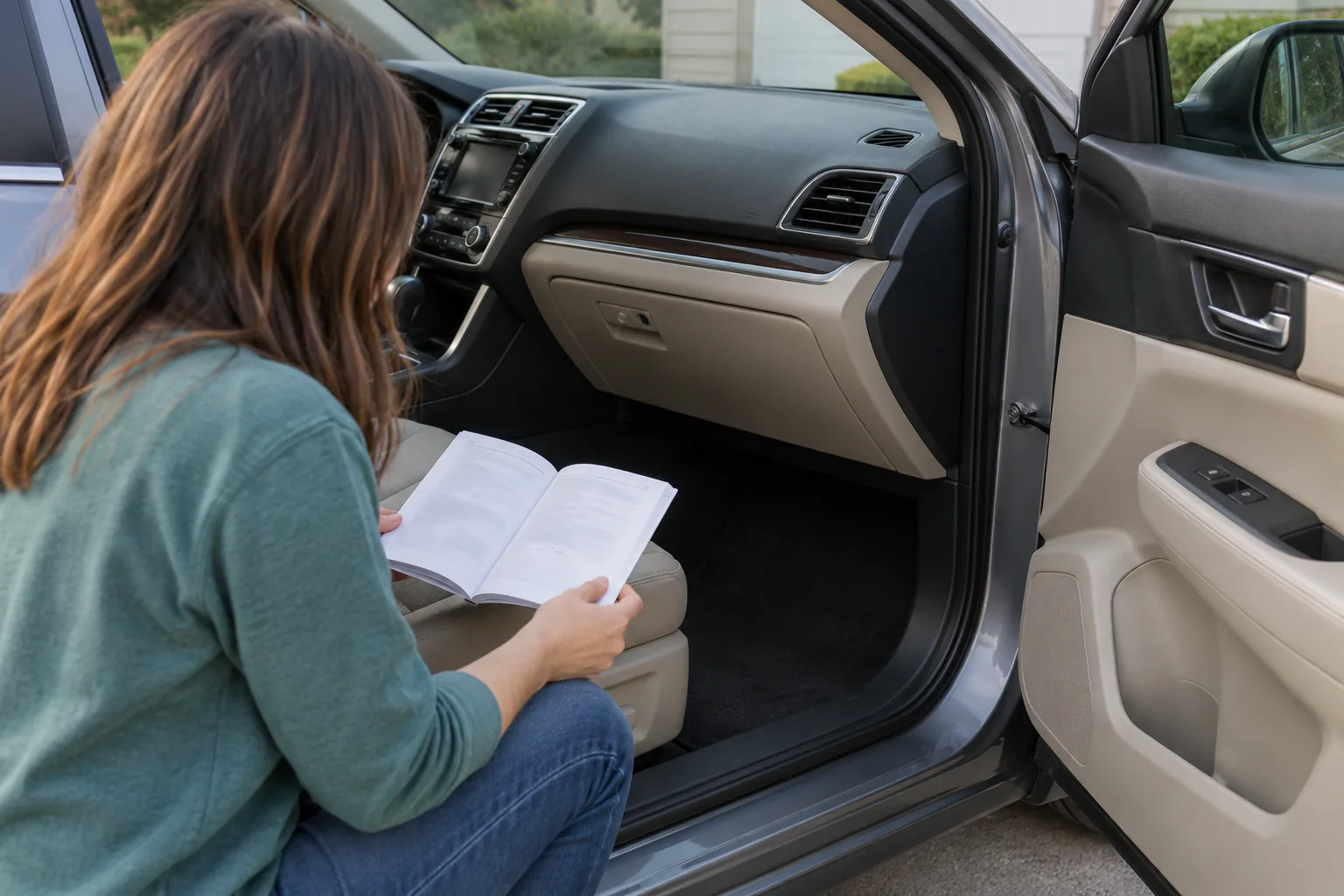
The exact choices depend on the vehicle, route, temperature, snow and ice exposure, local law, and driver capability. Use the owner manual for cold-weather restrictions and procedures; a checklist cannot make every storm or road safe.
Start with the winter you will actually face
List the lowest likely temperatures, snowfall or ice frequency, elevation, road treatment, parking conditions, and distance from help. Check whether the route or jurisdiction requires winter tires or chains and whether the vehicle permits chains on every wheel position. Some vehicles have limited clearance or specify particular sizes and axle positions.
Review the manual for winter fuel, coolant, washer fluid, tire, wiper, parking-brake, battery, hybrid or electric, and towing guidance. Toyota's model-specific winter instructions, for example, distinguish preparation before winter from procedures used while driving. Your model may differ.
Resolve existing problems before the first severe weather
Do not carry a warning light, coolant loss, weak battery, slow cranking, poor heater or defroster performance, damaged tire, or brake concern into winter by default. Cold weather, darkness, and slippery roads reduce the margin for dealing with an existing fault.
Review manufacturer-scheduled maintenance and open recalls. If service history is unknown, document that uncertainty and request a baseline inspection rather than guessing that every fluid or part is overdue.
Tires, traction, and pressure
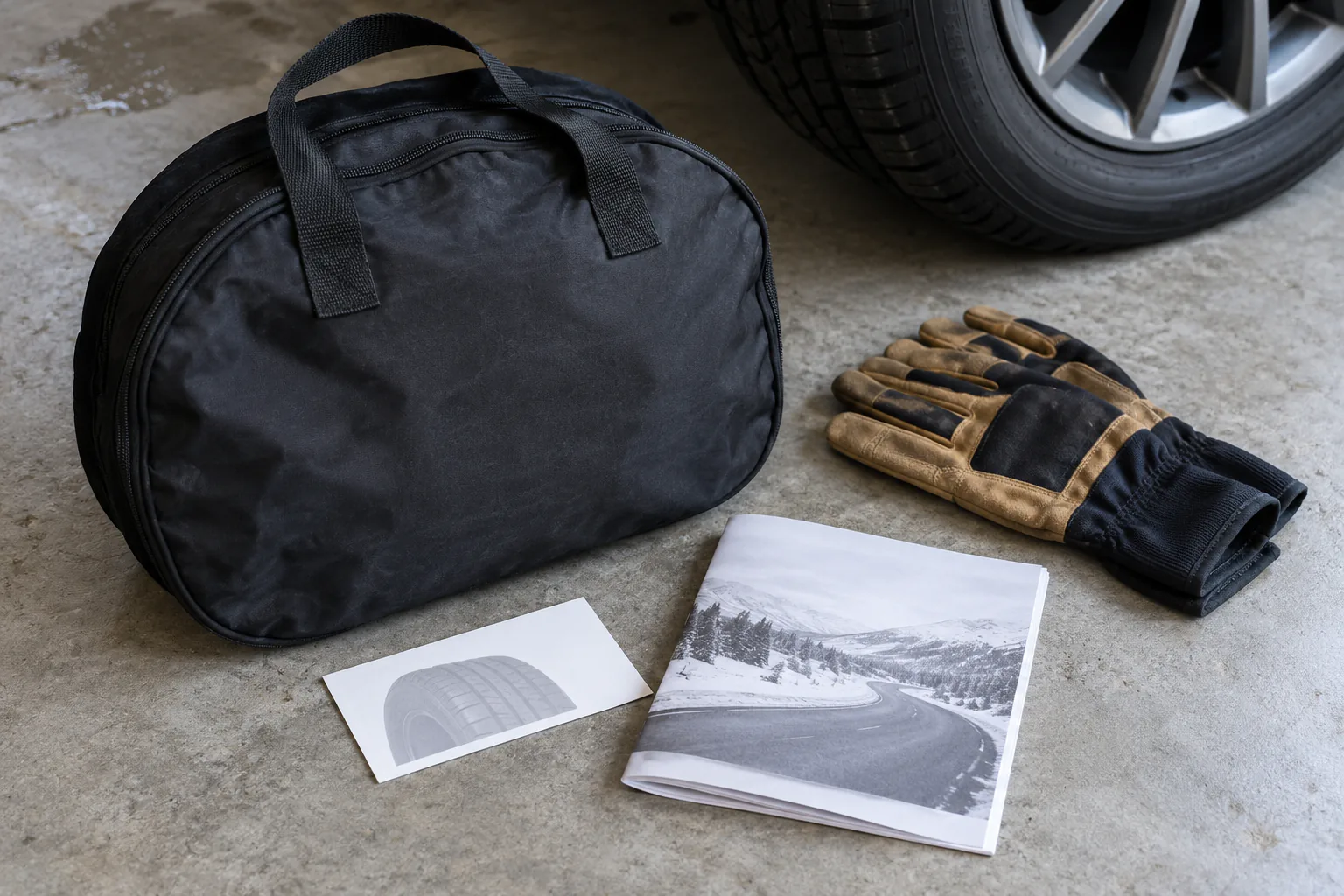
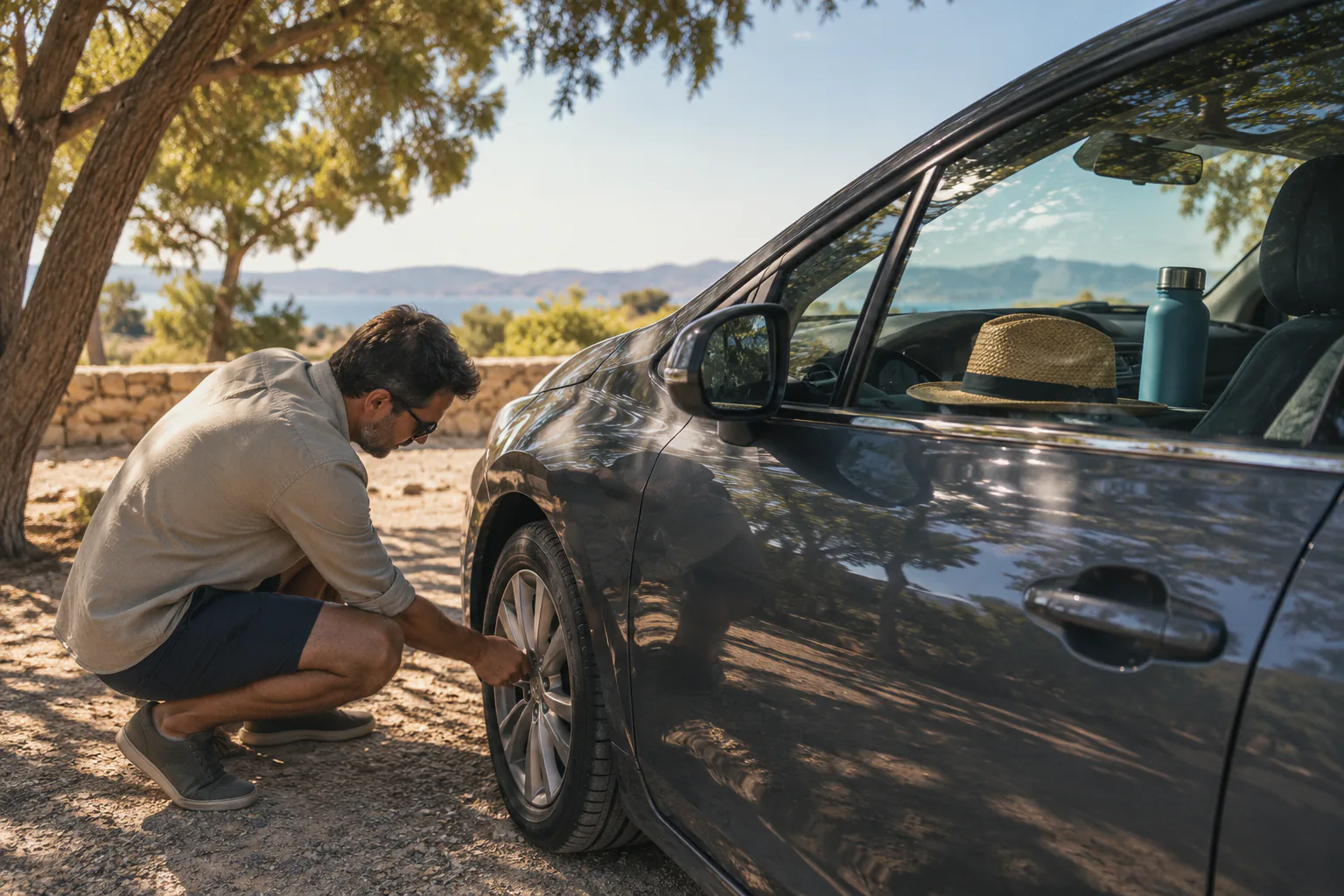
Inspect all tires for cuts, cracks, bulges, punctures, uneven wear, and adequate tread. Measure cold pressure against the vehicle placard; falling ambient temperature can change readings, so recheck after a meaningful weather shift. Do not inflate to the tire-sidewall maximum.
Choose tires for the climate and vehicle requirements. “All-season,” “all-weather,” and winter products are not interchangeable labels, and local law may define acceptable equipment. Match size, load, speed, and vehicle specifications, and seek professional advice for a complete set strategy. A tire choice cannot cancel the need to reduce speed and increase following distance.
If chains may be needed, buy the exact approved type and size. Read the installation, clearance, speed, and removal rules in advance. Practice only in a safe, dry location if the instructions permit. Do not discover an incompatible chain on a snowy roadside, and do not install one beside moving traffic.
Check the spare or inflator system and the limits printed for temporary equipment. A can of sealant may expire, and some damage cannot be repaired by an inflator kit.
Battery and electrical readiness
A weak 12-volt battery may become apparent during cold starts. Record slow cranking, clicking, dimming, resets, or charging warnings and have the battery and charging system tested when indicated. Inspect only accessible areas for swelling, leakage, damaged cases, loose-looking connections, or severe corrosion.
Do not attempt jump-starting until the exact vehicle procedure and approved connection points are known. Hybrids, electric vehicles, batteries in unusual locations, and damaged or frozen batteries require special caution. A portable booster is useful only when compatible, charged, stored correctly, and used by someone who can follow both manuals.
Coolant, washer fluid, and winter visibility
The cooling system also protects against freezing. Verify coolant condition, concentration, level, and specification through the manufacturer procedure or qualified service. Never open a hot pressurized cap, and do not mix coolants based only on color. Repeated loss requires diagnosis.
Use washer fluid suitable for expected temperatures and vehicle requirements. Plain water can freeze in the reservoir, lines, nozzles, or on the windshield. Inspect wiper blades for tears or deformation, and learn any winter or service position described by the manual. Do not use wipers to force heavy snow or free blades frozen to glass.
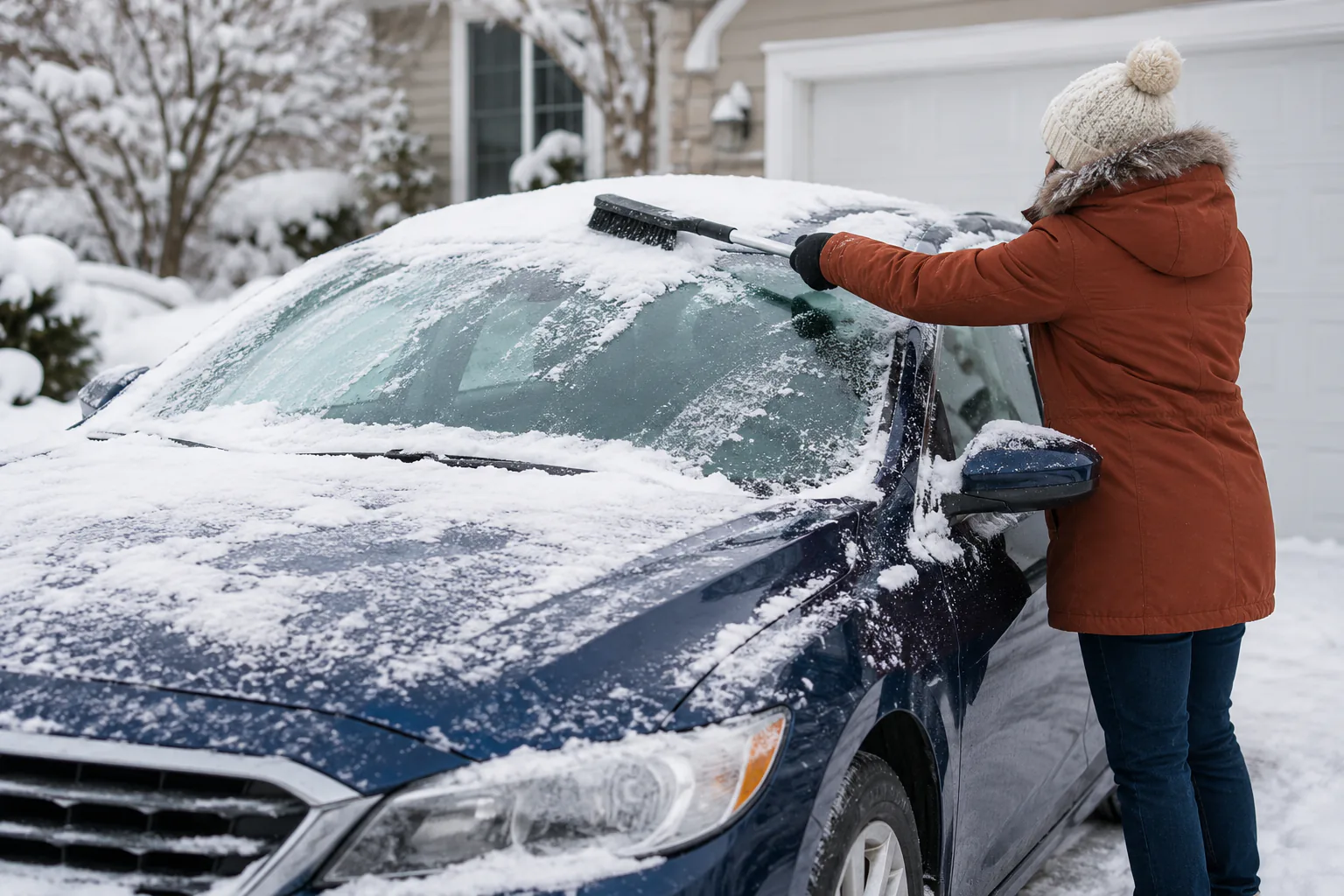
Check headlights, brake lights, turn signals, hazards, license-plate lamps, and defogger or defroster operation. Clean snow and ice from all windows, mirrors, lights, cameras, roof, hood, and sensors before driving as required; a small viewing hole is not adequate visibility, and loose roof snow can affect others.
Belts, hoses, heat, and exhaust concerns
With the engine cold and off, visually inspect accessible belts and hoses for cracks, fraying, bulges, cuts, or contamination. Do not squeeze hot hoses or reach near fans and moving parts. Confirm cabin heat and defrost performance before relying on them in severe conditions.
Keep the tailpipe clear of packed snow when the vehicle is stopped. Never run a vehicle in a closed garage. If occupants experience unexplained headache, dizziness, weakness, nausea, or confusion around a running vehicle, move to fresh air and seek emergency help; do not treat an open window as a repair for a suspected exhaust problem.
Assemble a winter delay module
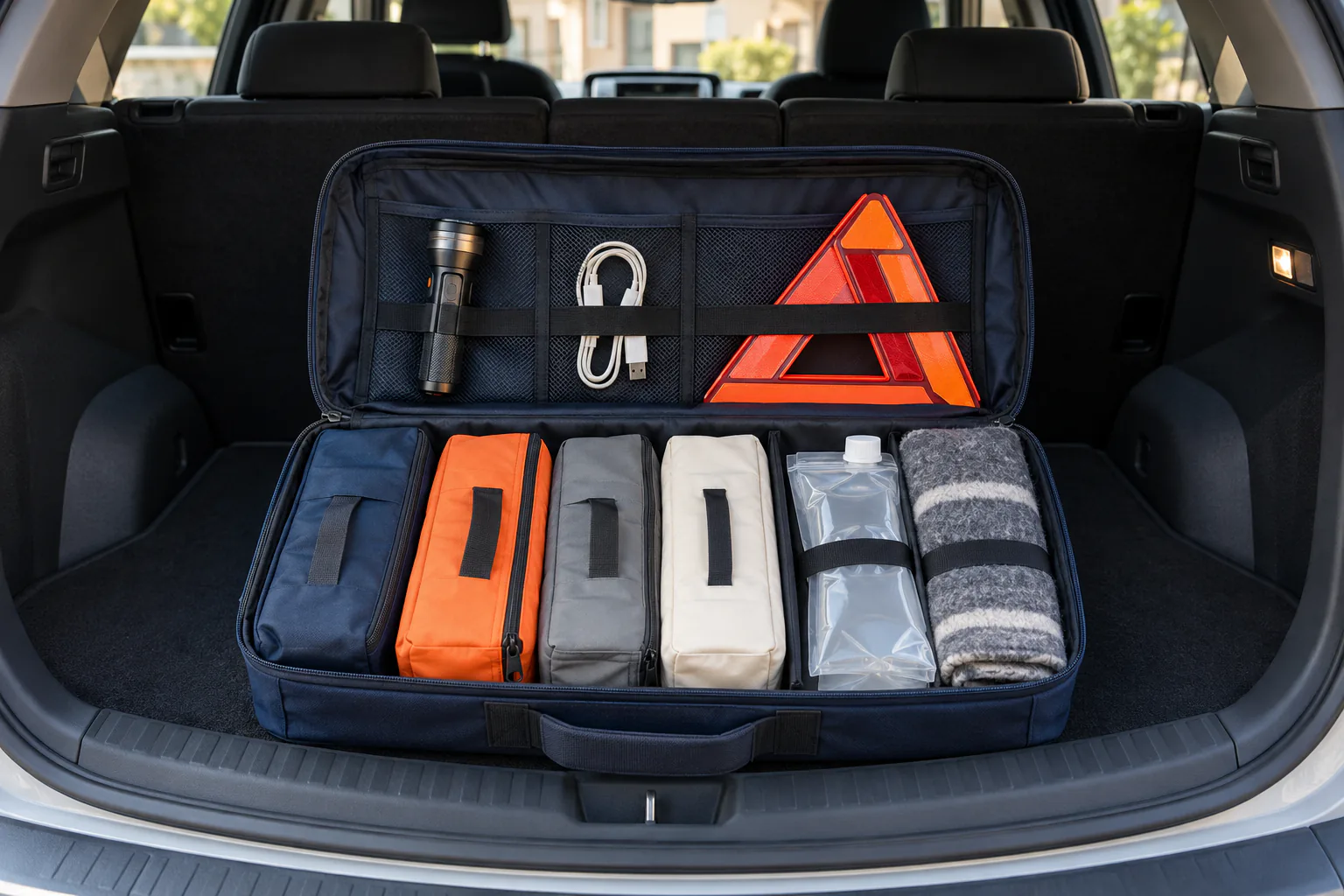
Add warm layers, blankets, gloves, an ice scraper, snow brush, flashlight, reflective warning equipment, charging capability, food, water, medicines, and passenger-specific supplies to the core emergency kit. A compact shovel and approved traction material may suit some routes. Secure equipment so it cannot move through the cabin.
Check expiry dates, batteries, and temperature-storage limits. Tell someone the route and expected arrival, and carry offline contact and navigation information. Supplies can support a wait, but they are not permission to travel against closure or severe-weather advice.
Use a departure decision, not just a checklist
Before leaving, check weather, road status, cold tire pressure, warnings, visible leaks or damage, fuel or charge, lights, glass, washer operation, and load security. Delay when the route is closed, equipment is legally or technically inadequate, visibility cannot be restored, a critical warning remains, or the vehicle cannot reliably heat and defrost for the passengers and conditions.
Drive for the conditions, not the speed limit alone. Increase following distance, make smooth inputs, and understand the vehicle's traction and driver-assistance controls from the manual. Winter preparation improves readiness; it does not change the physics of ice.
Create a small winter record beside the ordinary maintenance log. Note tire model and installation position, pressure checks after temperature changes, chain or traction-device specifications, washer-fluid rating, battery test date, and any winter-only warning or starting symptom. When the season ends, remove equipment that can degrade or become needless cargo, inspect it, and store it dry. Preserve anything the manufacturer expects to be refitted next winter.
If the car will sit unused, follow the manufacturer's storage guidance instead of relying on occasional idling. Short idle periods may not restore a battery, can create exhaust risk, and do not exercise every system. A compatible maintainer, charging plan, fuel plan, or scheduled drive must come from vehicle-specific instructions and the storage location's safety rules.