
Most road-trip checks do not disappear when the season changes. Tires, warnings, leaks, lights, wipers, fluid procedures, recalls, load, route, and communications matter year-round. Weather changes the failure pressures, the equipment choices, and the consequences of waiting for help.
Use this comparison to adjust a common baseline. It is not a choice between a “summer checklist” and an unrelated “winter checklist,” and it does not replace the vehicle's model-specific maintenance schedule.
The year-round baseline
One to two weeks before departure, review the owner manual, maintenance history, open recalls, warning messages, tire condition, recurring leaks, braking or steering changes, battery concerns, and unresolved noises. The purpose of the lead time is to leave room for evidence-based service and a follow-up check.
Two or three days before departure, verify applicable fluid levels by approved procedures, lights, wipers and washers, spare or inflator equipment, emergency supplies, documents, roadside contacts, and load plans. On departure day, confirm cold tire pressures, visible condition, warning status, weather, closures, route, and communications.
Those steps stay. The following priorities change.
Tires: heat accumulation versus cold pressure and traction

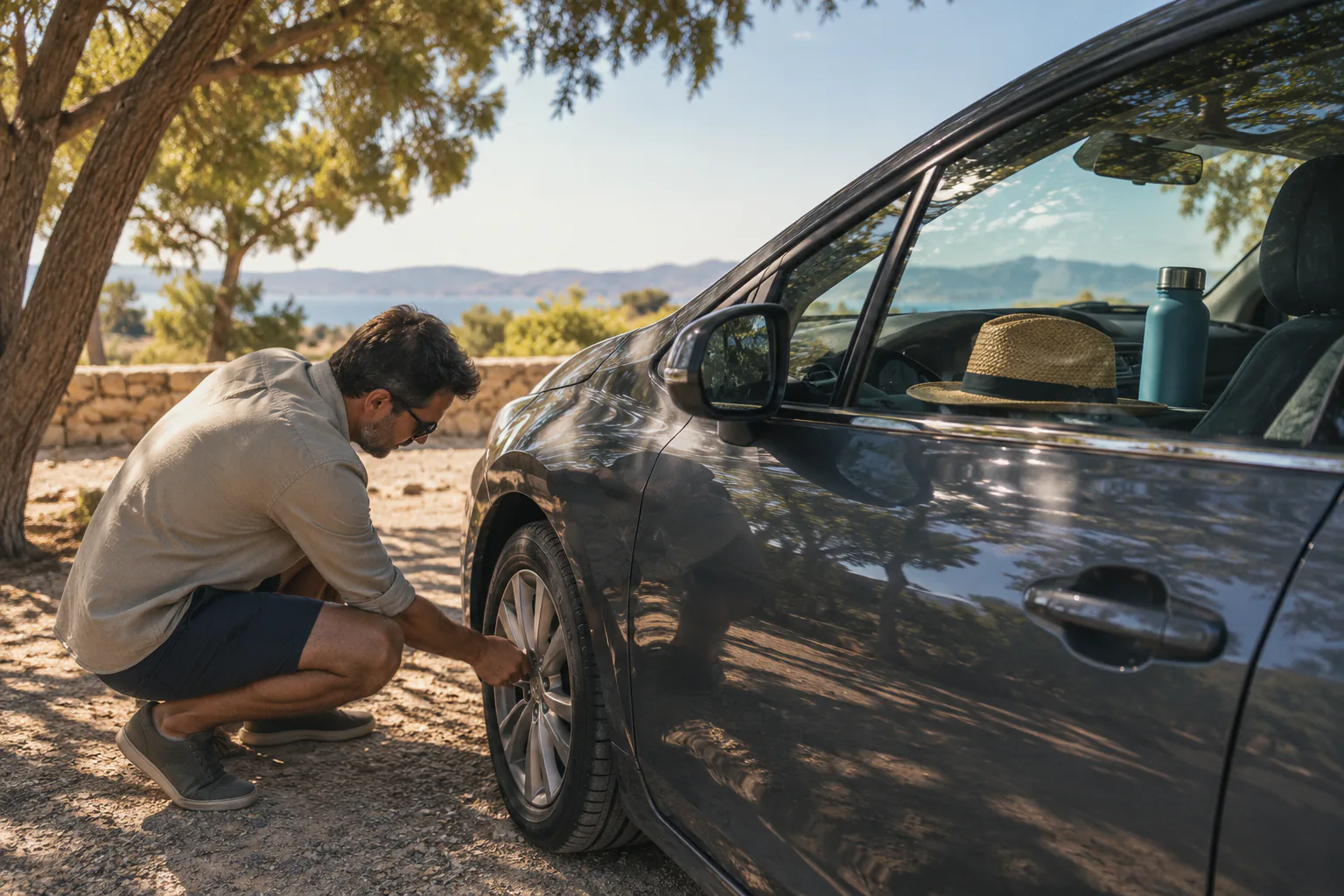
In summer, check cold pressures and loading before sustained high-speed travel. Do not release pressure from a tire simply because it reads higher after driving. Inspect for damage, inadequate tread, uneven wear, and recurring loss, and keep the total load within the vehicle label. A hot, overloaded, underinflated, or damaged tire has less margin.
In winter, cold pressure still comes from the placard, but falling ambient temperature makes rechecks important. Tread and damage remain relevant, while snow and ice add questions about winter-rated tires, chains, clearance, axle placement, local law, and route rules. Practice an approved chain procedure before the trip, not on a traffic-exposed shoulder.
In both seasons, pressure does not repair structural damage, and TPMS is not a complete condition inspection.
Temperature-control systems: cooling versus heating and defrosting
Summer puts cooling-system condition and air-conditioning performance near the top. Check coolant only under the specified cold conditions, use the exact specification, and investigate repeated loss. Never open a hot pressurized cap. Test cabin cooling early when children, older adults, pets, or people with health conditions will travel.
Winter still requires correct coolant protection, but heater and defroster performance become the cabin priorities. Verify that glass can be cleared and kept clear. Use washer fluid suitable for expected temperatures and never force frozen wipers across ice.
Air conditioning can contribute to dehumidification on some vehicles, so follow the manual rather than assuming it is a summer-only system.
Battery: heat history versus cold-start demand
Summer heat can expose or accelerate battery weakness, while winter starts can reveal insufficient capacity. The owner action is similar: note slow cranking, clicking, resets, visible swelling or leakage, and charging warnings; obtain a proper battery and charging-system test when indicated.
The travel kit changes. In either season, a compatible booster must be charged and used according to both manuals. In winter, gloves and cold conditions complicate connections. In summer, storage-temperature limits matter. A damaged, leaking, frozen, or unfamiliar battery is not a routine jump-start candidate.
Visibility: heat-worn rubber versus snow and ice
Summer preparation emphasizes blades deformed by heat or previous winter use, washer supply, glare, clean glass, and working lights. Check that air conditioning and ventilation support driver alertness and clear glass where applicable.
Winter adds ice scrapers, snow brushes, cold-rated washer fluid, defrosters, and full removal of snow and ice from windows, mirrors, lights, roof, hood, sensors, and cameras. Hidden wipers may need a model-specific service or winter position. Do not strike or pour hot water on frozen glass.
Neither season permits a dry first test of replacement blades or driving with only a small viewing patch.
Fluids, rubber, and leaks
Before hot travel, look for coolant residue, oil or other leaks, and visible belt or hose damage. NHTSA specifically calls attention to belts and hoses in summer. Keep clear of hot, moving, pressurized, and high-voltage components.
Before winter travel, verify coolant freeze protection through the approved method, use suitable washer fluid, and resolve leaks that could worsen or contaminate road surfaces. Cold can make some plastics and rubber less forgiving, so do not force trim, connectors, or frozen components.
In both seasons, a top-up is not a diagnosis. The exact fluid and checking condition come from the manual.
Passenger risk and emergency supplies
Summer passenger planning prioritizes water, sun protection, working communication, shade only when safely available, and special caution for heat-sensitive travelers. Never leave a child unattended in a parked car. Medicine, batteries, food, and adhesives may have storage limits that rule out a hot trunk.
Winter planning adds warm clothing, blankets, gloves, a shovel where appropriate, traction material, an ice scraper, and supplies for a longer weather delay. Keep the tailpipe clear of packed snow when stopped and never run a vehicle in a closed space.
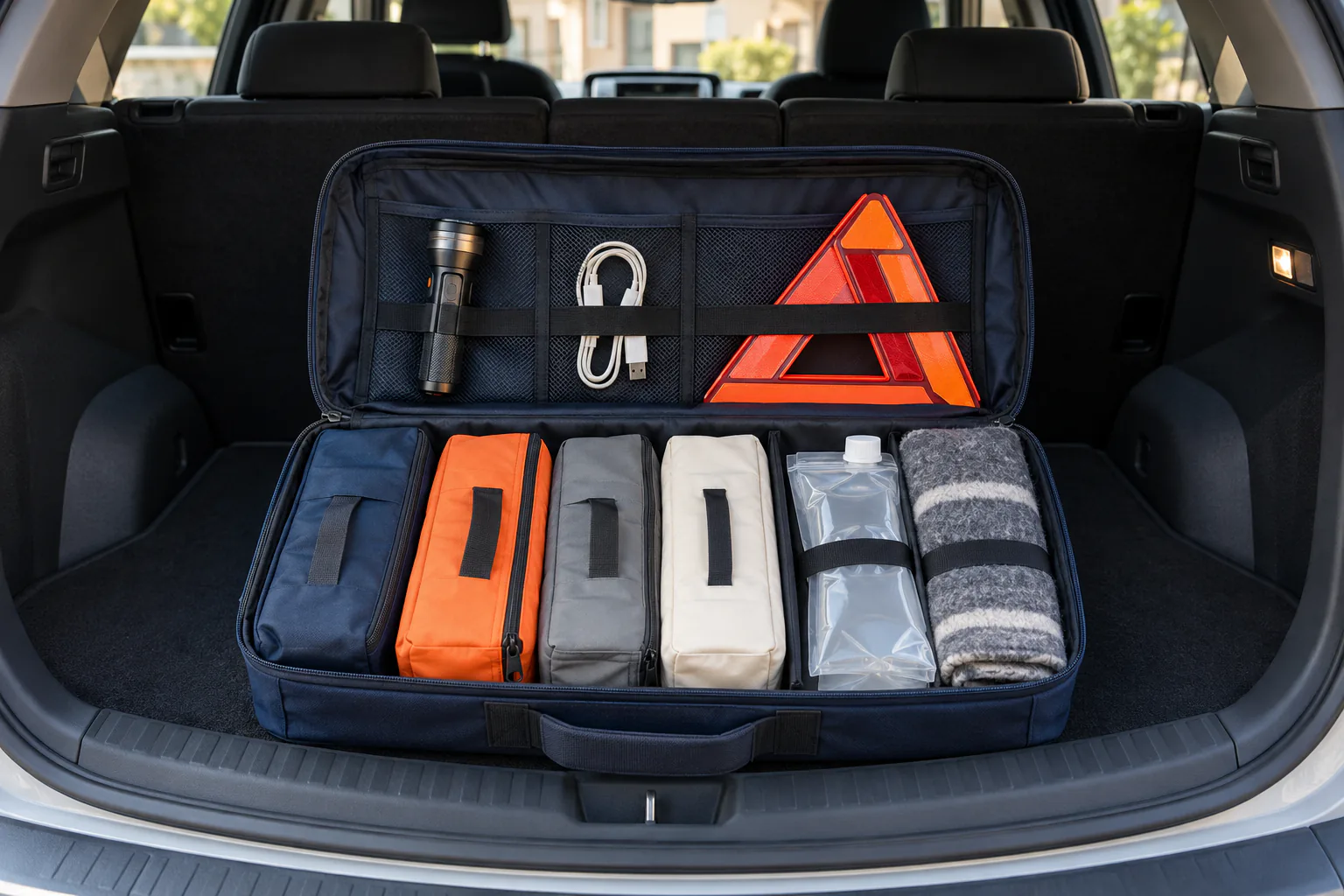
Both kits need first-aid supplies, light, reflective warning equipment, power, contact information, food and water planning, and passenger-specific items. Neither kit makes a dangerous shoulder or severe-weather route safe.
Route and energy planning

Summer routes may involve wildfire, extreme heat, construction, storms, and higher cooling demand. Winter routes may add closures, chain controls, limited daylight, freezing precipitation, and reduced charging or fuel margin. Check authoritative weather and road sources immediately before travel, then build alternate stops and delay options.
Electric-vehicle range and charging conditions can change with temperature, cabin conditioning, speed, elevation, load, and charger availability. Use the vehicle's trip-planning guidance and build reserve rather than copying a universal percentage.
A matched departure decision
Go only when the vehicle, equipment, people, and route fit the conditions. Delay a summer trip for unresolved overheating evidence, critical warnings, damaged tires, unsafe passenger cooling, or extreme-heat guidance. Delay a winter trip for inadequate traction equipment, uncleared visibility, critical warnings, unreliable heat or defrost where needed, closures, or severe-weather guidance.
The best seasonal checklist is a stable year-round routine with deliberate modules. Keep the baseline consistent, then change tires and traction decisions, temperature-control priorities, visibility equipment, emergency supplies, and route margins. That makes preparation easier to remember and harder to dilute with seasonal shopping lists.
Record which module was used and why. A simple trip note can capture forecast range, load, tire pressure, equipment fitted, energy stops, and any warning or performance change. That evidence helps prepare the next trip and prevents a one-time winter or summer concern from disappearing when the weather changes.
Remove expired, damaged, or seasonally inappropriate supplies after the trip, but keep the year-round core intact. Clean salt or dust only by approved methods, dry wet equipment outside the vehicle, and inspect externally mounted cargo before storage. Seasonal care ends with restoring the car to a known baseline.