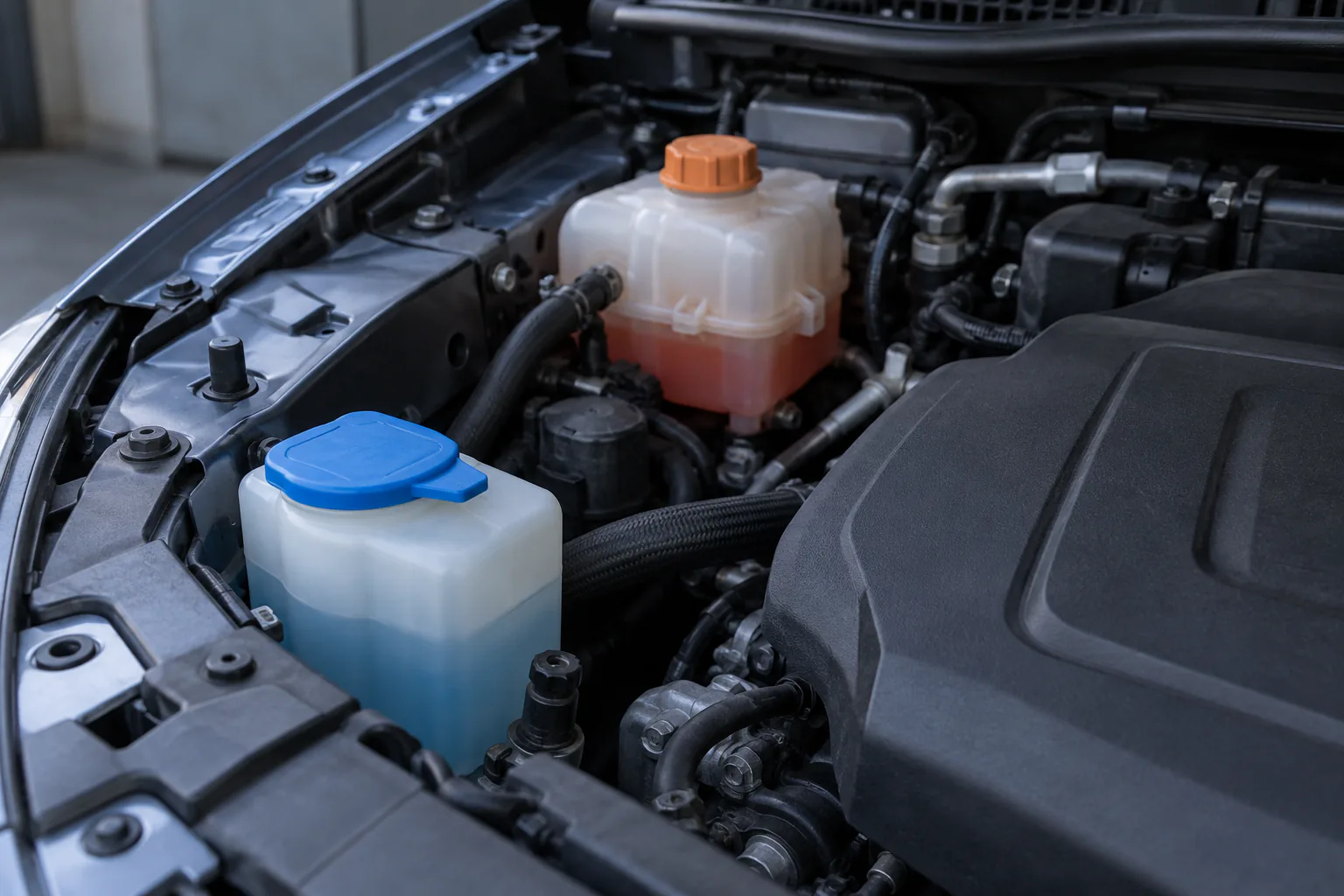
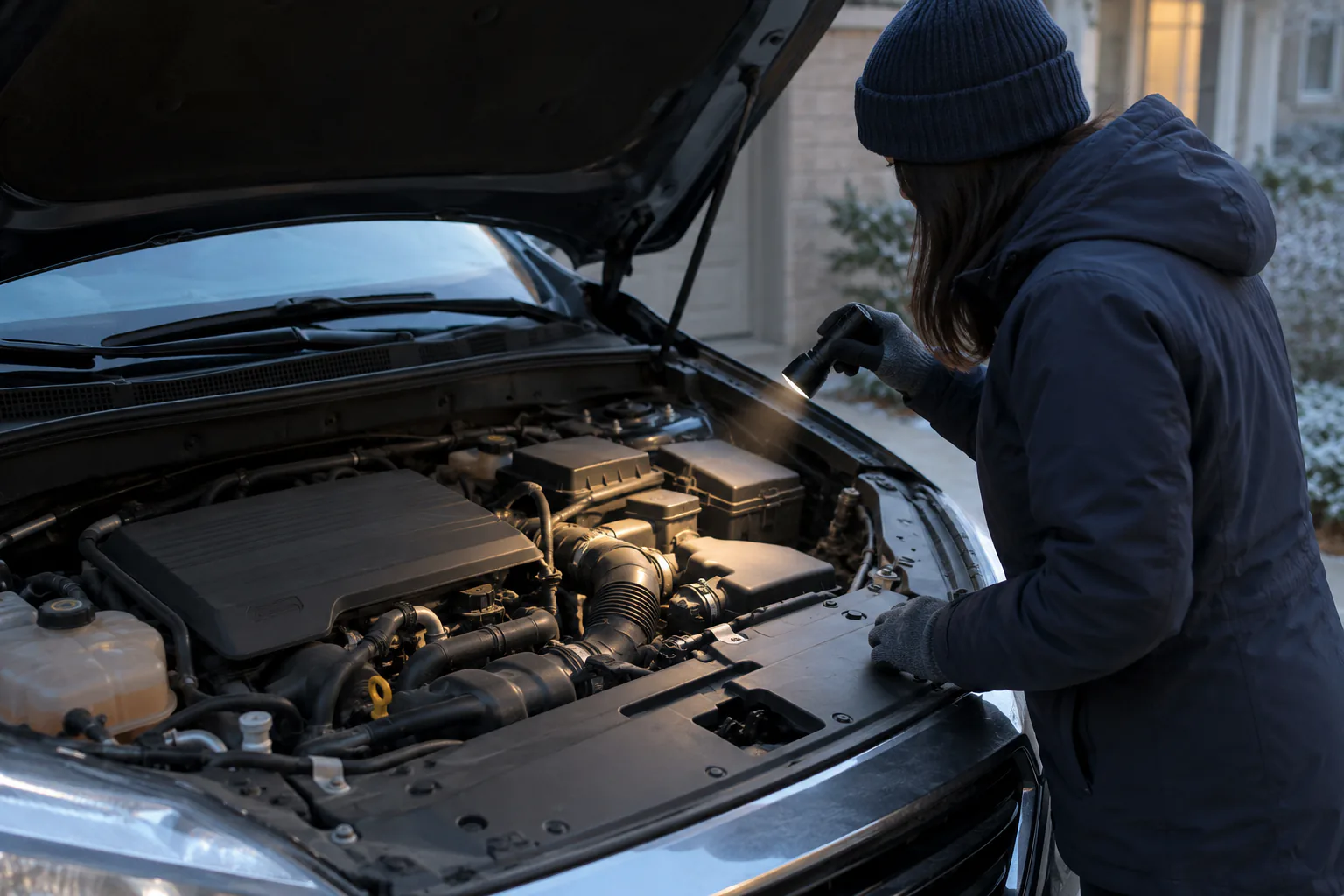
A home belt-and-hose check should be visual, cold, and no-touch unless the exact owner's manual authorizes more. Modern engine compartments can hide belts behind covers, use electric fans that start unexpectedly, and place hoses near hot, pressurized, high-voltage, or moving systems. Limited access is a valid result—not a reason to reach deeper.
Park on level ground, switch the vehicle off, remove the key or secure the start system as the manual directs, and wait until components are cold. Keep loose clothing, jewelry, hair, tools, and hands away from fans and belt paths. Never inspect while the engine runs.
Establish a baseline from the manual
Open the engine-compartment diagram and maintenance schedule. Identify only components the owner can safely see. Some vehicles use one serpentine belt; others have multiple accessory belts, timing belts behind covers, timing chains, or electric accessories that reduce visible belting. Do not call an unseen component “missing.”
Note the schedule verb: inspect, replace, or service under a defined condition. A timing-belt interval, where applicable, is model-specific and cannot be inferred from the appearance of an accessory belt.
Scan belts without touching
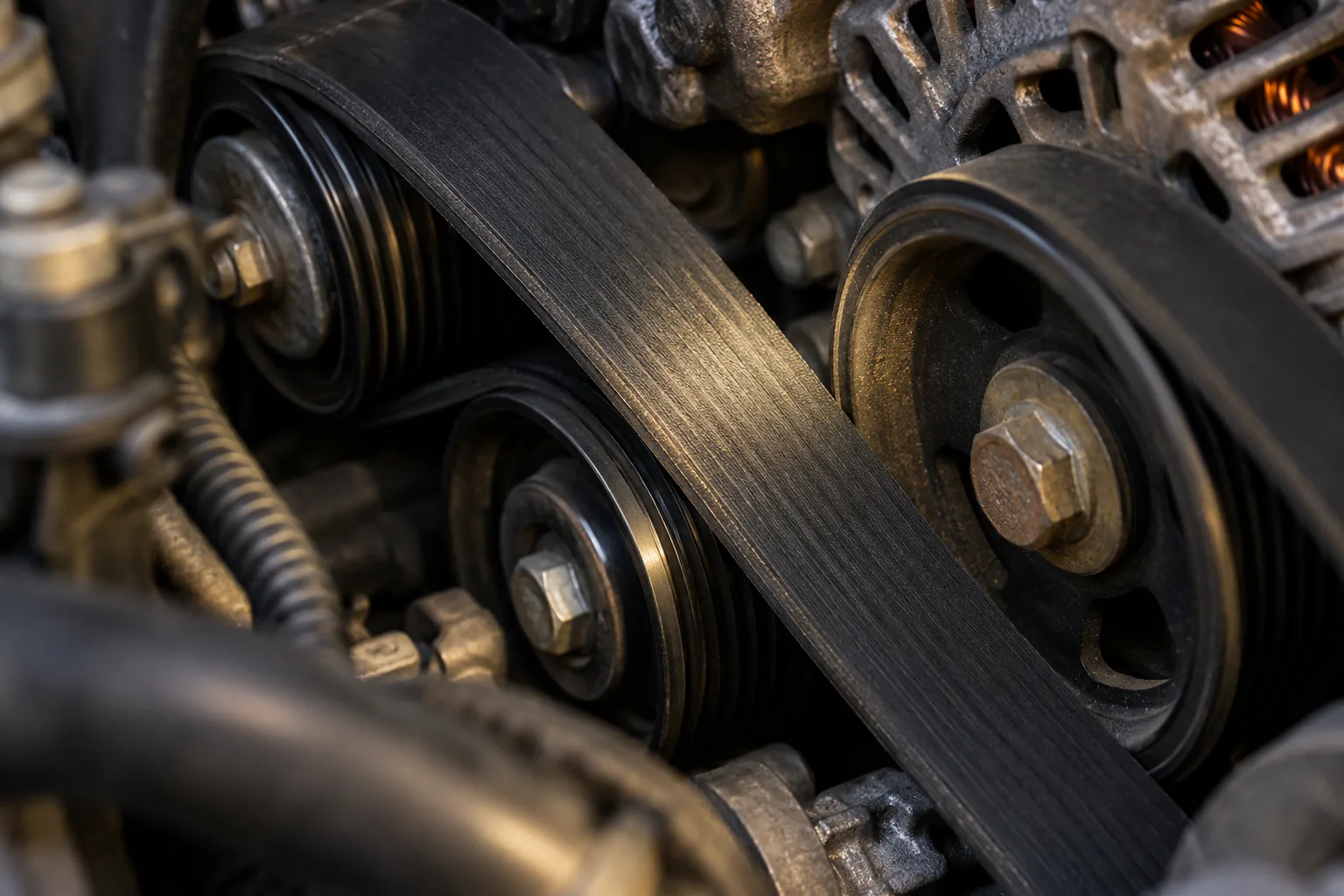
Use a flashlight from the perimeter. Look for missing ribs, large cracks, frayed edges, glazing, contamination, chunks, obvious misalignment, or a belt riding off a pulley. Modern ribbed belts can wear without dramatic cracking, so a clean appearance does not prove remaining life.
Do not rotate the engine, move a tensioner, insert a gauge, or place fingers between belt and pulley. Do not spray dressings or solvents. Oil or coolant on a belt may indicate another leak; replacing the belt without correcting contamination can allow repeat damage.
Record squealing or chirping reported during operation, but do not start the engine with the hood open to locate it unless a qualified procedure and safe setup exist. Sound can involve belt, pulley, tensioner, bearing, alignment, or other systems.
Scan hoses and connections
Look for visible swelling, collapse, cracks, abrasion, wetness, crusted residue, staining, or a hose rubbing another component. Pay attention to connection areas and clips without disturbing them. A residue trail can be more informative than fluid color alone.
Do not squeeze cooling hoses on a hot or pressurized system. Even when cold, a squeeze test is not universal and may damage aged material or provide false confidence. Leave pressure caps closed unless the owner's procedure explicitly permits opening under safe conditions.
Hoses may carry coolant, vacuum, fuel vapor, brake vacuum, air, or other media. Do not assume every rubber line is a coolant hose. Fuel odor, active leakage, steam, or a temperature warning requires immediate caution and qualified help.
Respect hidden and high-voltage areas
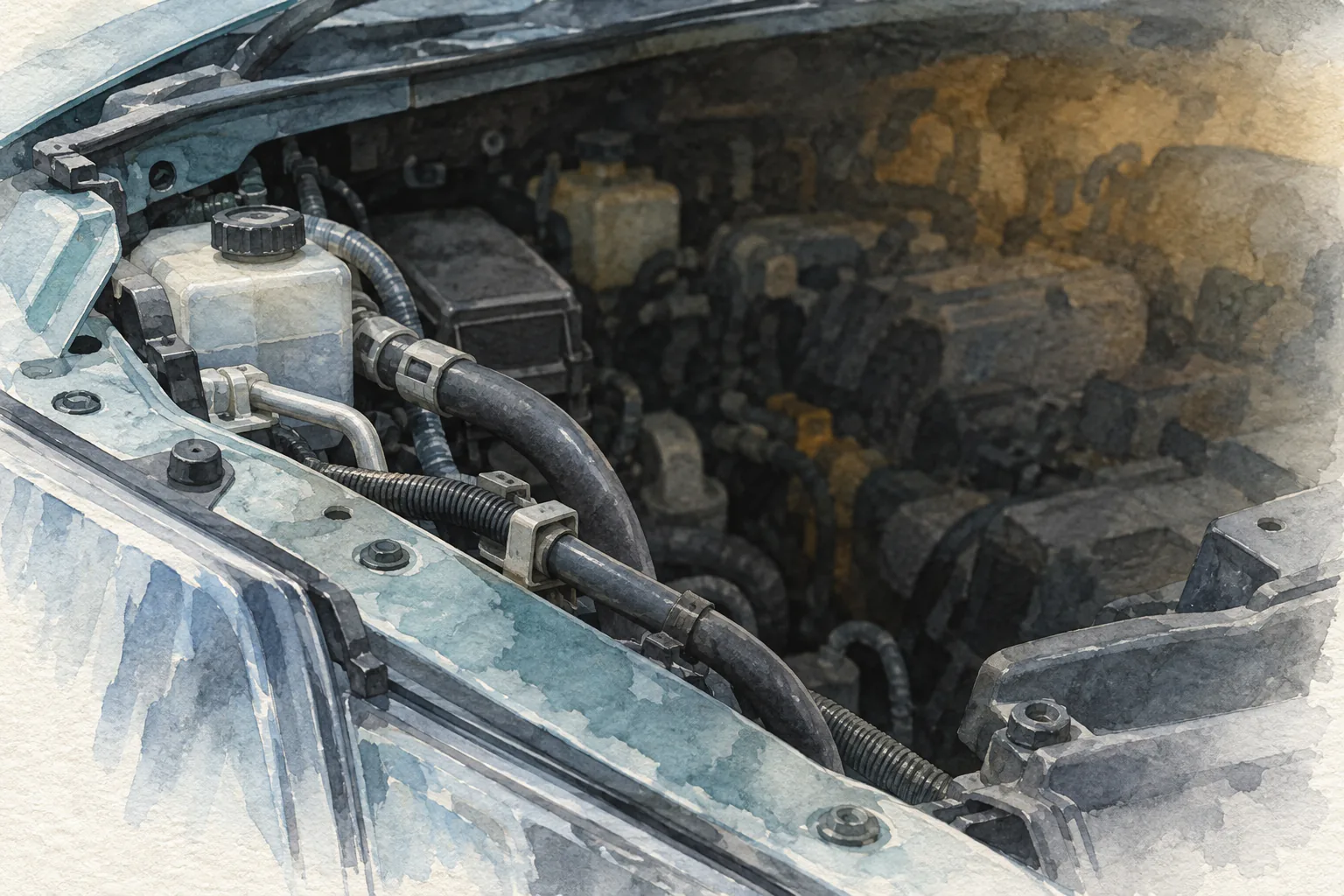
Orange cables and marked high-voltage components are not hoses to inspect by touch. Do not remove covers or probe them. Hybrid and electric vehicles can contain cooling loops for electronics and traction components that require specialized service.
Underbody and rear-mounted hoses are outside a safe top-down check. Never crawl beneath a vehicle supported only by a jack. A professional inspection can cover areas unavailable from the perimeter.
Decide what the evidence supports
An obvious split, bulge, active leak, missing belt material, severe contamination, smoke, steam, or unsafe operating symptom warrants prompt professional evaluation. If steering assistance, charging, cooling, or another belt-driven function changes, follow the manual and stop driving when directed.
Minor surface marks should be documented and compared with manufacturer criteria rather than diagnosed online. Ask a technician to identify the component, finding, measurement or criterion, related cause, and urgency. A replacement recommendation should address leaking fluid, pulley alignment, tension, or abrasion when those caused the damage.
Distinguish accessory belts from timing systems
An accessory or serpentine belt may drive an alternator, air-conditioning compressor, water pump, or other equipment depending on the vehicle. A timing belt synchronizes internal engine operation and is commonly hidden behind covers. A timing chain is different again. Visual access to one says nothing about the condition or schedule of another.
If the maintenance guide specifies timing-belt replacement, follow its time, mileage, and related-part instructions. Do not postpone it because the visible accessory belt looks good. Likewise, do not assume a vehicle has a timing belt because an older version did.
Ask a shop to name the belt or hose precisely on the estimate. “Replace belts” is too vague for a service history. The completed order should identify parts, related tensioners or pulleys, coolant or other fluid work, and the evidence that led to replacement.
After a replacement
Before leaving the shop, check for warning lights, unusual noise, visible leakage, or missing covers without reaching into the engine bay. Review whether the repair addressed the root cause: a leaking seal, failed tensioner, misaligned pulley, rubbing bracket, damaged mount, or overheating event.
If a cooling hose was replaced, ask what coolant specification and bleeding or air-removal procedure was used. Recheck the cold level as the manual directs. If a belt failed while driving, ask whether driven components and surrounding wiring were inspected for secondary damage.
Do not treat a new component as proof that the system is resolved when the original symptom continues. Preserve the old finding, repair details, and follow-up result.
Record and recheck
Take wide and close photographs without leaning over hazards. Record date, mileage, cold condition, location, residue, reported sound, warning status, and next action. Photograph from the same position later to track change.
NHTSA includes belts and hoses in seasonal road-trip preparation, but a travel checklist does not establish service life. The exact vehicle schedule and inspection remain decisive.
The goal is not to certify the engine bay. It is to notice visible change without creating a new hazard. Stay at the perimeter, keep the engine cold and off, and let inaccessible or ambiguous conditions move to a qualified inspection.
A limited view should be written as “not visible,” not “passed.” That single distinction keeps a careful visual check from becoming a false inspection record.
Seasonal repetition matters because rubber, clamps, and surrounding components experience heat, cold, vibration, contamination, and storage. Use the same cold, well-lit viewpoint before a long trip or major temperature change. Compare photographs rather than memory. If a previously dry connection develops fresh residue, or a belt edge moves closer to a pulley flange, schedule inspection before the condition becomes a roadside failure.