
A puddle can show that fluid reached the ground. It usually cannot identify the failed part by itself. Airflow, splash shields, gravity, and vehicle motion move liquids away from their source, while color changes with age and contamination. Use a leak to collect evidence and make a safe decision, not to perform a driveway diagnosis.
Stop normal operation for a strong or persistent fuel odor, active fuel leak, smoke or fire risk, overheating or steam, loss of braking or steering assistance, a rapidly growing leak, or a model-specific warning that directs you to stop. Move away from traffic and ignition sources and arrange appropriate help.
Describe six dimensions
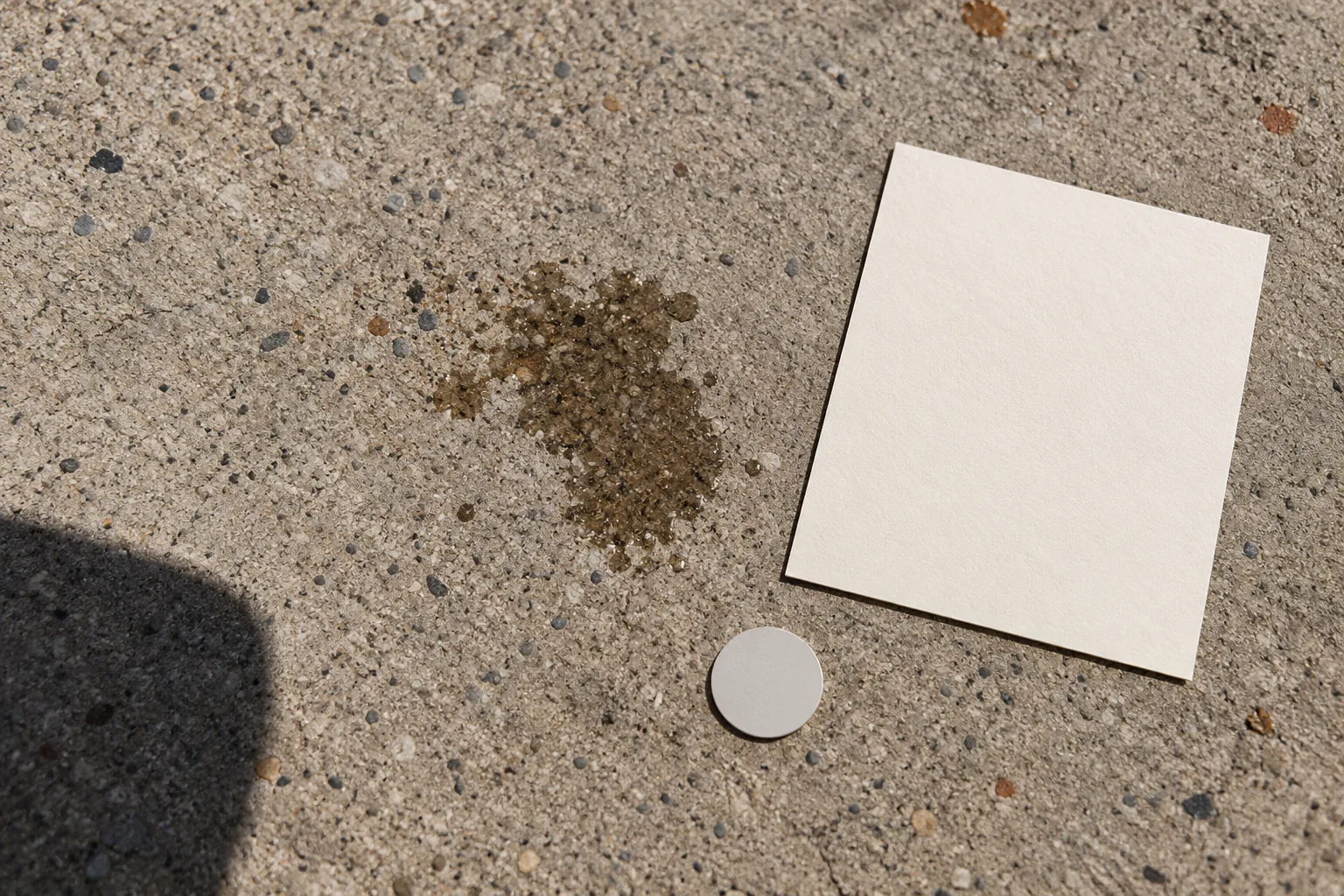
Record location under the vehicle, approximate amount, timing, recurrence, apparent texture or odor without direct contact, and vehicle symptoms. Note date, mileage, weather, air-conditioner use, recent service, and warning messages.
Use cardboard or clean paper beneath a safely parked vehicle if appropriate; never crawl underneath. Mark wheel positions so the pattern has context. Keep children and animals away. Do not touch, taste, or deliberately smell an unknown substance.
Clear water after air-conditioner use can be normal condensation. That possibility should not be used to dismiss colored, oily, odorous, recurrent, or symptom-related fluid.
Use system context, not color charts alone
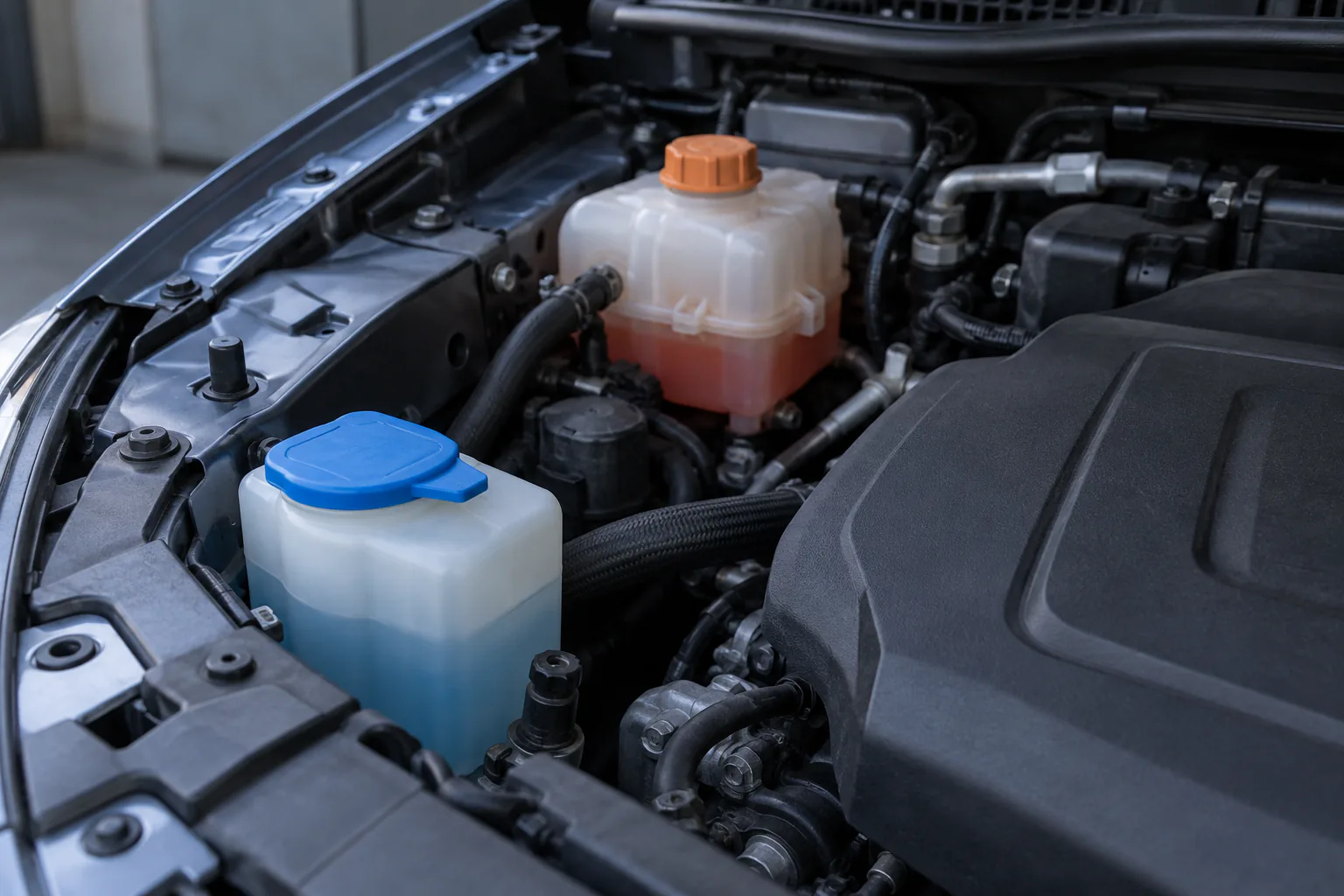
Coolant formulations can be several colors; oil darkens; transmission and power-steering fluids vary; washer fluid may resemble coolant; and road water can carry dirt. A color chart is at best a clue.
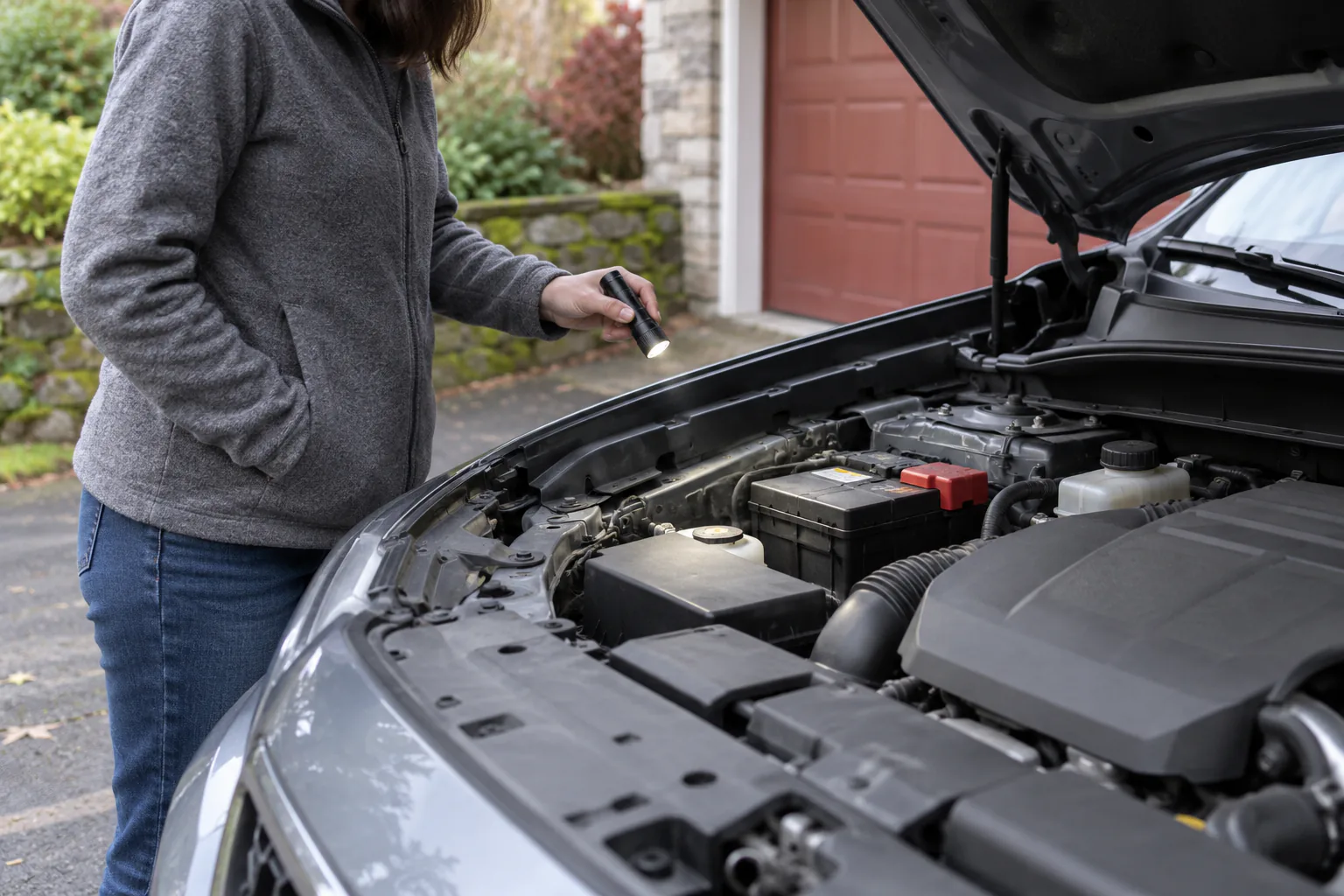
Open the exact manual's engine-compartment diagram and identify reservoirs without opening hot or pressurized caps. Look from the perimeter for a trail, wet component, staining, or residue. The first visible wet point is not always the origin.
The FTC describes common appearances and odors as consumer clues, but those examples should not be converted into certain diagnoses. Use them to communicate with a technician and to recognize situations that need prompt action.
Distinguish likely harmless water from a developing leak
Air-conditioning condensation is commonly clear, thin, odorless water appearing after HVAC use. It may drip from a consistent drain location. Confirm that it behaves like water and disappears without a declining fluid level or warning.
A recurrent oily spot, sweet odor with moisture, dyed washer fluid, or wetness near a wheel or engine bay deserves more attention. Brake-fluid loss and fuel leakage are safety-critical. Coolant loss can lead to overheating. Engine-oil loss can threaten lubrication. The same urgency cannot be assigned from spot size alone.
Do not top up as the only response
Adding fluid may restore a level temporarily when the manual permits, but it does not locate or repair a leak. Repeated topping-up can hide progression and expose the system to the wrong specification.
Never open a hot cooling system. Do not add brake fluid as routine consumption. Do not pour a generic fluid into a transmission, steering, or coolant reservoir. If the reservoir is empty, the specification is unknown, or a warning is active, seek qualified guidance.
Clean spills only after the vehicle is safe and the substance is identified. Use local hazardous-waste or recycling instructions; do not wash automotive fluid into drains or soil.
Prepare for inspection

Provide photographs with a location reference, the cardboard pattern, fluid-level trend, warnings, recent work, and the six dimensions. Ask the shop to identify the source, affected system, cause, safety status, repair scope, and whether contamination damaged belts, hoses, wiring, brakes, or tires.
After repair, ask how the area was cleaned and how recurrence will be checked. A residual drip can remain briefly, while a fresh leak means the problem is not resolved. Record the expected verification method.
Consider recent service and weather
A spot appearing after service may be spilled residual fluid, condensation, or a new leak. Contact the provider with photographs and timing rather than wiping everything away first. Ask whether the serviced area could retain fluid and what follow-up is appropriate. Do not accuse or assume; preserve evidence.
Rain, snow melt, road salt, and car washing can move old residue and create large wet areas. Blotting a sample onto clean white material without skin contact may show oiliness, but it still cannot identify the system. Repeat observation under dry conditions only if the vehicle is safe to remain parked and no urgent symptom is present.
Air-conditioning water can appear in more than one place depending on design and slope. Verify that levels remain stable and no odor, color, or warning accompanies it. A blocked drain can create water inside the cabin, which is a different maintenance concern from a fluid-system leak.
Ask whether the repair fixed cause and consequence
A failed hose, seal, gasket, housing, cap, cooler, or line can be the source, while low fluid, belt contamination, overheated components, damaged wiring, or soaked brake and tire surfaces can be consequences. The repair plan should address both.
Ask whether the system was pressure-tested, dye-tested, cleaned, refilled, bled, or verified according to the vehicle procedure. Not every leak requires every method. The answer should match the system and finding.
If an estimate recommends a large assembly because a small wet area was seen, request the precise source and confirming test. If the source cannot be reproduced, agree on a monitoring method and safety trigger rather than converting uncertainty into certainty.
Decide whether to drive
Only the exact condition and vehicle instructions can answer. Do not drive for a brake-fluid or fuel leak, overheating, smoke, serious oil-pressure warning, rapid loss, or impaired control. For a small unidentified spot with no symptom, arrange timely identification and monitor without assuming safety.
When advice is remote, it should become more conservative, not more certain. Towing can be less costly than turning a manageable leak into engine, brake, tire, or fire damage.
A leak tells you where to look next: system, rate, recurrence, and symptoms. Treat the puddle as a starting observation, preserve evidence, respect stop conditions, and require the repair to explain both the source and the reason it leaked.
Keep pets away from every unknown automotive fluid. Some products are toxic even in small amounts, and attractive color or odor is not a safety indicator.
Store photographs and repair records with the date and mileage. If the spot returns months later, that history can show whether it is the same location, a new system, or unresolved residue. Clean evidence beats a remembered statement that the vehicle “always leaked a little.”