
“The filter looks dirty” is only one piece of evidence. A defensible decision uses four: the manufacturer's schedule, the vehicle's operating environment, symptoms tied to the correct system, and an inspection performed by an approved method. The balance changes by filter type, vehicle, and access.
This guide focuses on engine and cabin air filters. Oil, fuel, transmission, and emissions filters can require different service procedures and may not be owner-accessible. Use the exact manual before opening any housing.
Start with the schedule
Find the maintenance guide for the exact model year and powertrain. Record whether it says inspect or replace, and whether special operating conditions change the requirement. Do not import a filter maker's general interval into the vehicle schedule.
FRAM, a filter manufacturer, gives general cabin-filter interval and symptom guidance. Its description of filter roles and access is useful, but it has a commercial interest. Use OEM documents for the final interval and part fit.
If history is unknown, write “unknown” rather than guessing from mileage. A safe inspection can establish condition only when the manufacturer provides access and criteria.
Add the operating environment

Dusty roads, construction, wildfire smoke, heavy pollen, agricultural debris, urban pollution, and frequent HVAC use can load filters differently. Record actual exposure and dates. Do not call every city or short trip a severe condition unless the schedule defines it.
Environment is a reason to inspect or use a specified schedule branch, not automatic proof that replacement is due. A filter in a sealed, well-designed housing may respond differently from one in another vehicle.
Match symptoms to the correct air path
Cabin-filter clues can include reduced vent airflow, odors, blower noise, or slower window clearing. These do not prove the filter is the cause; HVAC doors, blower faults, evaporator contamination, drains, or controls can produce similar symptoms.
Engine-filter concerns may arise from schedule, damaged media, poor fit, contamination, or intake diagnosis. Power loss, fuel-economy changes, rough operation, and warnings are nonspecific. Do not replace an engine filter as a remote diagnosis for an engine symptom.
Note when the symptom occurs, blower setting or engine condition, weather, warning status, and recent work. Stop normal driving for any serious performance or safety warning according to the manual; a filter article cannot clear a warning.
Inspect only when access is owner-appropriate
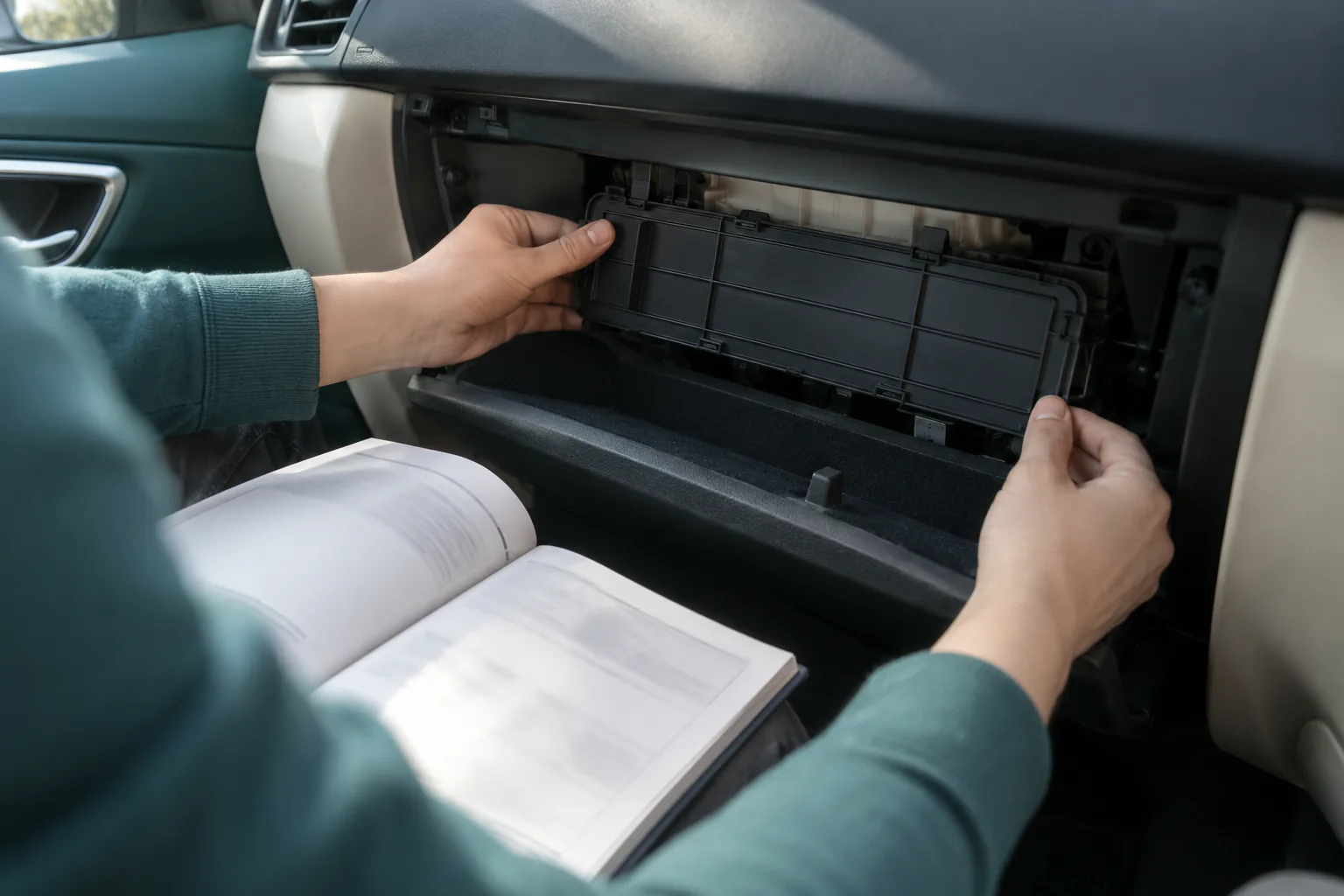
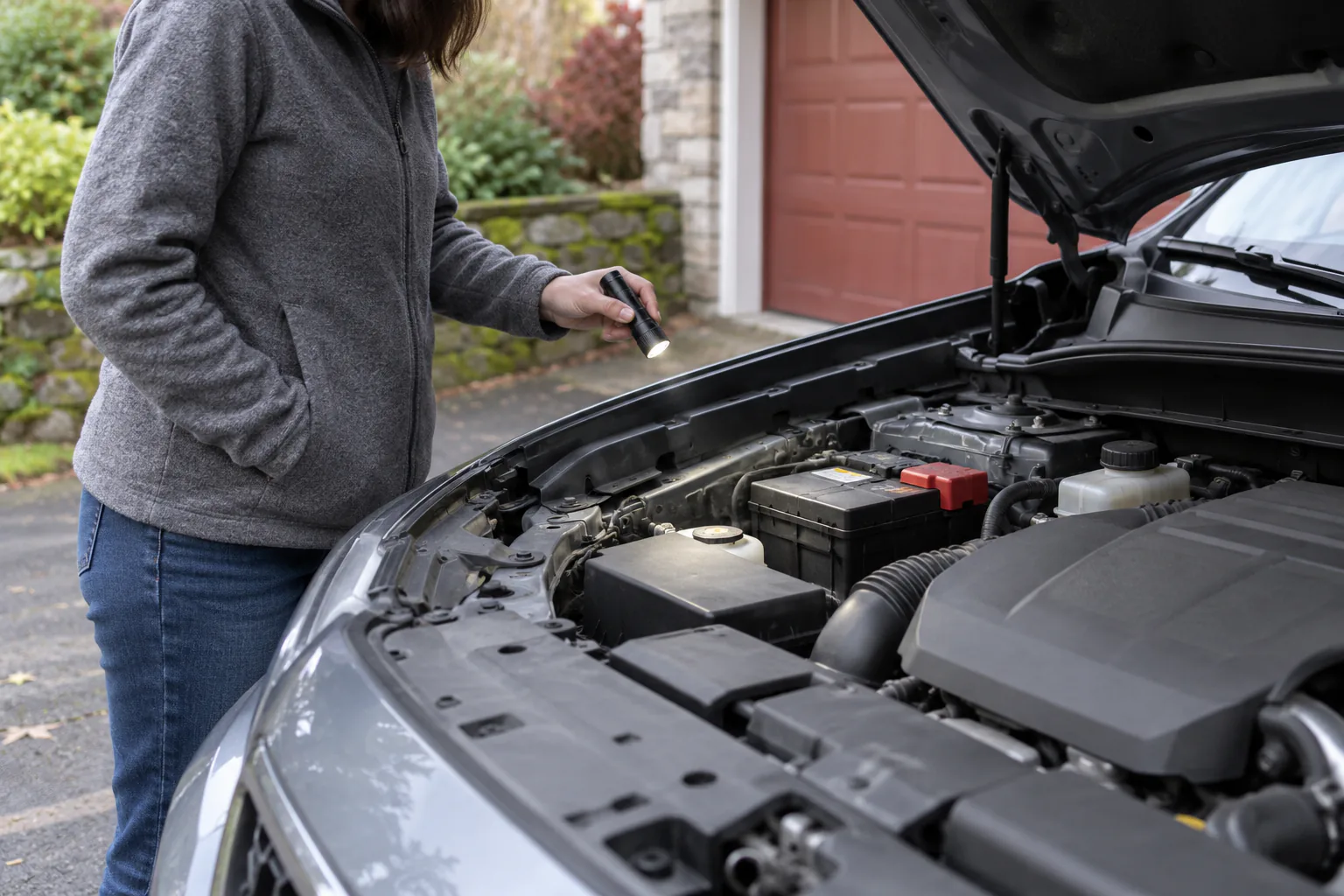
Work with the engine off and cool as required. Photograph the housing before opening it. Keep dirt from falling into the intake or HVAC duct and do not disconnect unfamiliar sensors or high-voltage components.
Check for tears, collapsed or distorted media, wet or oily contamination, pest damage, poor sealing, missing gaskets, heavy debris, and incorrect fit. Surface discoloration alone may not reveal restriction. Do not hold a filter to a light and treat the result as a universal pass/fail test.
If the filter is reusable, follow its maker's exact cleaning and drying procedure. Do not wash disposable media, blast it with compressed air, or reinstall it wet. Contaminated filters may require careful disposal.
Make the decision
Replace when the schedule says replacement is due, the approved inspection criterion is met, damage or poor fit is present, or qualified diagnosis connects the filter to the concern. Monitor when the filter is within schedule, correctly installed, and lacks a relevant finding. Escalate when symptoms persist after replacement or access exceeds the manual.
Choose the exact part by year, model, powertrain, and housing. Confirm dimensions and arrow meaning. `AIR FLOW` shows direction of flow; `UP` indicates orientation and is not always equivalent. Close all clips, screws, ducts, or glove-box stops.
Verify after service
For a cabin filter, test blower settings, listen for contact, and confirm normal glove-box or trim operation. For an engine filter, verify the air box is fully sealed and all permitted connections are restored before starting. Stop if a warning, abnormal idle, intake noise, or obvious leak appears.
Record date, mileage, part number, schedule source, old-filter condition, and next trigger. A photo supports fit and condition but does not replace a written record.
Use a worked decision sequence
Suppose cabin airflow feels weaker during a high-pollen month. First verify that the symptom affects several blower settings and is not simply a closed vent. Check the vehicle schedule and last documented replacement. If the manual provides simple access, inspect for heavy debris, moisture, distortion, and correct orientation. Replace only with the correct fit, then verify airflow. If the symptom remains, the filter hypothesis has not solved the problem and HVAC diagnosis is appropriate.
Now suppose fuel economy falls and an engine-filter advertisement says a new filter will restore performance. That claim alone is not vehicle evidence. Check for warnings, other symptoms, schedule status, and permitted inspection. A damaged or heavily contaminated filter may need service; a normal filter means the broad engine concern remains open. Do not erase diagnostic codes or replace unrelated parts in sequence until something changes.
For a vehicle used on dusty unpaved roads, record the manufacturer's definition of special conditions and inspection frequency. A photo at each inspection can reveal loading rate. Replace according to the criterion and ensure the housing is cleaned and sealed; otherwise a new filter may be contaminated or bypassed immediately.
These examples use the same four evidence streams without assuming the same answer. Schedule gives a baseline, environment changes exposure, symptoms identify the system to investigate, and inspection provides current condition.
Avoid repeated replacement without diagnosis
If a cabin filter quickly becomes wet, moldy, pest-contaminated, or heavily loaded, investigate drainage, sealing, storage, and environmental exposure. If engine-filter contamination is oily or unusual, obtain qualified evaluation rather than repeatedly installing new media.
The right time for filter attention is where documented timing, real exposure, relevant symptoms, and safe inspection meet. No single signal should quietly replace the other three.
When those signals conflict, preserve the conflict. An overdue date with a clean, intact filter still needs a schedule decision; a damaged filter before the interval still needs replacement and an explanation of the damage.
Keep the removed filter only when safe and permitted, or photograph both sides with the part number and vehicle position. Note moisture, pests, oil, broken seals, and housing debris separately. Those findings can point to a housing, drain, intake, or storage problem that a replacement filter alone will not correct.