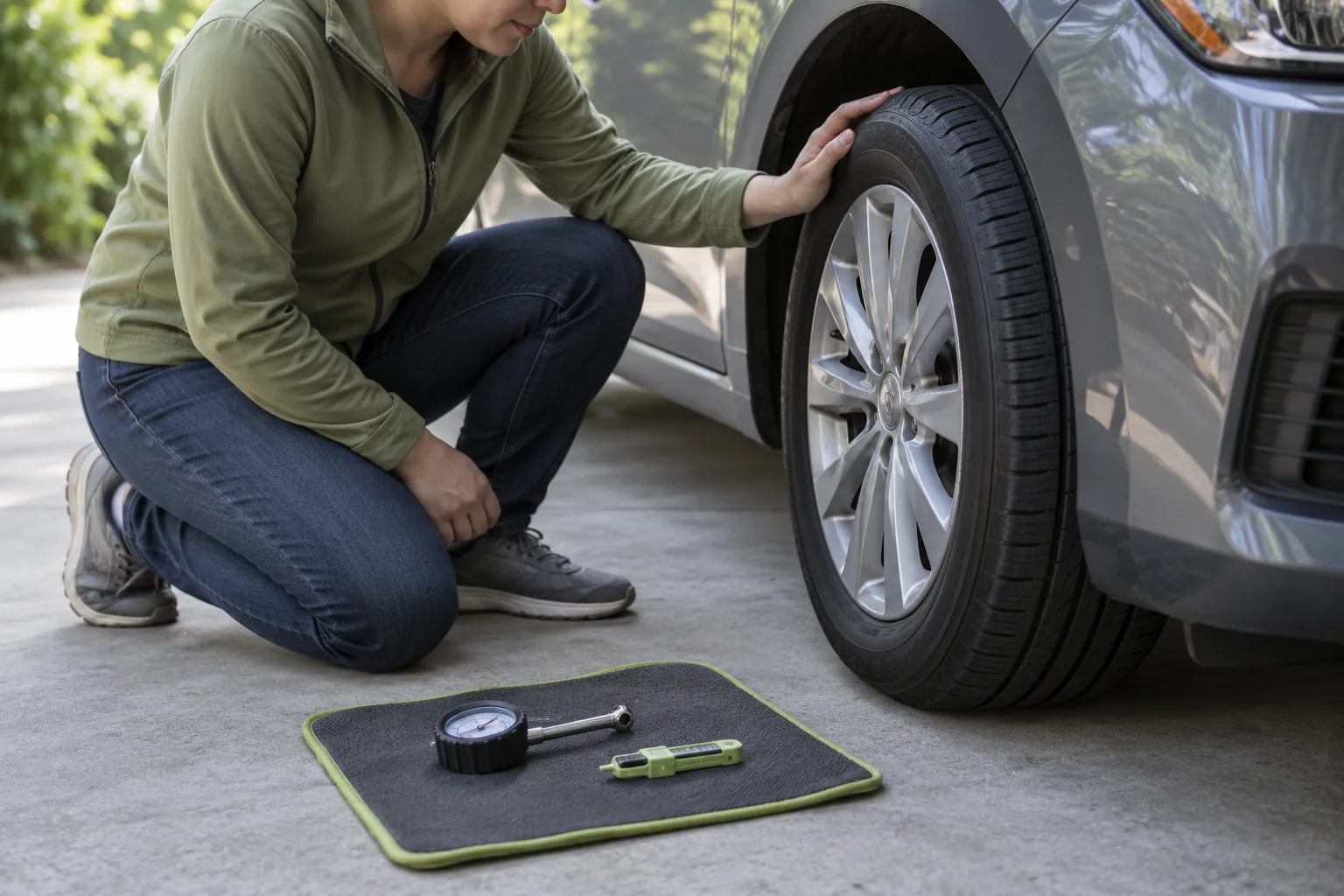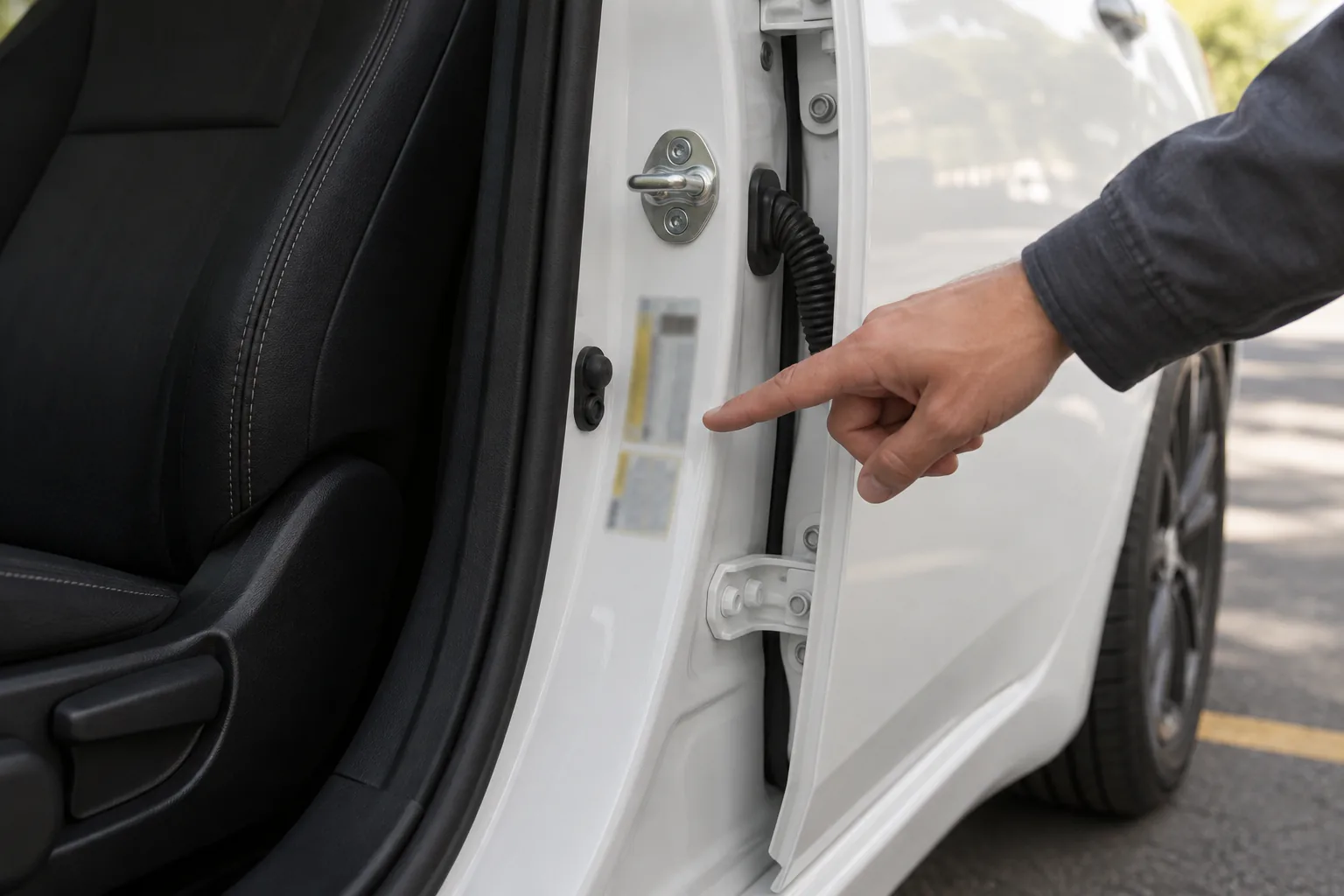
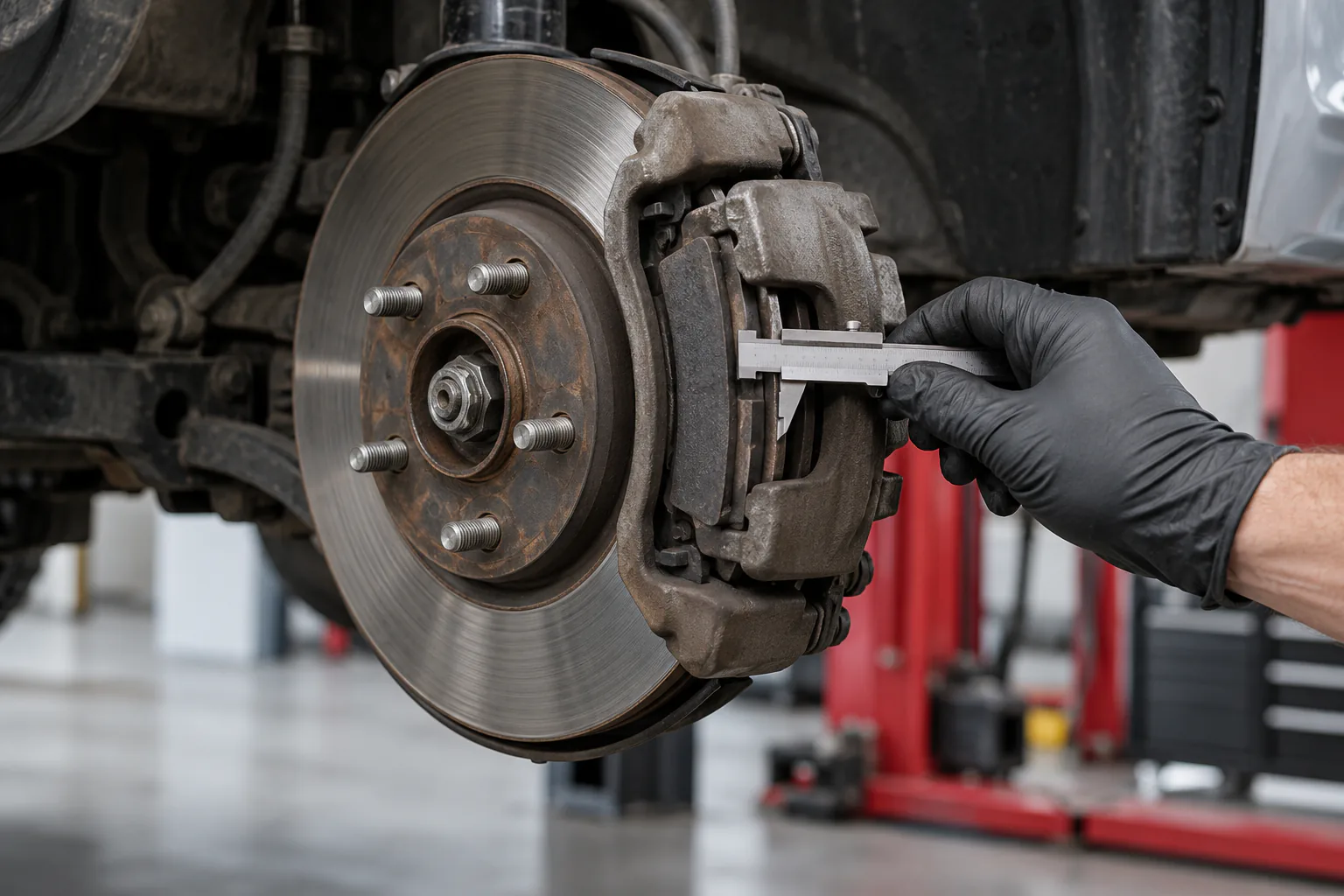
Brake pads do not share one trustworthy replacement mileage. Wear changes with vehicle mass, route, load, braking style, material, caliper condition, regenerative braking, and axle. A city vehicle may use friction brakes differently from a highway commuter; a hybrid may recover part of its braking electrically. Mileage is context, not a measurement of remaining material.
The useful question is not “How many miles do pads last?” It is “What evidence shows their present condition, what limit applies, and what else was inspected?”
Use symptoms for triage, not pad diagnosis
Grinding or scraping, pulling during braking, a sinking pedal, changed stopping performance, vibration, smoke, burning odor, or a brake warning needs prompt evaluation. The FTC lists pulling, a sinking pedal, scraping or grinding, and an illuminated brake light among brake-problem symptoms.
A squeal can have several contexts. Some pads use an audible wear indicator, but moisture, debris, material behavior, glazing, hardware, or other conditions can also create sound. Silence does not prove adequate thickness. Do not drive repeatedly to make a noise easier to hear.
If braking ability is reduced, pedal feel changes seriously, smoke appears, or the exact owner's manual directs you to stop, do not continue to a convenient appointment. Follow model-specific safety instructions and arrange appropriate transport.
Ask for measurements by position
A recommendation should identify axle and, ideally, inner and outer pad condition at each relevant wheel. Uneven inner/outer or left/right wear can matter. Ask for the measured friction-material thickness, the applicable manufacturer service limit, and whether the number excludes the backing plate.
Photographs can support the finding when clearly labeled, but perspective can mislead. A numeric estimate without access or method should be explained. Some designs make accurate measurement difficult without disassembly; the provider should state the limitation.
The Brembo guide for a Ford Mustang explains manufacturer views on pad and disc inspection and why fixed mileage is unreliable, but Brembo sells brake components and the page concerns a specific vehicle. Use it as disclosed manufacturer context, not a universal threshold.
Pads are only part of the brake inspection
Ask about rotor or disc condition, including thickness where relevant, surface damage, heat signs, scoring, cracking, and runout symptoms. A new pad installed against an unsuitable rotor may not address the underlying condition. Drum systems use different components and measurements.
The inspection may also need caliper movement, slides, hardware, hoses, leaks, fluid condition according to the vehicle schedule, parking-brake operation, and warning-system findings. A pad measurement cannot prove that the entire system is healthy.
Request the reason if both axles are recommended. Pads often wear at different rates. Replacing front and rear together may be justified by their actual measurements or a model-specific procedure, but symmetry on an invoice is not evidence by itself.
Separate three different recommendations
Scheduled inspection: The maintenance guide may call for periodic brake inspection. The expected result is documented condition, not automatic replacement.
Condition-based replacement: Measurements, damage, contamination, uneven wear, or system findings show that service is required or approaching a limit.
Symptom diagnosis: A driver reports noise, vibration, pulling, warning, or performance change. The repair should address the confirmed cause, which may involve more than pads.
Keeping these categories separate makes estimates easier to evaluate. Ask the shop to label which one applies.
Decide whether replacement is due now
Immediate timing depends on the measured condition, rate and pattern of wear, applicable limit, vehicle requirements, and safety findings. “Low” is not a standardized measurement. Ask how much usable material remains relative to the limit and whether the vehicle is safe to drive.
If replacement is not yet required, record the measurement and a review trigger based on professional guidance and the factory schedule. Do not convert a prediction into a guarantee. Wear rate can change with route, load, corrosion, or hardware condition.
For an expensive or complicated recommendation, the FTC suggests considering a second opinion. Provide the same symptom history and ask both providers for measurements and limits. Differences can then be compared on evidence rather than price alone.
Compare estimates on the same scope

One quote may cover pads only, another pads and rotors, and a third may add hardware, fluid service, or caliper work. A lower total is not automatically the same repair. Ask each provider to identify the axle, measured condition, parts included, procedures, taxes and fees, warranty, and unresolved findings.
Clarify whether rotor replacement or machining is required by measurement, surface condition, model procedure, or shop policy. Ask why hardware or caliper service is included. The goal is not to remove every additional line; it is to understand which lines correct a documented condition and which are optional or preventive.
If the estimates disagree about safety, request the underlying measurements and service limits in writing. A second provider may find new evidence or use a different but valid repair approach. Preserve both conclusions with attribution. Do not average two pad-thickness numbers or choose the one that supports the preferred price without understanding how they were obtained.
Review the completed repair order
The invoice should identify the work, supplied parts, labor, costs, and odometer. Ask which pads and related parts were installed, which specifications or procedures applied, whether rotors were replaced or serviced, what fluid or hardware work occurred, and what warranty covers parts and labor.
Preserve before measurements and unresolved findings. A completed pad replacement should not erase a reported vibration or warning unless the provider verified the resolution. If the symptom continues, return with the record rather than starting the history over.
Avoid unsafe DIY confirmation
Do not place any part of your body under a vehicle supported only by a jack. Wheel removal, lifting, brake disassembly, and torque-critical reassembly introduce risks beyond a visual driveway check. This article is about evaluating evidence from a qualified inspection, not teaching a pad replacement procedure.
Brake pads need replacement when model-appropriate inspection and evidence show they are at or approaching the applicable limit, damaged, contaminated, or part of a confirmed repair—not when a generic mileage counter expires. Ask for the measurement, the limit, the related system findings, and the consequence of delay. Those answers turn a sales line into a maintenance decision.
Set any follow-up from the documented condition, not a universal mileage. Record which axle was measured, the date and odometer, and the review reason so the next inspection can compare like with like.